Anthropic tries to revive Pentagon AI deal after talks collapse
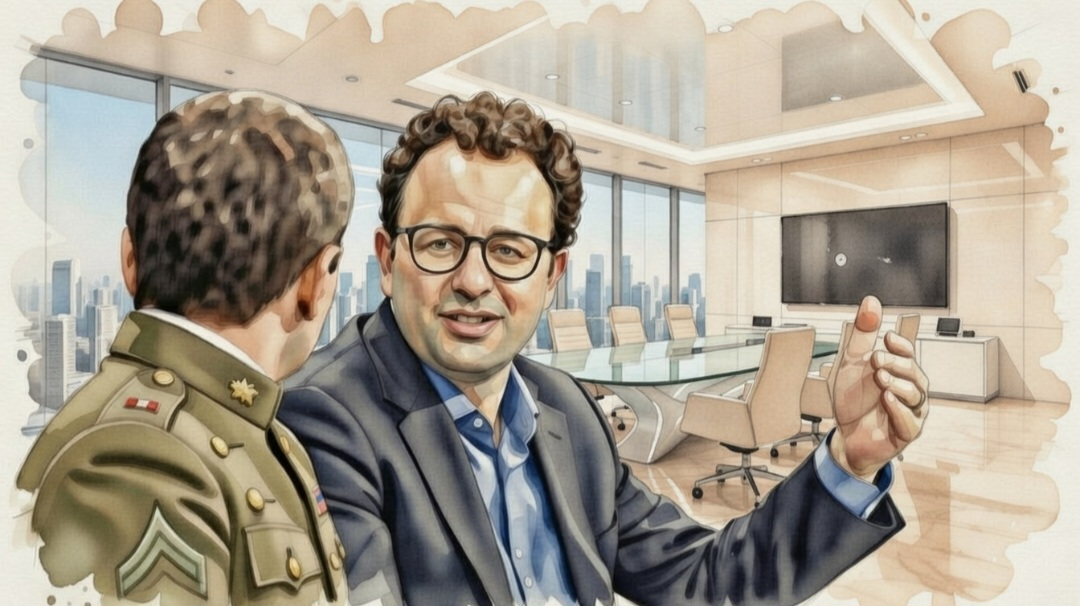
CEO Dario Amodei met Pentagon R&E undersecretary Emil Michael to restart a contract on military access to Anthropic AI models after talks collapsed over limits on surveillance and other uses.
Anthropic CEO Dario Amodei met this week with Emil Michael, the Pentagon's undersecretary of Defense for Research and Engineering, to try to revive a contract governing military access to the company's AI models after talks collapsed last week over limits on surveillance and other uses, according to people familiar with the discussions.
The collapse raised the risk of a restricted supply-chain designation for the privately held company. Such a label can disrupt relationships with federal agencies and major contractors. In recent days, some Defense Department contractors were directed to pause commercial ties with Anthropic, according to people briefed on the matter.
Talks broke down when the parties failed to agree on language that would bar use of Anthropic's systems for mass domestic surveillance, one of the company's stated red lines along with lethal autonomous weapons. Defense officials have pushed AI providers to permit any “lawful” uses, creating a clash over contract terms.
People familiar with the exchange described a heated meeting in which Michael accused Amodei of dishonesty and having a “God complex.” Afterward, Amodei circulated a memo to staff asserting that the Pentagon and OpenAI were spreading “misinformation,” a turn that has complicated efforts to restart negotiations.
The uncertainty has rippled through defense technology programs. Palantir's Maven Smart Systems software, used by the U.S. military, has faced disruption following the order to halt commercial activity with Anthropic. Lockheed Martin will remove Anthropic's Claude AI tools from its operations after President Donald Trump imposed a federal agency-wide ban on the company.
The public dispute has also affected consumer use of Anthropic's chatbot. Claude reached the top of Apple's App Store in the United States, while nearly 2,000 users reported outages amid a spike in traffic.
Renewed talks center on contract language that would set boundaries on military access and use cases for Anthropic's models. Company representatives have pressed for explicit prohibitions on surveillance at scale and autonomous weapons, while Defense officials have argued for broader latitude tied to the “lawful use” standard that governs other technologies procured by the government.
It remains unclear whether draft wording under discussion would include national security exceptions or rely on auditing and access controls to enforce limits.
Anthropic, founded by former OpenAI researchers, markets AI systems constrained by safety guardrails. The company remains private and has expanded commercial partnerships, including with firms that supply the federal government.
Pentagon procurement teams are reassessing how to classify and acquire large-scale AI services, a process that affects which tools can be integrated into weapons systems, intelligence workflows and logistics software. A restricted supply-chain designation can trigger removals by prime contractors and subcontractors, as reflected in actions around Lockheed and in disruptions around Palantir deployments.
No timeline has been given for concluding negotiations or restoring paused work. Key sticking points remain whether a blanket “lawful use” clause will govern government access to Anthropic's models and how any safeguards against surveillance and lethal uses would be written into enforceable contract terms.
The content on The Coinomist is for informational purposes only and should not be interpreted as financial advice. While we strive to provide accurate and up-to-date information, we do not guarantee the accuracy, completeness, or reliability of any content. Neither we accept liability for any errors or omissions in the information provided or for any financial losses incurred as a result of relying on this information. Actions based on this content are at your own risk. Always do your own research and consult a professional. See our Terms, Privacy Policy, and Disclaimers for more details.
Articles by this author