When an AI company said No to the Pentagon
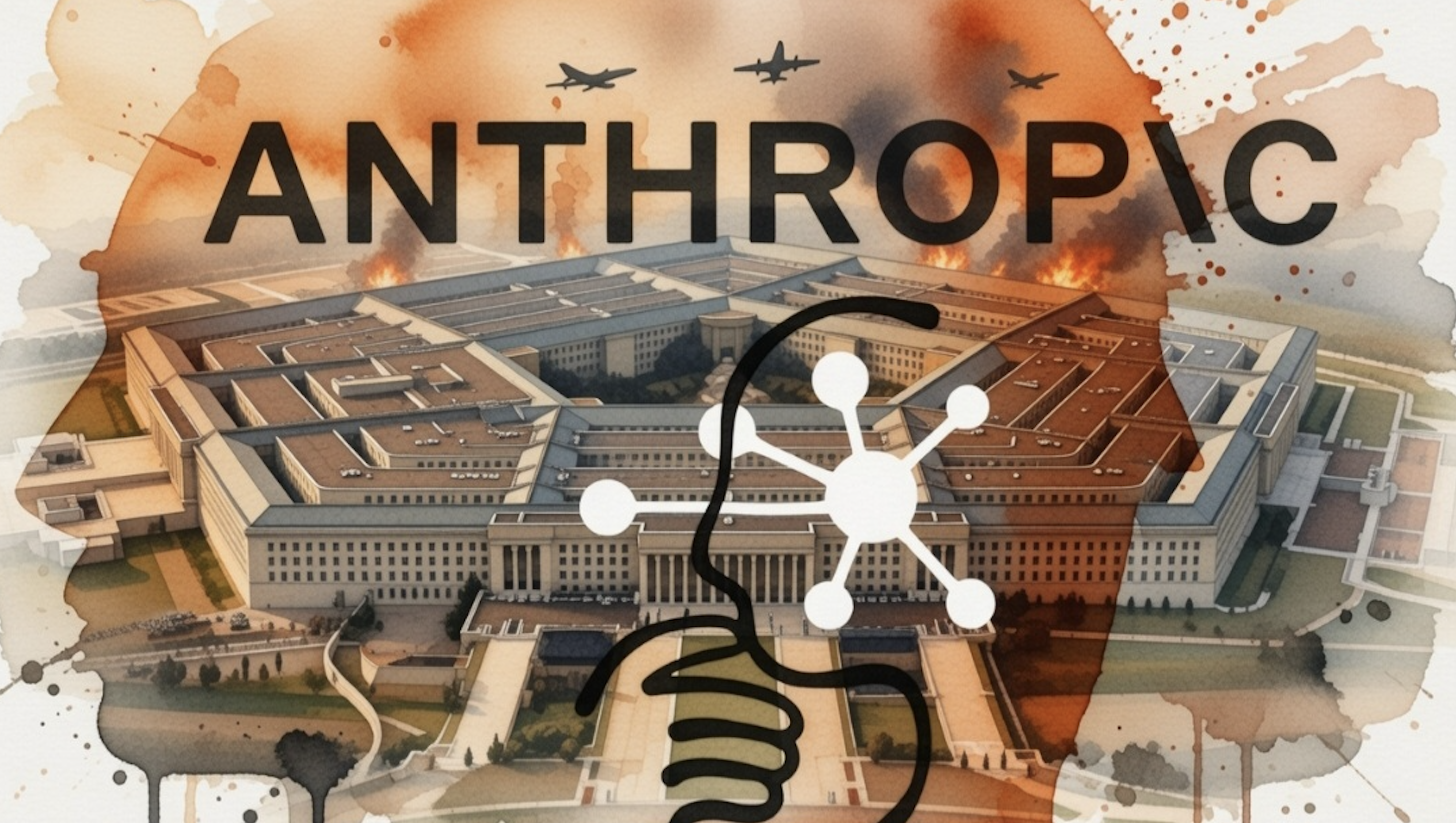
The deadline was 5:01 p.m. on Friday, February 27, 2026. Anthropic didn’t blink – and the Pentagon responded by applying a designation historically reserved for foreign adversaries to an American company for the first time.
Secretary of War Pete Hegseth had given the company until that moment to drop two restrictions on how the U.S. military can use its AI model Claude: no mass domestic surveillance of Americans, no fully autonomous weapons. When Anthropic refused, Hegseth went to X and declared the company a “supply chain risk to national security” – a designation previously applied only to foreign adversaries like Huawei, now applied for the first time to an American firm.
President Trump followed shortly after, directing all federal agencies to immediately cease using Anthropic's technology and accusing the company of putting American lives at risk.
What Hegseth actually wanted
The Pentagon's position, as stated publicly by spokesperson Sean Parnell, is straightforward: Anthropic should make Claude available for “all lawful use cases” without limitation. The Department argued that mass surveillance of Americans is already illegal under U.S. law, and that internal policies already prohibit fully autonomous weapons – making Anthropic's restrictions redundant and its insistence on them an attempt to exert operational control over the U.S. military.
Hegseth called Anthropic “sanctimonious” and accused the company of trying to “strong-arm the United States military into submission.” He added that “the Terms of Service of Anthropic's defective altruism will never outweigh the safety, the readiness, or the lives of American troops on the battlefield.”
Behind the scenes, the picture was messier. According to Axios, Under Secretary of War Emil Michael was on the phone offering Anthropic a deal at the same moment Hegseth was posting the supply chain risk designation on X. That deal would have required allowing the collection or analysis of data on Americans, including geolocation, web browsing data, and personal financial information purchased from data brokers. Anthropic declined.
Anthropic's position
The company had been negotiating with the Pentagon for months. It signed a $200 million contract with the Department of War in July 2024, becoming the first frontier AI lab to run models on classified networks. It never disputed the military's right to make operational decisions.
What it wouldn't accept were two things: using Claude to power weapons that fire without human involvement, and running the model as infrastructure for mass surveillance of American citizens. CEO Dario Amodei argued that current AI models aren't reliable enough for autonomous lethal decisions, and that no legal framework yet governs how AI can be used in mass surveillance at scale.
When the Pentagon submitted revised contract language, Anthropic said it contained loopholes – wording “framed as compromise” that was “paired with legalese that would allow those safeguards to be disregarded at will.”
After the designation was announced, Anthropic pushed back on its legal scope. The company argued that Hegseth doesn't have the statutory authority to bar all military contractors from using Claude – that under 10 USC 3252, a supply chain risk designation can only restrict Claude's use on Pentagon contract work, not across a contractor's entire commercial business. It said it would challenge the designation in court.
Why this goes beyond Anthropic
OpenAI CEO Sam Altman said his company had reached an agreement with the Department of War to deploy its models in their classified network, while noting that OpenAI holds the same red lines as Anthropic on autonomous weapons and mass surveillance. Whether the Pentagon applied different pressure or accepted a different language from OpenAI is not yet clear.
Palantir, which uses Claude to power its most sensitive military work, will likely need to strike a deal with one of Anthropic's competitors.
Senator Mark Warner warned that the episode poses risks beyond Anthropic itself. He described the pressure campaign as potentially “the pretext to steer contracts to a preferred vendor” and said it risks undermining the willingness of U.S. private sector companies and academia to work with the defense and intelligence communities.
Musk, whose company xAI holds its own Pentagon contract, has been publicly attacking Anthropic for weeks.
What happens next
Anthropic retains its commercial customers – individuals and companies without Pentagon contracts are unaffected. The military has six months to transition to alternative providers.
The company says it remains committed to supporting U.S. national security and open to continued negotiations. The Pentagon has not responded directly to Anthropic's legal challenge.
This is the first time a frontier AI company has publicly refused a government demand of this scale and accepted the consequences. The answer will come from the courts, the budget process, or the next contract negotiation.
The content on The Coinomist is for informational purposes only and should not be interpreted as financial advice. While we strive to provide accurate and up-to-date information, we do not guarantee the accuracy, completeness, or reliability of any content. Neither we accept liability for any errors or omissions in the information provided or for any financial losses incurred as a result of relying on this information. Actions based on this content are at your own risk. Always do your own research and consult a professional. See our Terms, Privacy Policy, and Disclaimers for more details.
Articles by this author