Gold dips as dollar rallies amid Middle East turmoil

Gold futures declined on Tuesday even as conflict between the U.S., Israel, and Iran continued to escalate – a move that surprised some observers but reflects a specific dynamic in how investors respond to geopolitical stress in the early stages.
What the dollar is doing to gold
At the close on Tuesday, gold contracts fell sharply across the board. The spot-month March 2026 contract on Bursa Malaysia Derivatives dropped to $5,288 per troy ounce from $5,414 on Monday, while April slipped to $5,306 from $5,432. On international markets, spot gold lost 1.4% to $5,150 an ounce in London trading, with U.S. gold futures down nearly 0.9%.
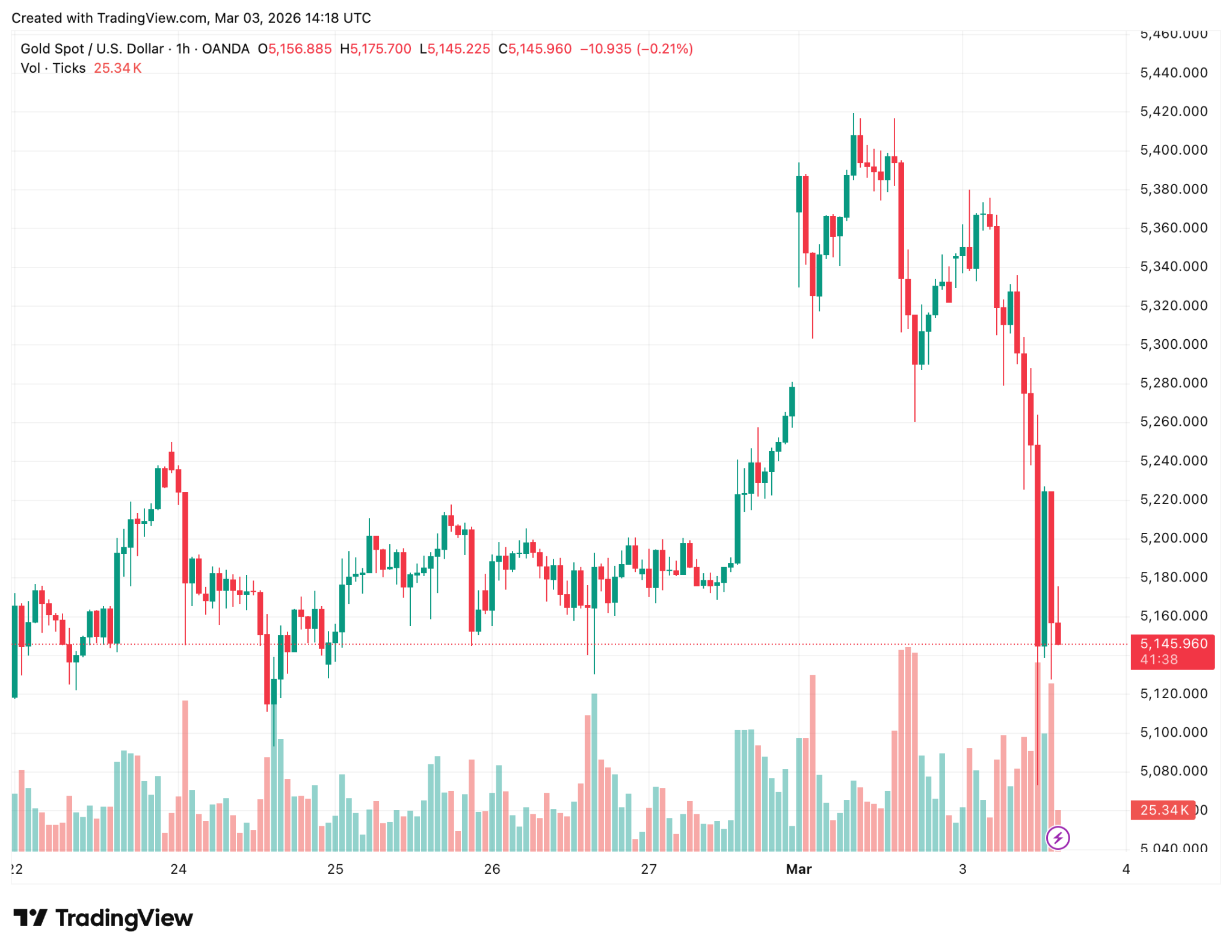
Stephen Innes, managing partner at SPI Asset Management, noted that firmer U.S. Treasury yields – particularly real yields – mechanically pressure gold by increasing the opportunity cost of holding a non-yielding asset.
“In the early stages of geopolitical stress, investors often sell risk assets and move into cash and dollars rather than immediately rotating into gold. The dominant trade is liquidity-driven de-risking rather than an inflation hedge bid.” Innes said.
The dollar index was on track for its largest one-day gain since late January, while 10-year U.S. Treasury yields reached 4.038%. Crude oil surged simultaneously – U.S. oil up 6.86%, Brent up 8.07% – pushing back rate-cut bets and strengthening the dollar further.
Physical supply caught in the crossfire
UAE airspace closures over the weekend grounded gold and silver shipments carried in commercial aircraft cargo holds, and several trading and logistics firms said their shipments through Dubai – a key hub for routes into Switzerland, Hong Kong, and India – had been paused indefinitely.
Fed rates, oil, and what analysts expect
The oil spike is creating a secondary pressure on gold through monetary policy expectations. Higher energy prices feed directly into inflation, which reduces the probability of Fed rate cuts – and a higher-for-longer rate environment raises the opportunity cost of holding gold. As of March 2, traders expected 0.56% in Fed cuts for the year, slightly down from 0.6% before the strikes (Bloomberg data).
Pepperstone senior research strategist Michael Brown noted that the conflict has considerably widened the range of potential outcomes, making accurate risk pricing “incredibly difficult, if not impossible,” pushing most investors toward a “de-risk now, ask questions later” approach.
ING added that if tensions remain contained and energy flows are unaffected, the initial risk-off move should fade as the oil risk premium unwinds – which would remove one key prop under the dollar. Swiss bank UBP took the opposite view, saying gold has ample scope to challenge its January all-time high of $5,594 if hostilities extend for several weeks.
Gold is still up nearly 23% year-to-date, and the same dollar strength currently weighing on bullion is a parallel headwind for crypto – Bitcoin and risk assets tend to struggle when the dollar climbs on flight-to-safety flows.
The content on The Coinomist is for informational purposes only and should not be interpreted as financial advice. While we strive to provide accurate and up-to-date information, we do not guarantee the accuracy, completeness, or reliability of any content. Neither we accept liability for any errors or omissions in the information provided or for any financial losses incurred as a result of relying on this information. Actions based on this content are at your own risk. Always do your own research and consult a professional. See our Terms, Privacy Policy, and Disclaimers for more details.
Tags
Articles by this author