BNY sticks to three Fed cuts despite Iran-driven oil shock
As geopolitical risk from the Middle East pushes oil prices higher and complicates the inflation outlook, BNY macro strategist John Velis is maintaining his call for three Federal Reserve rate cuts in H2 2026 – anchoring the forecast on labor market deterioration rather than price dynamics.
The BNY case
Velis notes that even amid the recent geopolitical shock, the rates curve has barely budged. Markets are still pricing in two Fed cuts for the year, despite a small rise in oil prices and a modest uptick in inflation expectations.
His main concern is the labor market: “Our rate call rests on concerns over the labor market, which is at best flat and could decline further. Even with sticky inflation, if labor deteriorates, the FOMC will respond with looser policy at the expense of inflation,” Velis said.
On the inflation side, he acknowledged that producer prices last week came in disappointingly high, driven by services – particularly trade services, a proxy for margins, where the relevant PPI subcategory rose 4.2%. He attributes this partly to firms passing on tariff costs.
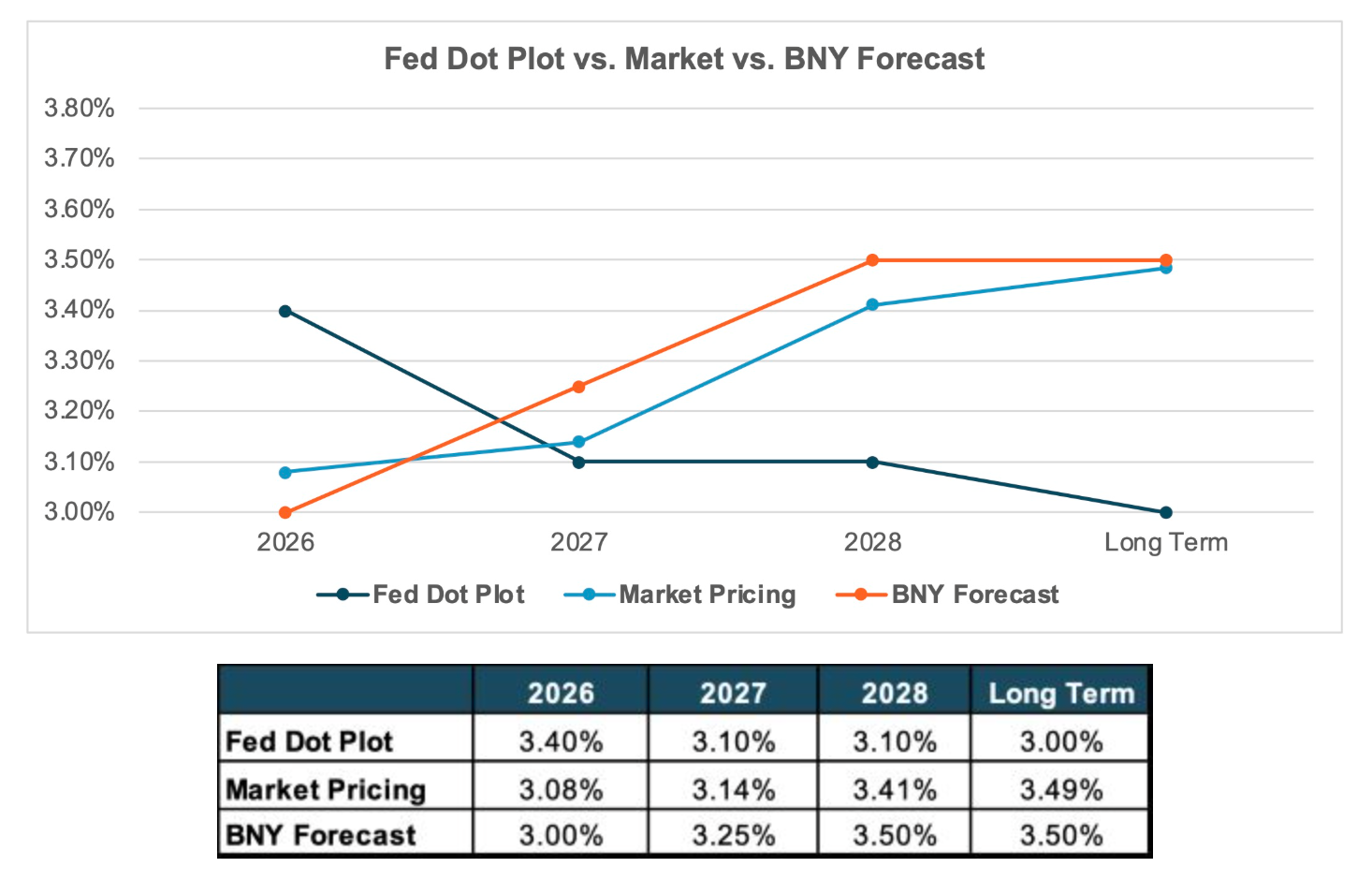
BNY Mellon holds the most aggressive expectations for interest rate cuts – Source: bny.com
Where the market stands
The BNY view is more dovish than current market pricing. Traders were pricing roughly 0.56% of Fed rate cuts for the full year as of March 2, down from 0.6% before the U.S.-Israeli strikes on Iran. CME FedWatch data shows roughly 97% probability that the Fed holds rates unchanged at its March 18 meeting.
Former Treasury Secretary Janet Yellen put it more directly. “I think the recent Iran situation puts the Fed even more on hold, more reluctant to cut rates than they were before this happened,” she said at a shipping industry conference in Long Beach. Inflation is already running about a percentage point above the Fed's 2% target, with tariffs contributing roughly half a point of the current 3% pace, she noted.
The scenario split
Wall Street is divided on how durable the oil shock will be. Citi analysts wrote that they do not expect geopolitical developments to significantly affect Fed policy rate plans, with modest upside risk to inflation offset by less supportive financial conditions. JPMorgan's Jamie Dimon told CNBC there won't be a major inflationary hit as long as the conflict is not prolonged, given the U.S.'s relative insulation from energy shocks through domestic production.
At the other extreme, Natixis economists outlined a scenario where the conflict broadens regionally, oil holds above $120, shipping lanes are disrupted, and the Fed ultimately cuts rates quickly to stave off an economic downturn – a very different path to easing than the one BNY is projecting. For now, the NFP report on Friday is the next data point that could shift the calculus.
The content on The Coinomist is for informational purposes only and should not be interpreted as financial advice. While we strive to provide accurate and up-to-date information, we do not guarantee the accuracy, completeness, or reliability of any content. Neither we accept liability for any errors or omissions in the information provided or for any financial losses incurred as a result of relying on this information. Actions based on this content are at your own risk. Always do your own research and consult a professional. See our Terms, Privacy Policy, and Disclaimers for more details.
Articles by this author