$400B wiped out in 4 hours: Is crypto truly decentralized?

Donald Trump announces 100% tariffs on Chinese products via Truth Social – and $400 billion in crypto valuation disappears within hours. More than $19B in forced liquidations. 1.66 million traders suffer losses. Can a market dependent on one presidential announcement truly be called decentralized?
October 10, 2025, 4:45 PM EST. Donald Trump launches Truth Social and publishes a post regarding the China trade war.
4:47 PM EST. Bitcoin plunges $3,000 within two minutes.
8:00 PM EST. Crypto market capitalization drops by $400 billion. Bitcoin reaches $105,000 – a 14% decline from its daily peak of $122,000. Ethereum crashed to $3,500 (-20%). Solana obliterated by 25%.
That night, over $19 billion in trading positions were forcibly liquidated across roughly 1.66 million accounts. By multiple accounts, this represents one of the most significant liquidation events in crypto history.
This market collapse was triggered by a single presidential social media post.
China has adopted an extraordinarily hostile stance by implementing comprehensive export controls on virtually all their manufactured goods, taking effect November 1.
The United States will respond with 100% tariffs on all Chinese imports, alongside export restrictions on critical software – also beginning November 1.
Two brief paragraphs – $400 billion in valuation vanished.
Anatomy of a flash collapse
Trump reveals new 100% tariff measures targeting Chinese manufacturers, simultaneously canceling his Xi Jinping summit and warning of “massive tariff escalations.” Market sentiment turns to panic. Widespread liquidations commence. Bitcoin briefly touches $105,000 (hitting $102,000 on Binance). Ethereum drops to $3,500. Altcoin markets saw declines ranging from 20% to 40%.
Total cryptocurrency market valuation contracted from $4.25 trillion to $3.78 trillion over 24 hours, translating to roughly $470 billion in losses.
Liquidations cascaded throughout the evening. Available data indicates $7 billion in positions were eliminated within a single hour, with the October 11 morning total surpassing $19 billion – establishing an unprecedented historical benchmark.
Market memories and human tragedies
Veteran traders draw parallels to March 2020, when global pandemic lockdowns triggered market collapse.
Bitcoin trader Bob Loukas compared the losses to the market reaction during COVID-19, noting the severity of liquidations.
Crypto analyst Pentoshi stated that this market event ranks among the most significant recent losses in crypto, affecting numerous traders.
Trader Cole Bartiromo reported losing $1.1 million on a Solana position, illustrating that even low leverage could not prevent major losses.
Others suffered losses beyond financial. Konstantin Ganich (Kostya Kudo), a prominent Ukrainian crypto trader, was discovered deceased in his vehicle that morning. Investigators believe suicide resulted from devastating investor fund losses during the crash.
This transcended normal market correction. This represented systematic leverage destruction.
The decentralization contradiction
Merely four days prior, Bitcoin established a fresh all-time high at $126,199. Market analysts discussed entering the “euphoria stage.” Year-end forecasts predicted $180,000-$200,000. ETF capital inflows shattered records. Institutional buyers were accumulating.
Then came one presidential message – and the supposedly “decentralized” infrastructure collapsed dramatically following the announcement.
How does this happen?
Bitcoin functions as a decentralized protocol. No executive can halt its operations. No nation controls its blockchain. Even if the US prohibits Bitcoin tomorrow, the network continues functioning.
The issue: we frequently conflate “Bitcoin the project” with “Bitcoin the market.” These prove to be entirely separate concepts.
Who truly commands pricing
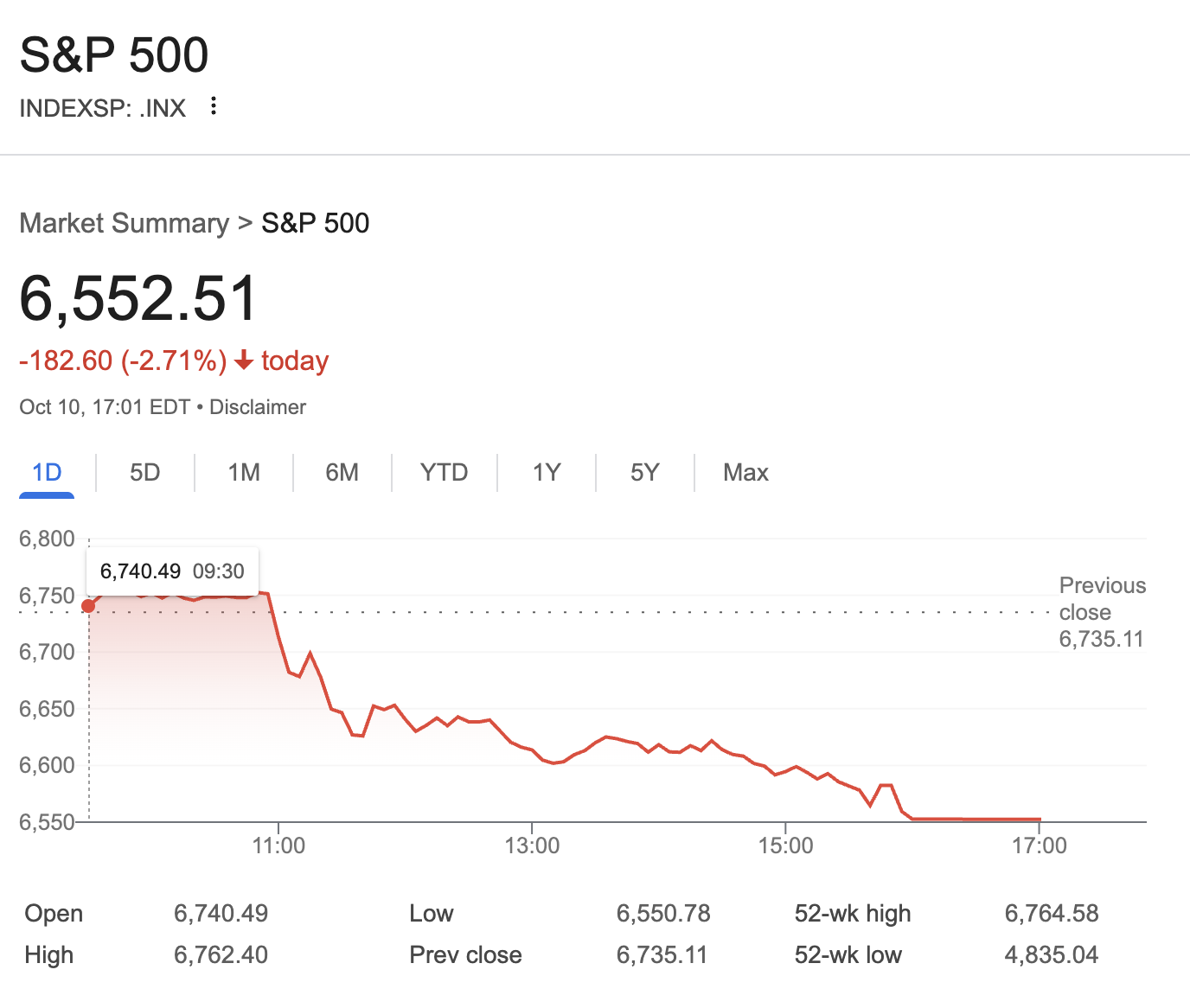
More than 80% of trading volume flows through centralized platforms including Binance, Coinbase, and Bybit. Millions trade derivatives with 1:50, 1:100, even 1:125 leverage ratios. Bitcoin ETFs from BlackRock, Fidelity, and Grayscale channel institutional capital that responds to macroeconomic signals identically to traditional finance. When S&P 500 declines 2.7% (as occurred October 10), Bitcoin declines alongside.
Fiat liquidity remains under Wall Street control, traditional brokerages, centralized crypto platforms, and dominant market makers.
When Trump initiates trade conflict, this liquidity exits markets in synchronized fashion. Whether Tesla equity or Bitcoin – the response proves identical.
$19 billion liquidated: dissecting the carnage
Trading with leverage means borrowing from exchanges. Example: possessing $1,000 while employing 1:50 leverage enables opening a $50,000 position. Favorable market movement generates wealth. However, even 2% adverse movement triggers automatic position closure (liquidation) when initial collateral deposits vanish. Exchanges never incur losses. Traders absolutely do.
Forced long position termination essentially becomes a sell order. Consequently, mass liquidations themselves apply downward price pressure, accelerating declines. This initiates subsequent liquidations, creating cascade dynamics.
Precisely yesterday's sequence. Former BitMEX founder Arthur Hayes identified automatic liquidations on major cryptocurrency platforms as the driver behind such extreme price action (speculation regarding which platform remains).
Who remained unscathed
Peter Todd, a Bitcoin Core developer, rested undisturbed that evening.
Adam Back, Hashcash inventor (Bitcoin's foundational technology), received no margin calls.
Hal Finney, were he living, similarly would have avoided liquidations.
Why?
They possess Bitcoin. Not derivatives. Not 1:125 leveraged contracts. Simply Bitcoin within personal wallets.
For them, Bitcoin declined from $122,000 to $105,000, an unfortunate drop for holders. Yet they maintain identical Bitcoin quantities. Nobody could force-close their holdings.
Crypto traders' positions, however, closed automatically. Their capital vanished. Contracts nullified.
Institutional capital equals centralization
Recent years saw crypto celebrating institutional money influx. January 2024 delivered Bitcoin ETF launches. BlackRock, Fidelity, Grayscale entered cryptocurrency markets. Wall Street acknowledged Bitcoin.
Nobody questioned: what occurs when this capital exits?
Now we understand.
During macroeconomic deterioration, institutional investors liquidate all risk assets simultaneously: technology stocks, lower-rated bonds, commodity futures, cryptocurrencies.
Bitcoin is categorized as “risk-on assets” – purchased during optimism, sold during panic.
October 10: S&P 500 dropped 2.7% (182 points), Dow Jones 1.9% (878 points), Bitcoin 14% ($17,000), Ethereum 20%. Everything declined simultaneously. Identical players control the capital.
Locating decentralization
Bitcoin's protocol remains decentralized. No nation halts it. No president governs the blockchain.
Yet cryptocurrency markets exhibit unprecedented centralization.
Fiat liquidity concentrates within five major centralized exchanges, Wall Street ETF vehicles, traditional brokerages, institutional investors. Pricing reflects US macroeconomic policy, trade conflicts, Federal Reserve decisions, presidential social media statements.
When Trump activates tariff mechanisms, centralized liquidity exits synchronously. Protocol decentralization becomes irrelevant when 95% of capital flows through centralized channels.
Identifying crypto's real controllers
Crypto operates entirely under crypto market control. Traders seeking leverage don't purchase crypto. They purchase contracts for difference, essentially entering casinos.
Nobody altered Bitcoin's decentralized characteristics that night. Everyone witnessed fiat liquidity location – centralized player control, with continued operational freedom.
Peter Todd, Adam Back, fellow cypherpunks avoided liquidations. They also acquired Bitcoin at $105,000.
Tomorrow's distinction: they'll still hold Bitcoin. Those 1.66 million liquidated traders won't.
Closing thoughts
True Bitcoin decentralization isn't price independence from governments. It's the reality that private key ownership means nobody confiscates your coins, regardless of Trump announcing 10,000% tariffs.
That requires purchasing Bitcoin. Not 1:125 leveraged Bitcoin contracts.
Not your keys, not your coins.
Satoshi's warning stands.
The content on The Coinomist is for informational purposes only and should not be interpreted as financial advice. While we strive to provide accurate and up-to-date information, we do not guarantee the accuracy, completeness, or reliability of any content. Neither we accept liability for any errors or omissions in the information provided or for any financial losses incurred as a result of relying on this information. Actions based on this content are at your own risk. Always do your own research and consult a professional. See our Terms, Privacy Policy, and Disclaimers for more details.
Articles by this author