Two tankers hit in Iraq; Oil jumps as Gulf disruptions

Two tankers were hit in waters off Iraq, halting oil terminals, while ships left Mina Al Fahal in Oman as a precaution. Brent crude jumped 10% amid wider attacks on Gulf shipping.
Two oil tankers were struck in Iraqi waters, prompting a temporary halt at the country’s oil terminals and precautionary departures from Oman’s Mina Al Fahal. Brent crude rose as much as 10% intraday.
Iraq’s State Organization for Marketing of Oil identified the vessels as the Marshall Islands-flagged Safesea Vishnu and the Malta-flagged Zefyros. Port operations were suspended following the incidents, according to the General Company for Ports of Iraq. In a statement, SOMO stated: “This event negatively impacts Iraq's security and economy, and poses a threat to the safety of maritime navigation and oil activities in Iraqi territorial waters.”
In Oman, ships were instructed to leave Mina Al Fahal as a precaution after drone strikes at other ports a day earlier. The terminal, which exports about 1 million barrels a day of Omani crude, reopened several hours later with loadings proceeding. Drone attacks on Wednesday hit fuel tanks at Salalah, while other drones were intercepted. Salalah paused operations at its container and general cargo terminals; other Omani ports, including Duqm, remained open.
Additional incidents were reported in nearby waters. On Thursday, a vessel was struck by an unknown projectile north of Jebel Ali in the United Arab Emirates, according to the UK Maritime Trade Operations agency. A day earlier, the Thai-flagged Mayuree Naree, a 30,000-deadweight-ton bulk carrier, was hit while attempting to exit the Strait of Hormuz, according to Thailand’s navy.
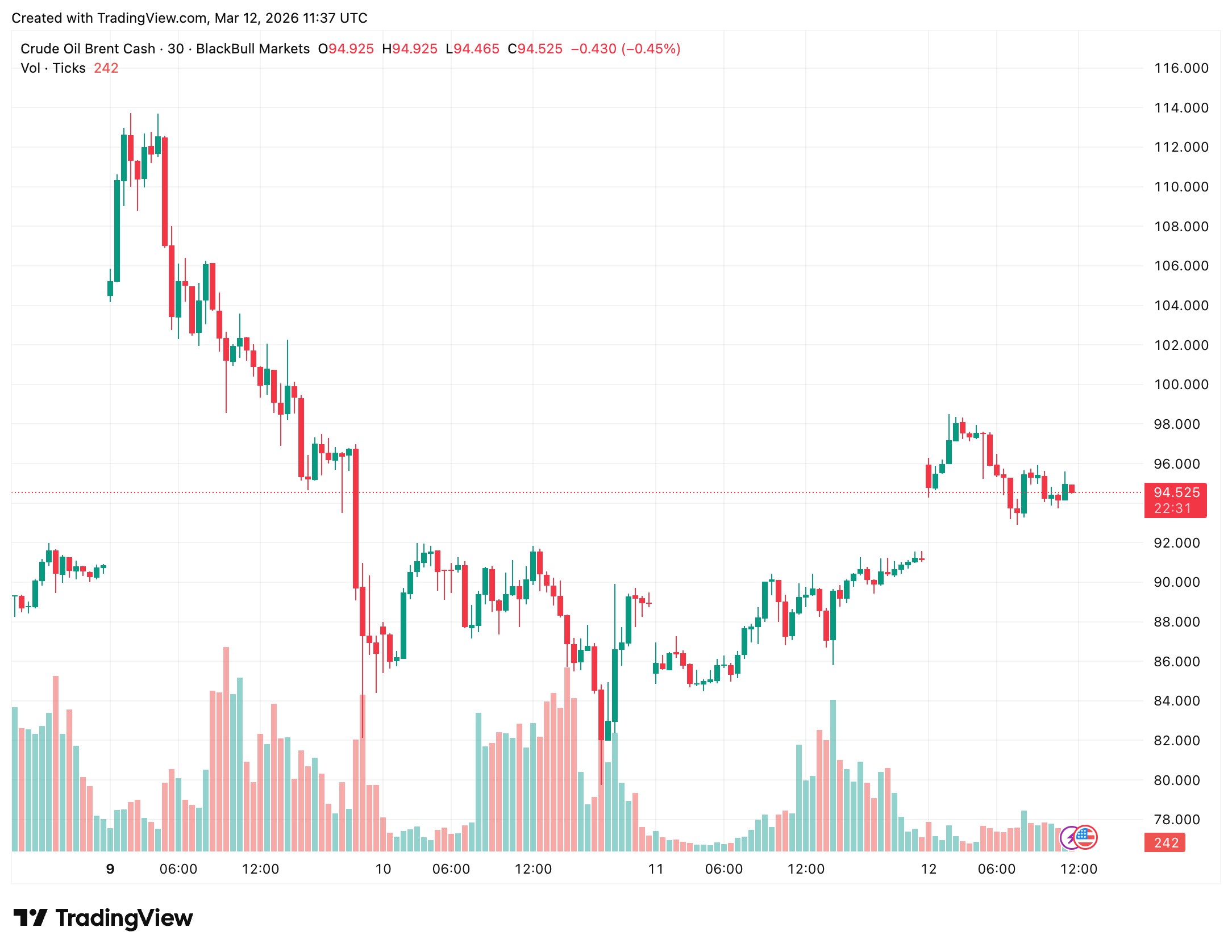
Oil markets rallied on the latest disruptions. Brent crude climbed as much as 10% on Thursday, even after officials announced a coordinated release of 400 million barrels from strategic reserves. Omani crude traded around $132 a barrel on Thursday, compared with Brent near $96.
Interruptions at Oman’s export terminals carry broader pricing effects because Omani crude is among the few grades still used to help set the Middle East’s Dubai benchmark after recent changes to the pricing basket.
Loadings continue from Fujairah in the UAE, a key export hub outside the Strait of Hormuz, though some shipowners are avoiding the port due to security risk. Saudi Arabia is routing barrels to the Red Sea port of Yanbu via pipeline. With traffic through Hormuz limited in recent days, Iraq, Kuwait and Saudi Arabia have reduced output.
“The market will have to start worrying about more than just Strait of Hormuz oil flows,” observed Warren Patterson, head of commodities strategy at ING. He noted that emergency stockpile releases “only cover a fraction of the supply losses we are seeing.”
“We would have thought the worst-case scenario had already materialized, with the de facto closure of the Strait of Hormuz lasting for almost two weeks,” noted Xu Muyu, senior crude analyst at Kpler. In her view, evacuations in Oman suggest the situation could worsen.
The content on The Coinomist is for informational purposes only and should not be interpreted as financial advice. While we strive to provide accurate and up-to-date information, we do not guarantee the accuracy, completeness, or reliability of any content. Neither we accept liability for any errors or omissions in the information provided or for any financial losses incurred as a result of relying on this information. Actions based on this content are at your own risk. Always do your own research and consult a professional. See our Terms, Privacy Policy, and Disclaimers for more details.
Tags
Articles by this author