First tanker sails Strait of Hormuz amid Iran conflict
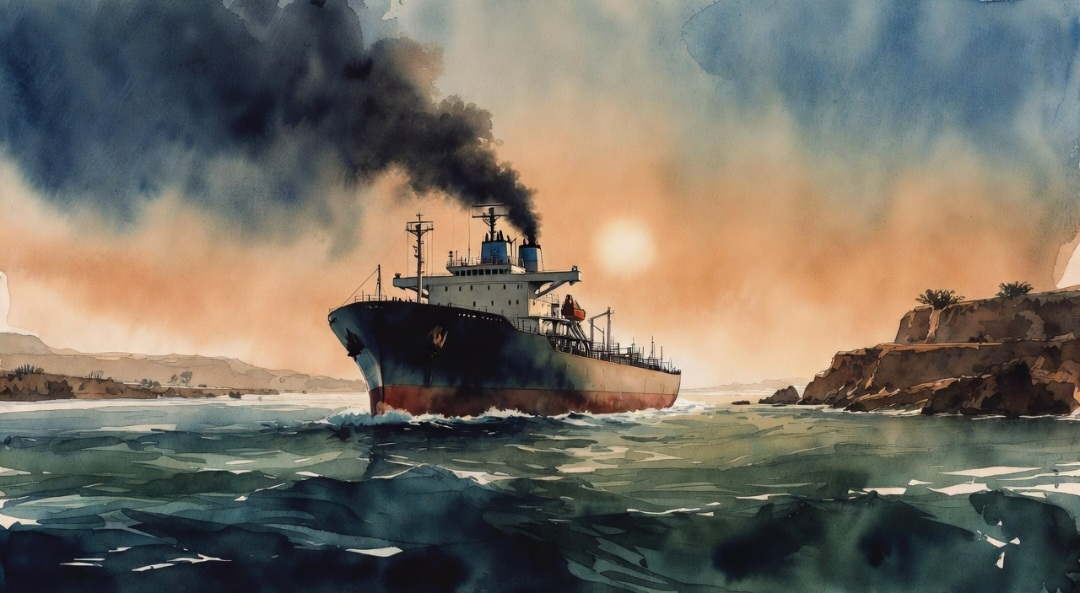
A suezmax tanker became the first to transit the Strait of Hormuz since the Iran war cut daily vessel traffic by 83%, while Goldman Sachs raised Brent forecasts.
The tanker Pola, managed by Dynacom Tankers, switched off its AIS tracker on March 2 as it approached the strait and reappeared off Abu Dhabi the following day, according to LSEG shiptracking data reported by Reuters. The vessel is heading to the port of Jebel Dhanna to load Abu Dhabi Murban crude for delivery to Thailand, according to two trade sources who spoke on condition of anonymity.
The transit is notable for its rarity. Crude tanker traffic through the strait fell to four vessels on March 1 – the day after hostilities broke out – versus an average of 24 a day since January, according to Vortexa vessel-tracking data. That is an 83% drop in a single day.
Why the strait went quiet
The sharp decline in export flows is being driven largely by fear rather than an outright blockade. Shippers and producers have entered a wait-and-see mode following reports of damage to three vessels and sharply higher insurance premiums. The strait itself – a narrow channel connecting the Persian Gulf to the Gulf of Oman – normally handles about a fifth of the world's oil and liquefied natural gas shipments.
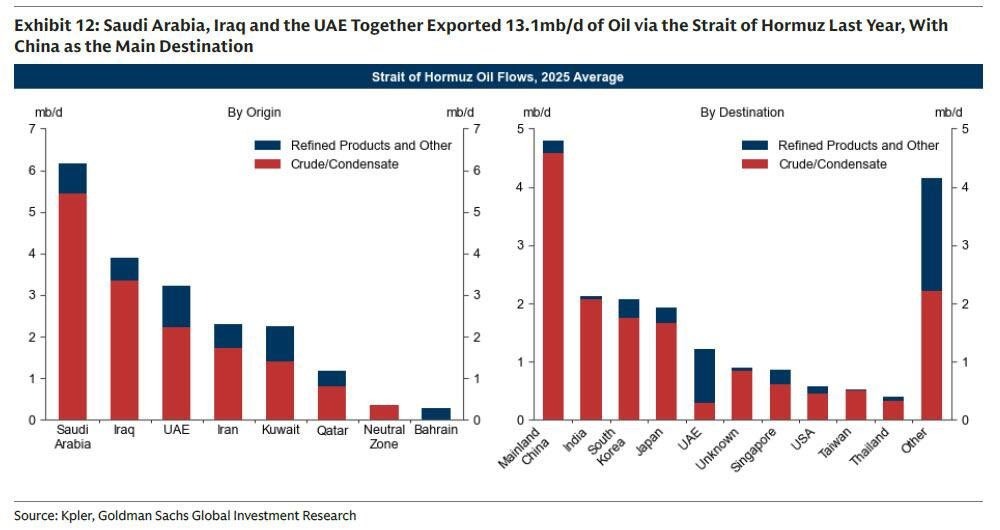
Saudi Arabia, Iraq, and the UAE together exported 13.1 million barrels per day of oil via the Strait of Hormuz last year. The International Energy Agency estimates that 4.2 million barrels per day of that flow can be redirected using existing spare pipeline capacity, leaving roughly 16 million barrels per day at risk from a full closure.
The complication is that the spare capacity sitting in Saudi Arabia, the UAE, and Kuwait is itself largely landlocked behind the chokepoint. As long as the strait remains compromised, that spare capacity cannot be physically deployed to reach global buyers.
Goldman Sachs forecast and risk scenario
Goldman Sachs revised its second-quarter Brent forecast upward on Wednesday by $10 to $76 per barrel, and its WTI estimate by $9 to $71. The bank's analysts assume oil exports through Hormuz will remain at current reduced levels for another five days, recover to 70% over the following two weeks, and return to normal in the two weeks after that.
Under that base case, Goldman estimates around 200 million barrels of Middle Eastern crude production losses and a drawdown of about 76 million barrels in OECD commercial inventories in March – compared with a prior assumption of a 10 million barrel build.
The bank assumes reduced Hormuz exports continue for five more days. If the disruption lasts longer, Brent could hit $100 – tightening global energy markets sharply. Further out, Goldman still sees Brent declining to around $66 by Q4 2026 as the risk premium fades, but acknowledges that lingering uncertainty around Iran and Russia-Ukraine will continue supporting prices through the second quarter.
The U.S. Strategic Petroleum Reserve currently holds around 415 million barrels – more than 200 million barrels below its pre-2022 level – limiting the buffer available if disruptions extend.
What the Pola transit means
A single tanker moving through the strait does not reverse the broader supply picture, but it signals that the passage remains physically navigable and that some operators are willing to test it. Whether others follow will depend on how insurance markets reprice the route over the next several days, and on how the conflict develops on the ground.
Brent has already rallied approximately 34% year-to-date to around $82 per barrel. Goldman's current trading-desk estimate puts a $14 risk premium embedded in that price – corresponding roughly to a full four-week halt in Hormuz flows.
The content on The Coinomist is for informational purposes only and should not be interpreted as financial advice. While we strive to provide accurate and up-to-date information, we do not guarantee the accuracy, completeness, or reliability of any content. Neither we accept liability for any errors or omissions in the information provided or for any financial losses incurred as a result of relying on this information. Actions based on this content are at your own risk. Always do your own research and consult a professional. See our Terms, Privacy Policy, and Disclaimers for more details.
Tags
Articles by this author