New U.S. market rules could reshape spot crypto trading

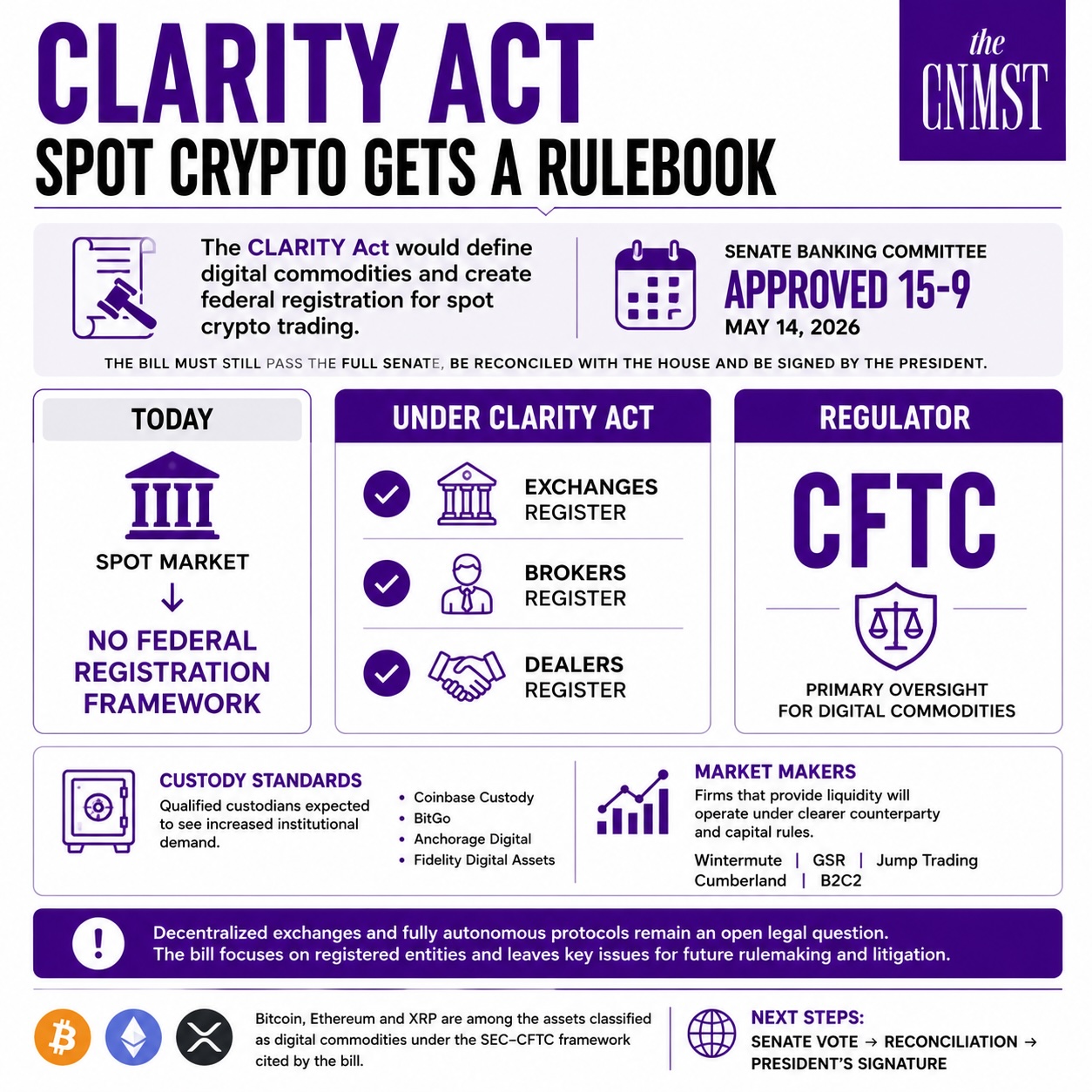
The CLARITY Act, passed by the House in 2025 and approved 15-9 by the Senate Banking Committee on May 14, 2026, would define digital commodities and create federal registration for spot crypto trading.
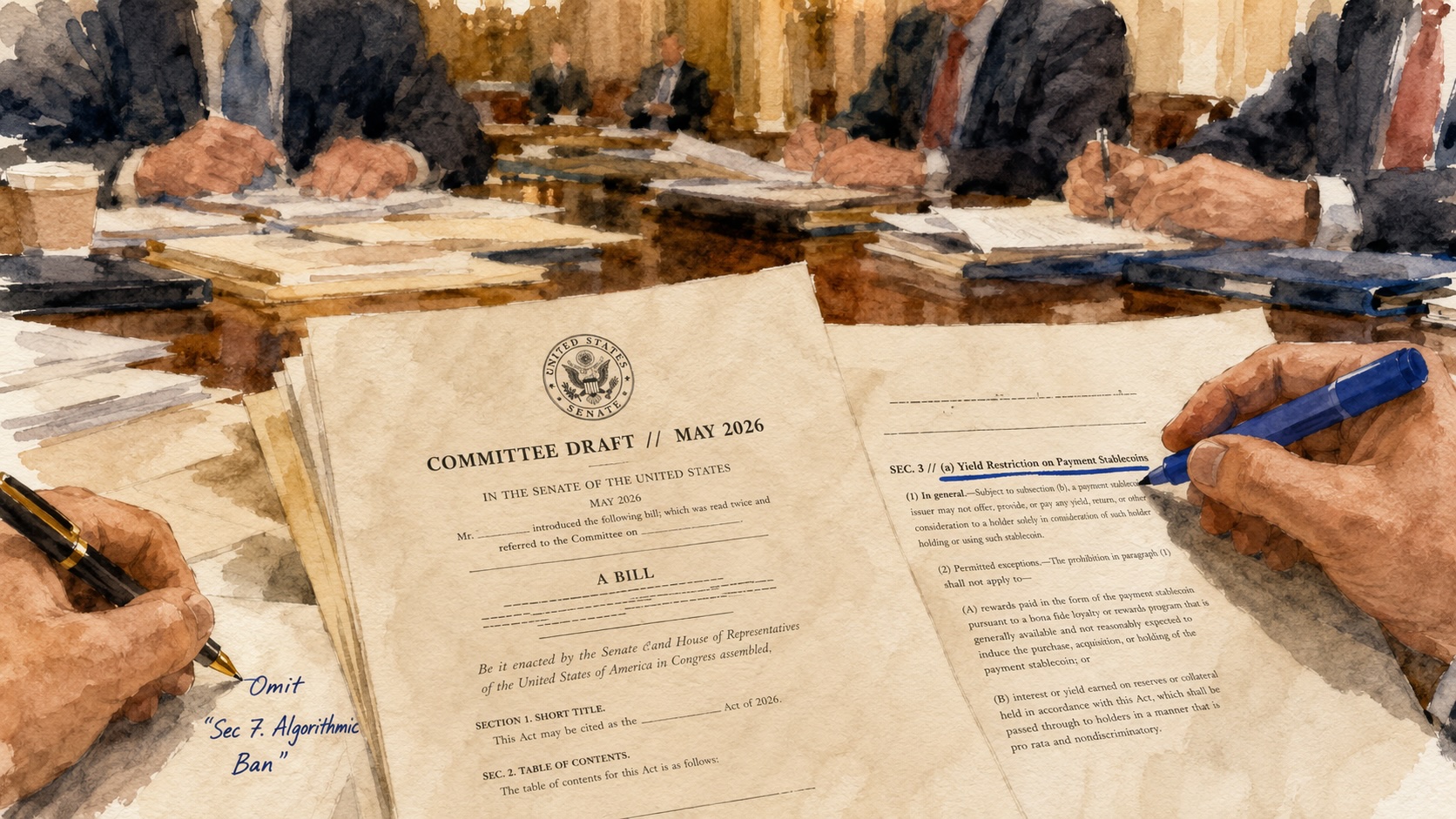
Congress advanced the CLARITY Act after the House approved its version in 2025 and the Senate Banking Committee voted 15-9 on May 14, 2026. The bill would create a legal category for “digital commodities” and establish a federal registration regime for spot exchanges, brokers and dealers under primary Commodity Futures Trading Commission oversight. The measure must still pass the full Senate, be reconciled with the House text and receive the president's signature before becoming law.
The bill would place spot trading of designated digital commodities largely under the CFTC's supervision, while setting custody, disclosure and capital standards for registered venues and intermediaries. It would create an objective process for moving tokens between Securities and Exchange Commission and CFTC jurisdiction. Current federal law gives the CFTC anti-fraud and anti-manipulation authority in spot markets, but lacks a comprehensive registration and supervision framework for spot trading.
Regulators issued a joint SEC-CFTC interpretation in March 2026 that grouped crypto assets into five categories and labeled 16 major tokens, including Bitcoin, Ethereum and XRP, as digital commodities. Supporters of the CLARITY Act say the bill would codify that classification and provide clearer rules for exchanges and intermediaries.
Centralized exchanges that custody customer assets and run private order books would be required to register and meet custody and reporting standards similar to traditional venues. Qualified custodians such as Coinbase Custody, BitGo, Anchorage Digital and Fidelity Digital Assets are expected to receive increased demand from institutional clients that require regulated custody. Market-making firms that provide continuous liquidity, including Wintermute, GSR, Jump Trading, Cumberland and B2C2, would operate under clearer counterparty and capital rules.
Decentralized exchanges present a legal challenge because many run as smart contracts and do not hold user funds. The bill focuses on registered entities, leaving open how fully autonomous protocols, and the developers who maintain them, will be treated. Lawmakers and industry groups have raised questions about how on-chain activity should map to traditional roles such as custody, brokerage or exchange services.
The CLARITY Act follows other legislative and regulatory steps, including the GENIUS Act of July 2025, which created a federal framework for payment stablecoins, and international regimes such as the EU's Markets in Crypto-Assets rules in force since 2024. Remaining issues include cross-border order routing, transaction-dependent token classification and the need for further rulemaking and litigation to define which on-chain activities trigger specific regulatory obligations.
The Senate must bring the bill to the floor and secure 60 votes to overcome a filibuster. Final provisions will depend on Senate amendments and reconciliation with the House version before the bill can be enacted.
The content on The Coinomist is for informational purposes only and should not be interpreted as financial advice. While we strive to provide accurate and up-to-date information, we do not guarantee the accuracy, completeness, or reliability of any content. Neither we accept liability for any errors or omissions in the information provided or for any financial losses incurred as a result of relying on this information. Actions based on this content are at your own risk. Always do your own research and consult a professional. See our Terms, Privacy Policy, and Disclaimers for more details.
Articles by this author