LNG prices in Asia and Europe at risk of 130% spike if Hormuz disruption persists
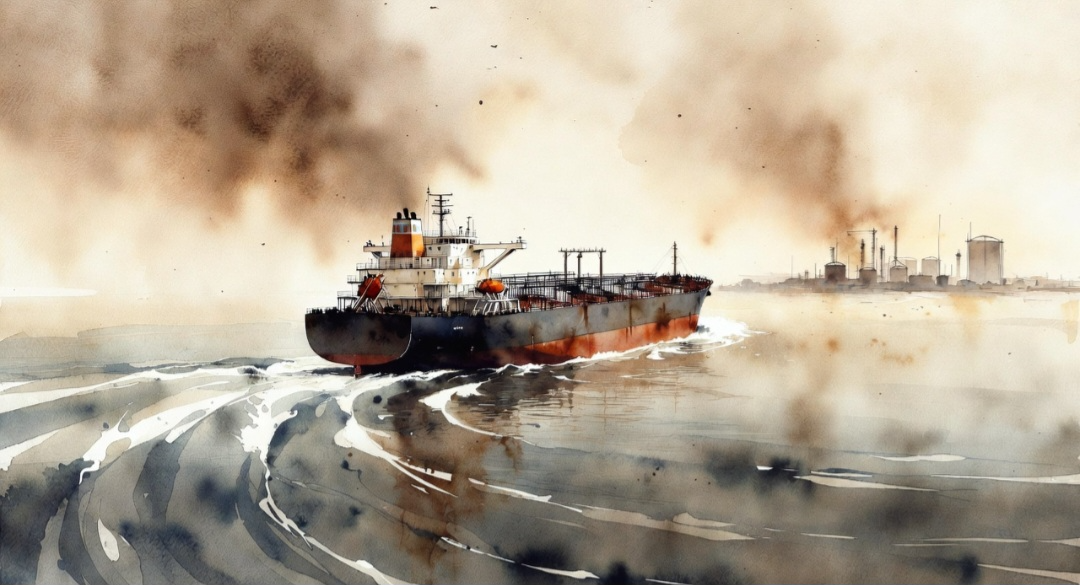
Tankers are diverting. LNG exports out of Qatar are stalling. Goldman Sachs has now calculated the impact a prolonged disruption in the Strait of Hormuz would have on gas markets across Asia and Europe.
Goldman Sachs analysts, in a note dated March 1 and authored by a team including Daan Struyven, calculated that a month-long halt to LNG shipments through the Strait of Hormuz would push Asia's spot natural gas price up 130% to $25 per million British thermal units. Europe's TTF benchmark faces the same trajectory. If the disruption stretches beyond two months, Goldman sees TTF crossing €100/MWh – the level that triggered widespread industrial demand destruction across Europe in 2022.
Gas market benchmarks in both regions have so far priced in little to no Iran-related risk premium, the analysts noted, which leaves significant room for upside shock.
Qatar has no way around Hormuz
Qatar is the world's second-largest LNG exporter after the United States, accounting for roughly 20% of global supply. Every cargo it ships transits the Strait of Hormuz. Unlike oil, which can partially reroute through Saudi Arabia's East-West Pipeline, Qatar's entire export programme – approximately 9.3 billion cubic feet per day – has no viable alternative. The Dolphin Pipeline offers only partial relief, moving 2.6 bcf/day to the UAE with no onward export routing.
Anne-Sophie Corbeau, a researcher at Columbia University's Center on Global Energy Policy, was blunt: there is simply no substitute for the volumes that move through this chokepoint.
The pullback from the strait was immediate. On February 28, nine LNG carriers changed course away from Hormuz within a 6.5-hour window. By Sunday, Japan's largest shipping companies had moved from high alert to a full operational standstill – Nippon Yusen formally suspended all vessel movements through the strait. As of Monday, at least 13 empty LNG carriers that had been positioned to load in Qatar or the UAE had diverted course, according to Bloomberg vessel-tracking data.
Insurance premiums surge as LNG cargoes stall
The financial cost of the disruption is already spreading beyond freight. Marine war insurance premiums for Gulf transits jumped 25–50% over the weekend, according to Marsh estimates, with underwriters issuing policy cancellation notices to vessels in the area. If direct attacks on merchant shipping continue, brokers warned the repercussions across war insurance rates could be severe.
Widespread GPS jamming has added a separate layer of operational risk. Windward reported that more than 1,100 ships in the Middle East Gulf were affected in a single 24-hour period, with vessels erroneously placed at airports, on land, and near a nuclear power plant.
Why US LNG can’t offset a Hormuz shock
ING commodities strategists Warren Patterson and Ewa Manthey wrote Monday that American LNG export capacity is expanding but cannot offset a sudden loss of Persian Gulf volumes on any near-term timeline.
Wood Mackenzie put it in broader terms: 15% of global oil supply and 20% of LNG supply are currently at risk, with oil above $100 a barrel possible if tanker flows aren't restored quickly. Goldman Sachs estimated the current war risk premium in crude has already reached $18 per barrel – equivalent to the expected impact of a six-week full closure of the strait.
Israel's curtailment of production from its own offshore gas fields compounds the regional supply picture further.
Europe's storage in the crosshairs
Goldman calculated that a one-month full halt to Hormuz LNG transit would tighten Northwest European gas inventories by the equivalent of 8% of total storage capacity. With the Northern Hemisphere still in the heating season and European storage levels already stretched, the timing amplifies the pressure considerably.
South Korea, which sourced 69% of its crude imports from the Middle East last year – more than 95% of that moving through Hormuz – has activated 24-hour government monitoring and advised vessels in the area to stand by in safe waters until conditions improve.
The content on The Coinomist is for informational purposes only and should not be interpreted as financial advice. While we strive to provide accurate and up-to-date information, we do not guarantee the accuracy, completeness, or reliability of any content. Neither we accept liability for any errors or omissions in the information provided or for any financial losses incurred as a result of relying on this information. Actions based on this content are at your own risk. Always do your own research and consult a professional. See our Terms, Privacy Policy, and Disclaimers for more details.