Hyperliquid AWS Tokyo validators give locals a speed edge

Glassnode reports Hyperliquid runs 24 validators in AWS Tokyo, giving nearby traders 2–3 ms access and cutting order round trips by about 200 ms compared with Ashburn, Virginia.
Hyperliquid has concentrated its validator set in Japan. New research on March 30 shows the protocol operates 24 validators in Amazon Web Services’ Tokyo region (ap-northeast-1). Traders located near Tokyo can reach the matching layer in 2–3 milliseconds of network time and see roughly 200 milliseconds faster order round trips versus Ashburn, Virginia, according to the measurements.
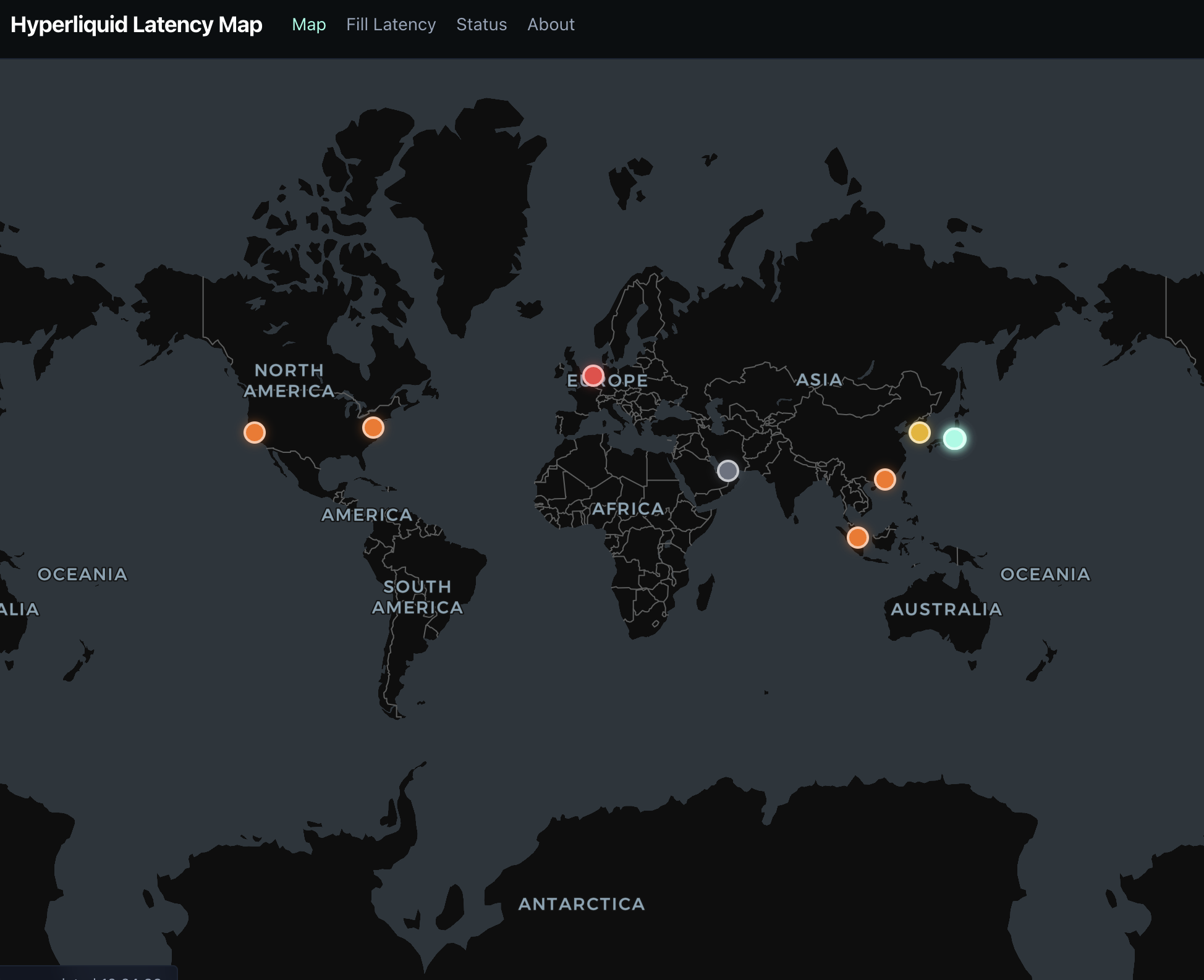
The validators are spread across multiple availability zones within AWS Tokyo. The API layer routes through AWS CloudFront, while the order-matching logic sits with the validator cluster in Japan. In a time-ordered queue, proximity affects how quickly an instruction reaches the matching layer, which can influence queue position.
Latency tests quantify the gap. From AWS Tokyo, the median round trip to place and confirm an order is about 884 milliseconds, with approximately 879 milliseconds spent on server processing and around 5 milliseconds on network transit. From Ashburn, the median rises to roughly 1,079 milliseconds. For users in Europe, network delays can exceed 200 milliseconds compared with Tokyo.
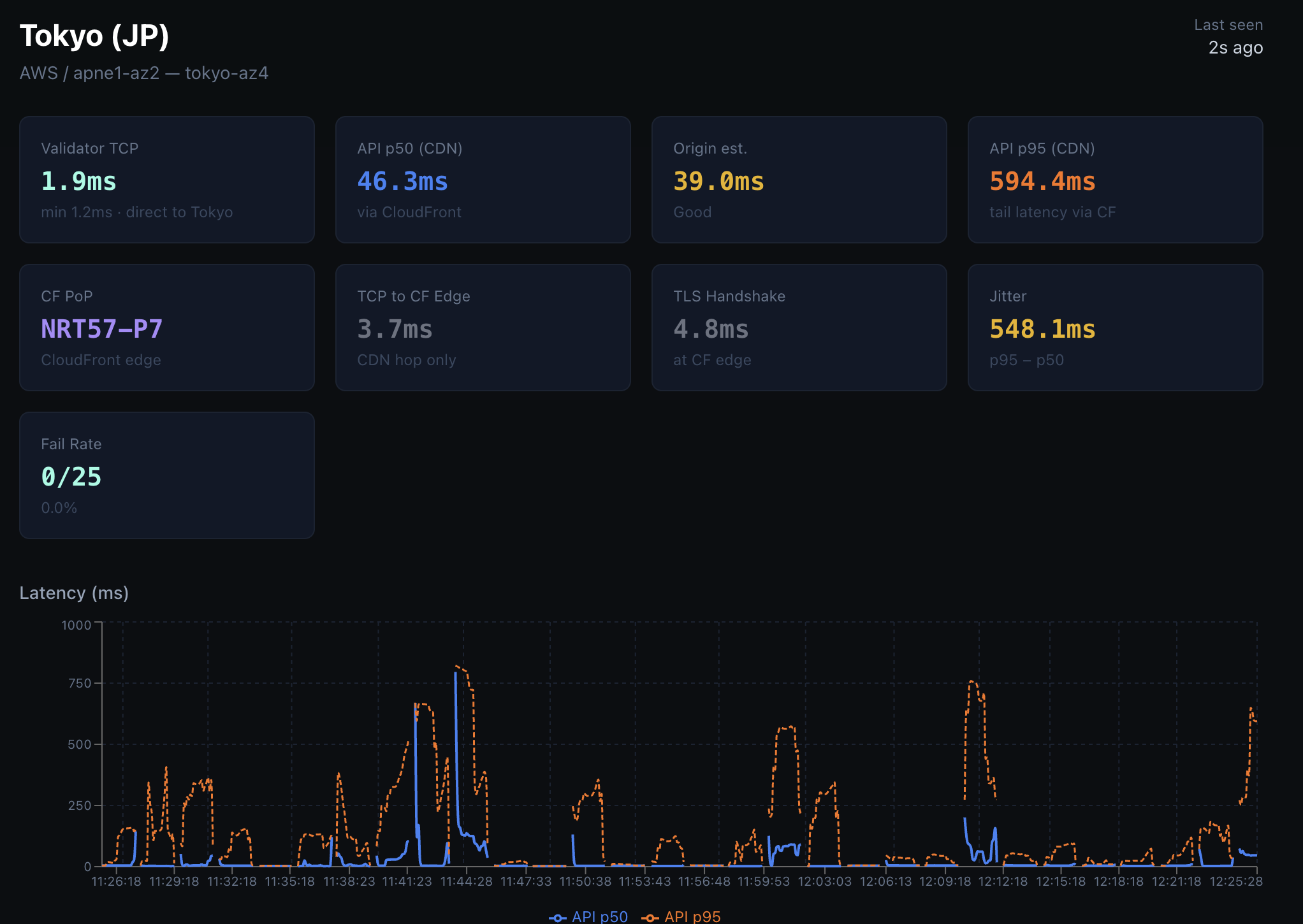
The venue regularly records more than $4 billion in daily perpetuals volume. On that flow, a 200-millisecond difference can recur across many orders. Some traders noted that more complex instructions can change the picture; one reported paths from the Tokyo region with round trips near 400 milliseconds, highlighting how server processing dominates most of the latency.
Hyperliquid’s setup mirrors choices by major centralized exchanges. Binance and KuCoin operate significant infrastructure in AWS ap-northeast-1. BitMEX moved its primary deployment to Tokyo data centers after previously running in Ireland. “We were in Ireland before … but it became more and more difficult because basically everyone except the U.S. players are in the Tokyo data centers,” BitMEX CEO Stephan Lutz recalled. He linked the switch to liquidity gains of roughly 180% in the exchange’s main contracts and up to 400% in some altcoin markets.
Executives cite Japan’s post–Mt. Gox regulatory reset and growing institutional demand as reasons for the cluster. At a Token2049 event in Singapore last year, Blockdaemon CEO Konstantin Richter described the shift:
“Japan had no regulation for a long time, and then it went super stringent, and nothing happened for a long time. But people kept on chiming away, and now they actually have a regulatory infrastructure that’s institutionally scalable and about ready to pop.”
He noted that clients in Japan are prepared to pay for institutional-grade systems.
Reliance on a single cloud region raises operational questions. An AWS Tokyo outage in April 2025 caused service degradation across multiple crypto platforms. Separate data referenced in the research shows around 36% of Ethereum nodes run on AWS.
Traditional markets use controls to curb geographic advantages. The New York Stock Exchange equalizes cable lengths in its Mahwah, New Jersey, data center using optical backscatter reflectometry to the nanosecond. Deutsche Börse normalizes cross-connects to within 2.5 nanoseconds. IEX sends every order through a 350-microsecond delay built from 38 miles of coiled fiber. Europe’s MiFID II requires clock synchronization to within 100 microseconds with external audits of cable-length equalization. Comparable mechanisms are not widely in use in decentralized trading today.
The research finds that open access does not eliminate latency differences when core systems are concentrated in one geography. For traders operating near AWS Tokyo, proximity delivers faster paths to the validator set, earlier placement in time-ordered queues and a higher chance of getting filled first.
The content on The Coinomist is for informational purposes only and should not be interpreted as financial advice. While we strive to provide accurate and up-to-date information, we do not guarantee the accuracy, completeness, or reliability of any content. Neither we accept liability for any errors or omissions in the information provided or for any financial losses incurred as a result of relying on this information. Actions based on this content are at your own risk. Always do your own research and consult a professional. See our Terms, Privacy Policy, and Disclaimers for more details.
Articles by this author