

Is BitMEX Good? Hands-on Impressions After Trading on the Crypto Exchange
Affiliate Disclosure:
The Coinomist publishes reviews and ratings produced by GNcrypto as part of a content partnership. GNcrypto’s editorial team tests platforms independently using real funds. If you click on affiliate links, GNcrypto may earn commissions, which support their testing infrastructure. All opinions, ratings, and assessments are GNcrypto’s. The Coinomist does not influence evaluations and may not share these views.
BitMEX

BitMEX (4.1/5) excels at derivatives trading with advanced risk controls, while trailing mainstream exchanges on spot variety and fiat access.
GNcrypto's Verdict

The GNcrypto analysts tested BitMEX with a real BTC spot trade of about $100: checked the order book, timed execution speed, watched at the spread, and compared the “net” fee shown in the terminal with what actually posted after opening and closing the position. Based on that test and a review of the platform’s terms, the takeaway: BitMEX is a strong, derivatives-first venue with solid liquidity and advanced risk controls – but it’s not the right fit for everyone.
- Deep liquidity on derivatives and tight spreads on major contracts;
- Competitive fees, especially if you often trade as a maker;
- Advanced order types and risk-management tools;
- API, bots, and copy trading for users who don’t want to trade manually.
- A limited spot pair list and a “thinner” spot offering vs. the largest exchanges;
- No full-featured fiat on-ramp;
- An interface and terminology that feel more “pro trader” than beginner-friendly;
- Geo restrictions, including not being available to U.S. residents.
On this page
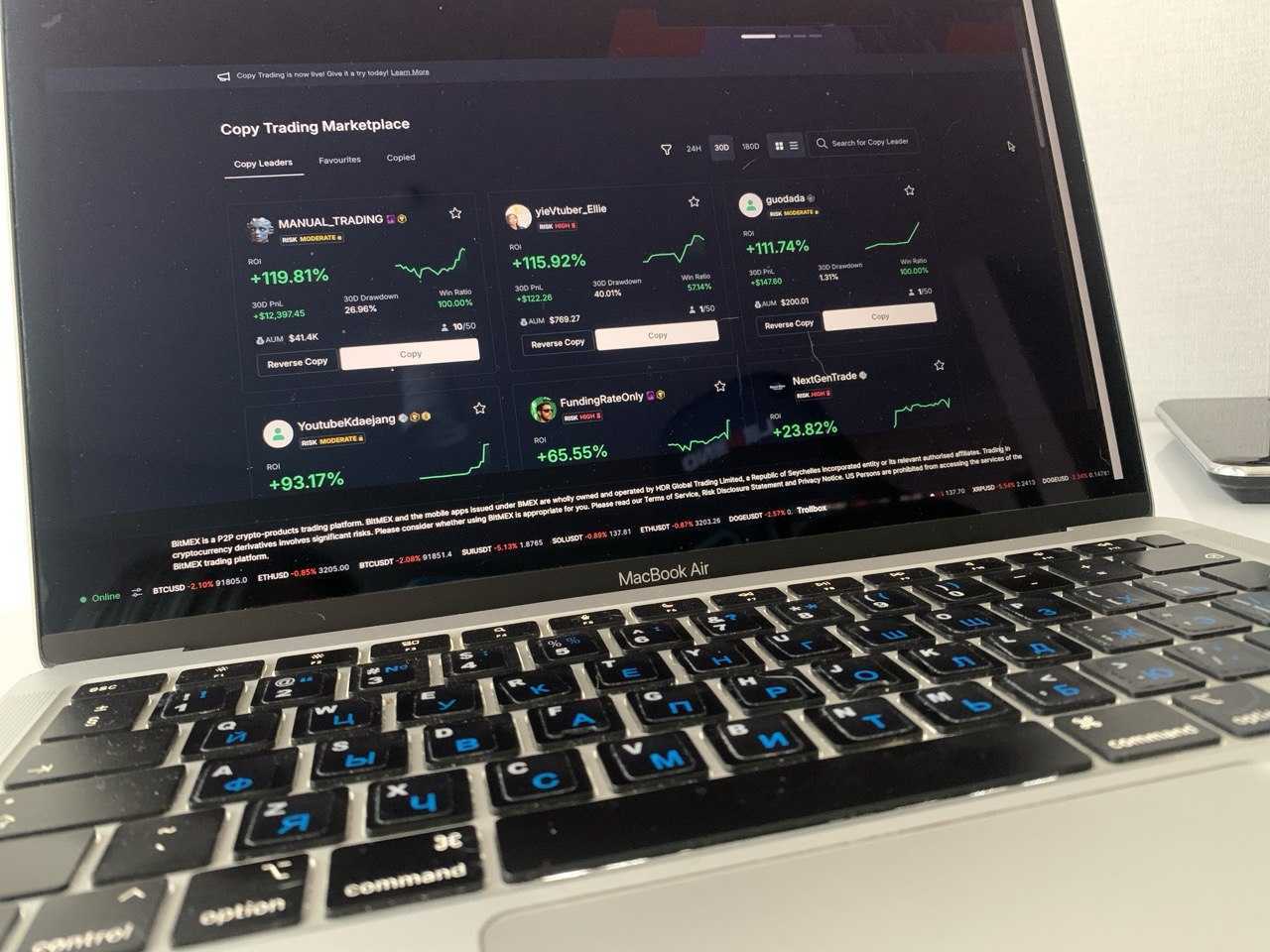
BitMEX is built around margin trading – perpetuals, futures, and advanced order types feel native here, obvious within minutes of logging in. On spot, the coin selection is noticeably smaller, and there’s no mainstream fiat on-ramp (card/bank), so beginners, or anyone who wants easy USD deposits/withdrawals, may find it less convenient.
BitMEX: Pros and Cons
This BitMEX review reveals a clear trade-off: BitMEX excels at derivatives and risk-control tooling, but as an “all-in-one spot hub” it trails Binance and Coinbase.
Strengths:
- Deep liquidity on key derivatives – spreads on XBTUSD stayed under 0.5 during testing;
- Advanced order types and flexible margin settings (cross/isolated) that suit active trading;
- Leverage up to 250× on certain BTC instruments (for users who understand liquidation risk – 0.4% adverse move triggers liquidation at max leverage);
- Trading bots, copy trading, and an API for strategy automation;
- A clean “trader terminal” logic: fewer unnecessary screens, more control over the trade.
Weaknesses:
- A much smaller spot offering by pairs/assets; it may not cover a broad portfolio;
- No mainstream fiat on-ramp (card/bank), which makes “starting from zero” harder;
- The interface and terminology can feel heavy if you’ve never traded derivatives;
- Geo restrictions and strict compliance: the platform is not available to U.S. Persons and is sensitive to jurisdiction;
- The derivatives focus raises the bar for risk management: leverage mistakes get expensive fast.
If your use case is derivatives and precise risk settings, BitMEX’s strengths usually outweigh the drawbacks. If you mainly want a simple “buy-and-hold” experience with lots of altcoins, the limitations will be more noticeable.
BitMEX 2026: User Experience
Opening BitMEX feels like launching a trading terminal, not visiting a crypto storefront – deliberate design choice. It’s clearly designed for traders who understand how margin works and consistently factor in liquidation risk. That comes through immediately in the UX: the focus is on derivatives markets, trading screens, and granular control over trade parameters.
Key observations from testing:
- Derivatives dominate. BitMEX launched as a margin-trading venue in 2014 and still prioritizes perpetual swaps, dated futures, and pre-launch products. Spot exists, but it’s secondary: the pair count and overall breadth are materially smaller than on retail-first exchanges that focus on frequent listings.
- The interface is built for active trading. The order book/depth, advanced order types, and cross vs. isolated margin settings stay front and center. New users may find the layout dense and the terminology intimidating, but for experienced traders it’s a benefit: fewer simplifications and more control points. This BitMEX exchange review confirms what experienced traders report: the platform's matching engine processes orders in under 2 seconds during normal market conditions, delivering the high-speed execution derivatives traders expect.
- Execution and the real “cost to enter.” Analysts opened a $97 BTC spot position using a limit order placed $2 below mid price to check the true entry cost without unnecessary slippage. The order filled in 11 seconds: terminal showed $0.07 fee up front, final amount matched exactly. Sold the same amount two hours later – checked trade history line by line, no surprise charges, and the spread at the time stayed reasonable for a retail-sized order.
If your goal is a simple “buy and hold” flow, BitMEX may feel like overkill. But if you’re here for derivatives and hands-on risk controls, the user experience lines up with what you’d expect from a specialized trading venue.
Test scenario breakdown: Analysts placed 3 derivatives orders on XBTUSD perpetual (100x leverage, $50 notional each) to test execution speed and liquidation alerts.
Order 1: market order filled instantly, liquidation price displayed immediately.
Order 2: limit order $10 below market, filled in 8 seconds when price touched.
Order 3: stop-loss order triggered correctly during 2% drawdown. Conclusion: risk management tools work as advertised, but 100x leverage means 1% adverse move wipes position – precision required.
Is BitMEX Good?
BitMEX has a long and well-known regulatory history in the U.S. In 2020, U.S. regulators (CFTC, FinCEN) accused the platform and its founders of operating an unregistered derivatives venue and running insufficient AML/KYC controls. Those cases ended in a $100M settlement (CFTC) and criminal charges against founders. What matters today: disputes settled, platform now requires strict KYC for everyone and applies geo-blocking.
Access is blocked for U.S. Persons via IP checks and KYC verification, geo-fencing is tighter than pre-2020. That helps reduce the odds of repeating past issues, but the legacy of enforcement actions is still a real compliance consideration for risk-averse users.
On security, BitMEX avoided the major hacks that hit competitors – no customer-fund losses found in public records, custody model emphasizes multi-sig and primarily cold storage, with withdrawals handled through dedicated procedures. Risk assessment depends on your profile: experienced derivatives traders find it a strong tool, as BitMEX reviews consistently highlight, but crypto trading carries inherent risks regardless of platform.
Who BitMEX fits: derivatives traders comfortable with 50x–250x leverage, users who understand liquidation mechanics and position sizing, API traders automating futures strategies, traders outside U.S./restricted jurisdictions seeking advanced order types (iceberg, hidden, post-only).
Who should skip: spot-only traders needing wide asset variety (spot pairs limited vs Binance's 500+), beginners unfamiliar with margin trading (no training wheels – leverage defaults to 10x+), U.S. residents (geo-blocked), users needing fiat on-ramp (no card/bank deposits – crypto-only funding).
Overall BitMEX Rating
| Criteria | Rating (out of 5) |
|---|---|
| Liquidity & Volume | 4 |
| Fees & Total Cost to Trade | 5 |
| Asset Selection & Trading Pairs | 4 |
| Execution Quality / Market Quality | 5 |
| Tools & Order Controls | 5 |
| Fiat Access & Minimum Trade Size | 3 |
| Reliability & Transparency | 4 |
| Total Score | 4,1 |
Methodology – How We Tested BitMEX
The GNcrypto testing team uses a weighted, category-based model, collect standardized data from each platform (public pages + hands-on testing), and convert that into a 1.0–5.0 star score in 0.1 increments.
To keep this reviews independent, the GNcrypto testing team ran:
- A real-money test (~$200 BTC spot buy and sell) to observe spreads, execution quality, slippage and realized fees.
- Order book checks on major pairs during normal market conditions.
- A line-by-line review of the published fee schedules, funding-rate mechanics and BMEX token incentives.
- A review of public regulatory actions, enforcement outcomes and the platform’s current compliance posture.
- Comparison of product range, tools and UX with other major derivatives-focused exchanges.
The GNcrypto testing team wrote this review from the perspective of active traders who care about costs, reliability and risk as much as about headline leverage. This review shows what trading on BitMEX actually feels like in 2025.
Categories & Weights
- Liquidity & Volume – 25%
- Fees & Total Cost to Trade – 25%
- Asset Selection & Trading Pairs – 15%
- Execution Quality (Market Quality) – 10%
- Tools & Order Controls – 10%
- Fiat Access & Minimum Trade Size – 5%
- Reliability & Transparency – 10%
Latest News




Recommended Articles/Reviews





The content on The Coinomist is for informational purposes only and should not be interpreted as financial advice. While we strive to provide accurate and up-to-date information, we do not guarantee the accuracy, completeness, or reliability of any content. Neither we accept liability for any errors or omissions in the information provided or for any financial losses incurred as a result of relying on this information. Actions based on this content are at your own risk. Always do your own research and consult a professional. See our Terms, Privacy Policy, and Disclaimers for more details.
