Clarity Act to define U.S. crypto market structure

The Clarity Act would spell out which U.S. regulator oversees different digital assets and set rules for trading platforms, custody, clearing and reporting.
A bill introduced in Congress would define how U.S. law treats different digital assets and set rules for trading platforms, custody, clearing and reporting. Lawmakers began committee-level review in the current congressional session and have signaled hearings to gather technical input from regulators, crypto exchanges, custody providers and industry groups.
Under the text being discussed, tokens would be classified using a functional test that looks at how a token is marketed and used rather than applying a single label. That classification would determine whether the Securities and Exchange Commission or the Commodity Futures Trading Commission has primary authority for a given token.
The bill would create registration pathways for trading platforms and intermediaries. Registered venues would face market surveillance and anti-manipulation requirements, regular reporting obligations and standards similar to existing securities and commodities markets. Custody rules in the proposal would require segregation of customer assets, insurance or capital buffers and independent audits, along with recordkeeping obligations for custodians and broker-dealers.
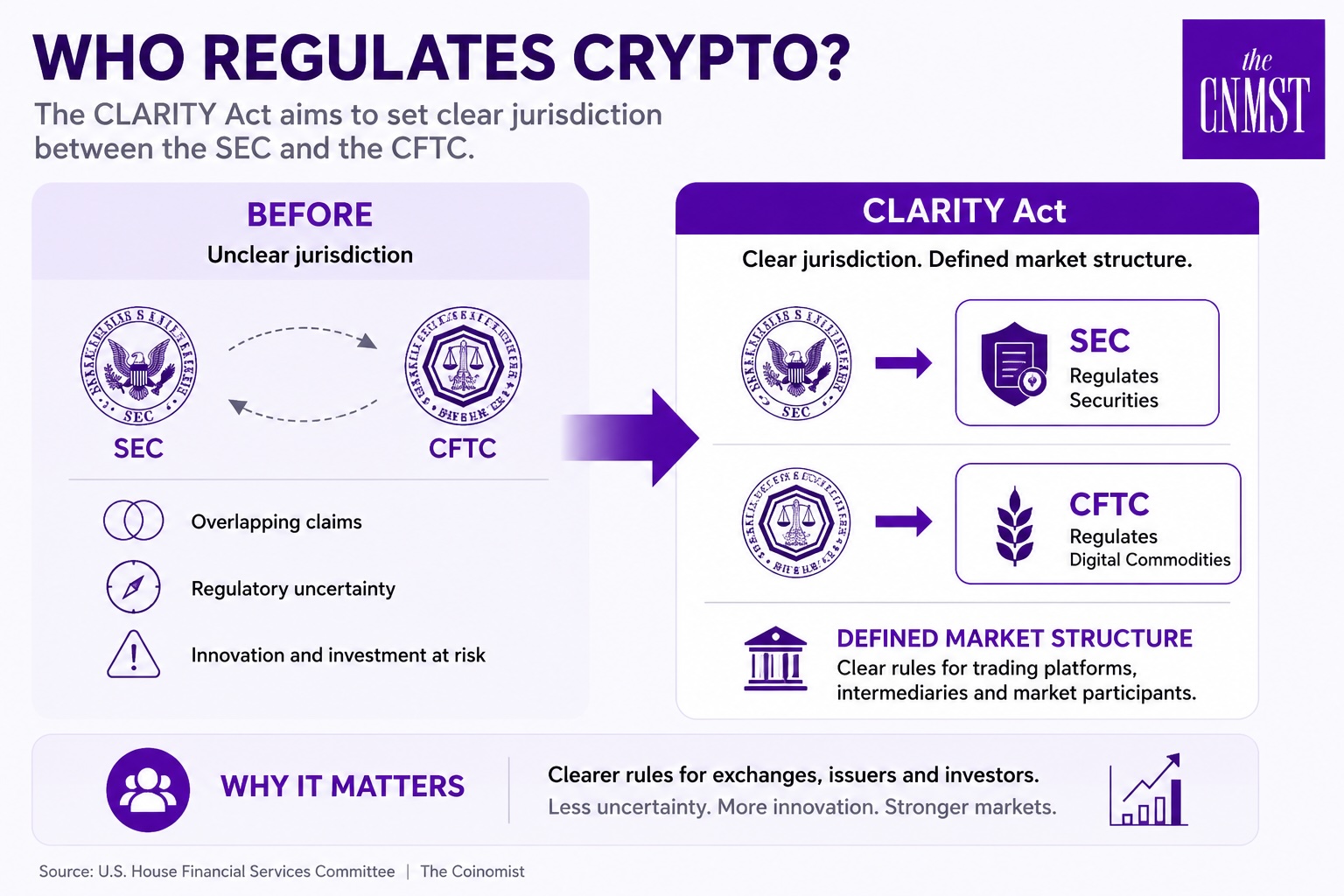
Provisions under discussion include trade reporting and public price dissemination, standards for best execution and order handling for brokers, and frameworks for central clearing or settlement where netting could reduce systemic risk. Agencies would be instructed to coordinate on cross-cutting topics such as derivatives on tokens, stablecoin arrangements and cross-border transactions.
Sponsors included a phased timetable for agencies to issue implementing rules and for firms to meet new requirements. The bill would set transition periods for entities that must register or hold additional capital so they have time to comply. If passed by both chambers of Congress and signed by the president, the statute would apply across the United States and supersede existing agency guidance.
Supporters say the bill aims to reduce legal uncertainty that has limited institutional participation and complicated enforcement. Critics argue the requirements could raise costs for smaller firms, may not fit technologies that change rapidly and could push some trading and liquidity offshore.
The proposal follows a series of enforcement actions and litigation centered on whether specific tokens are securities. The Clarity Act is one of several legislative efforts addressing crypto, alongside separate proposals on stablecoin rules, tax reporting and investor protection.
The measure would affect retail and institutional investors, centralized exchanges, decentralized trading venues, market makers, custody providers and clearing agents. Expected obligations for custodians include asset segregation, insurance or capital reserves and third-party audits. Trading venues could face registration, routine reporting, surveillance systems to detect market abuse and requirements to disclose fees and execution quality.
The content on The Coinomist is for informational purposes only and should not be interpreted as financial advice. While we strive to provide accurate and up-to-date information, we do not guarantee the accuracy, completeness, or reliability of any content. Neither we accept liability for any errors or omissions in the information provided or for any financial losses incurred as a result of relying on this information. Actions based on this content are at your own risk. Always do your own research and consult a professional. See our Terms, Privacy Policy, and Disclaimers for more details.
Articles by this author