Stocks sink as oil jumps on Iran war; Nasdaq in correction

U.S. stocks fell Thursday as oil jumped on Iran war fears. The Nasdaq slid 2.4% into correction and the S&P 500 fell 1.7%, its worst day since January. Brent settled at $101.89.
U.S. stocks dropped Thursday as renewed concern about the war with Iran pushed oil prices higher and knocked major indexes lower in New York trading.
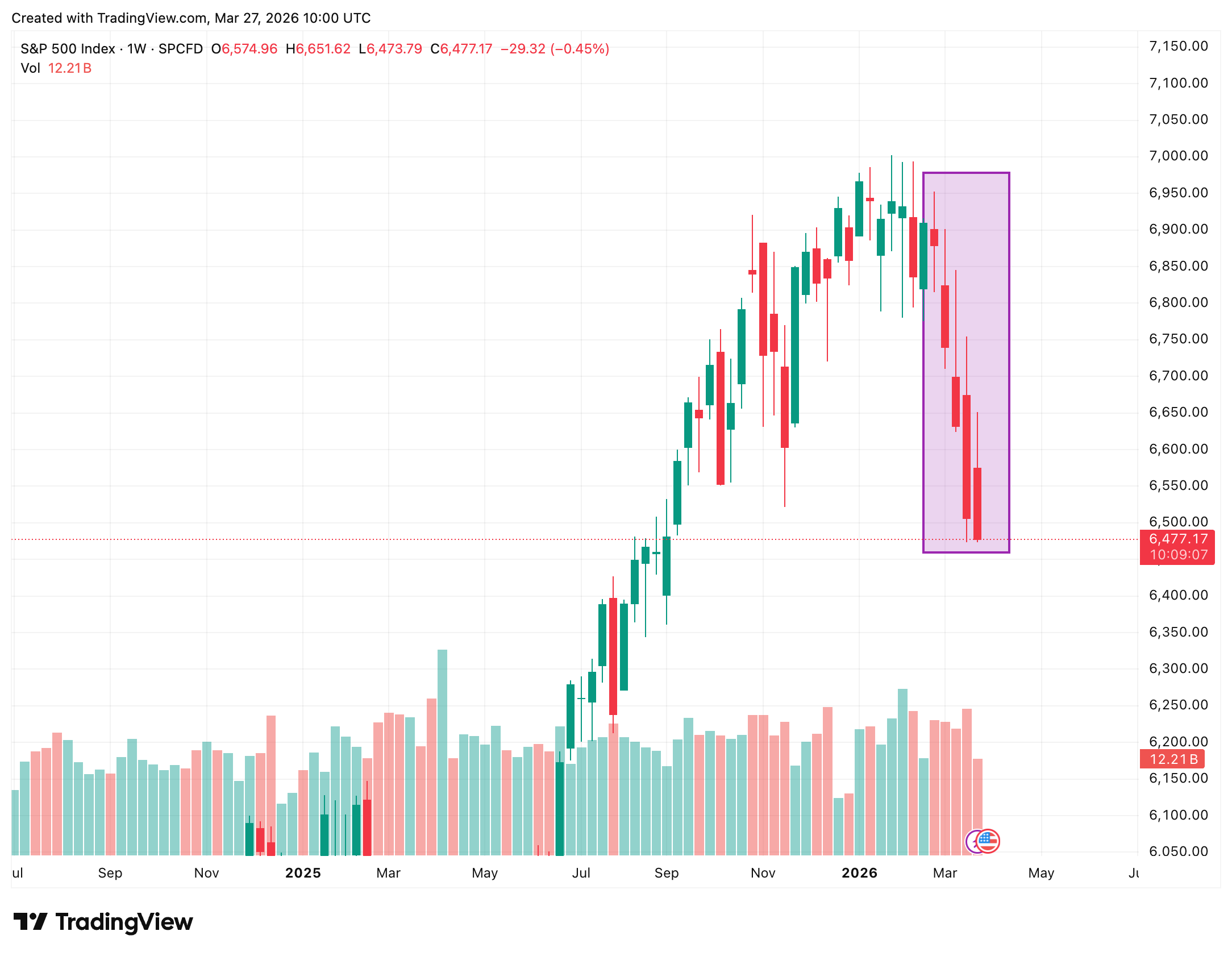
The Dow Jones Industrial Average fell 469 points, the S&P 500 lost 1.7% in its worst session since January, and the Nasdaq Composite slid 2.4%, ending more than 10% below its record from early this year. A decline of at least 10% from a recent peak is known as a correction. The S&P 500 is on pace for a fifth straight weekly loss, which would be the longest since mid-2020.
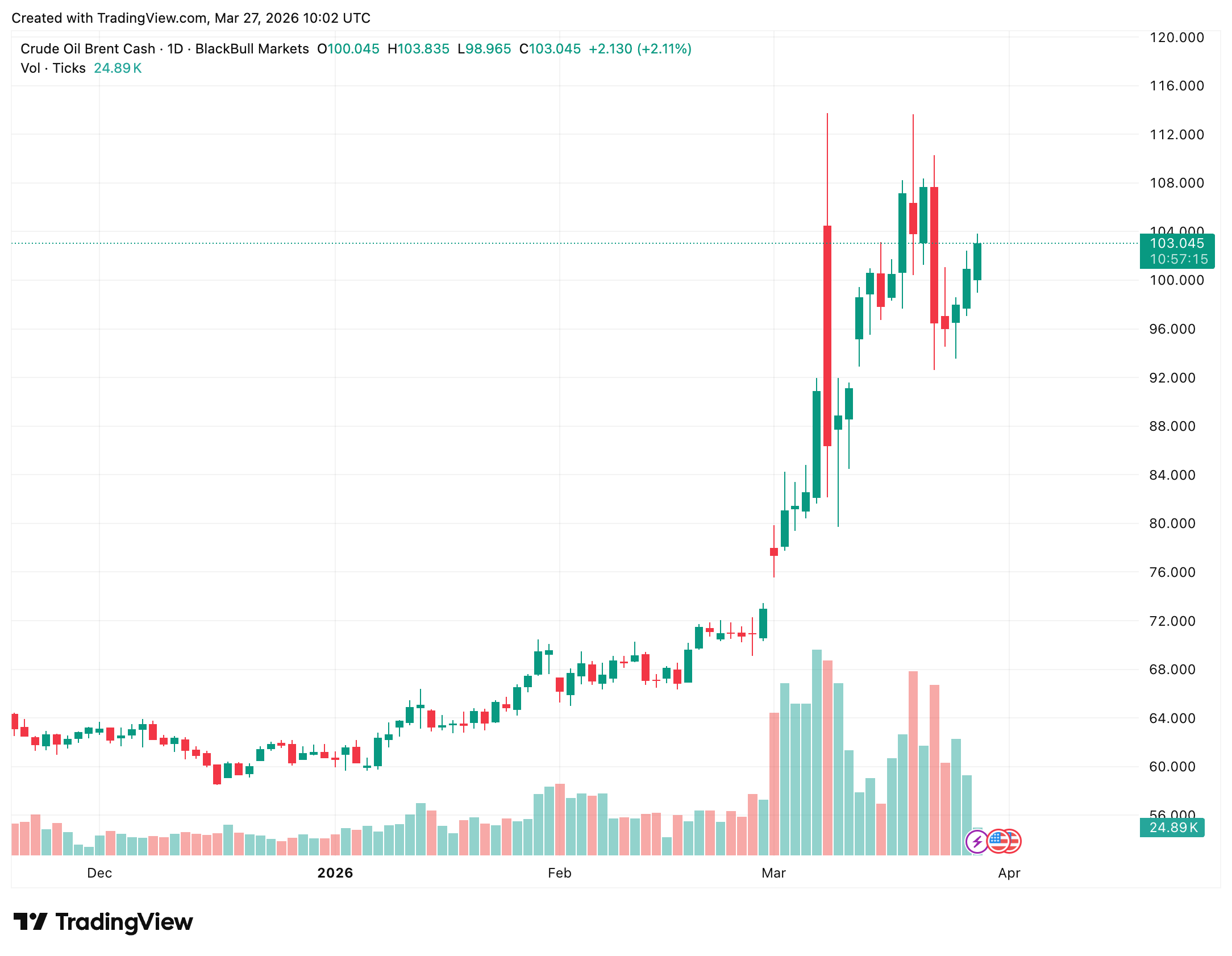
Oil advanced after signs Iran is tightening control of the Strait of Hormuz, the narrow waterway that handles about one-fifth of global oil shipments. Brent crude rose 5.8% to settle at $103.00 a barrel, while U.S. benchmark crude gained 4.6% to $94.48. Prices later eased from the day’s highs, with Brent slipping back toward $100.
Early-week optimism about possible talks to end the conflict faded after Iran rejected the notion of direct negotiations and dismissed a U.S. ceasefire proposal conveyed through Pakistan. Fighting persisted, and additional U.S. troops moved closer to the region. “They better get serious soon, before it is too late, because once that happens, there is NO TURNING BACK, and it won’t be pretty!” President Donald Trump wrote on his social media account Thursday morning. Minutes after markets closed, he indicated he would delay a threat to “obliterate” Iranian power plants to April 6 to allow more time for discussions, adding, “Talks are ongoing and, despite erroneous statements to the contrary by the Fake News Media, and others, they are going very well.”
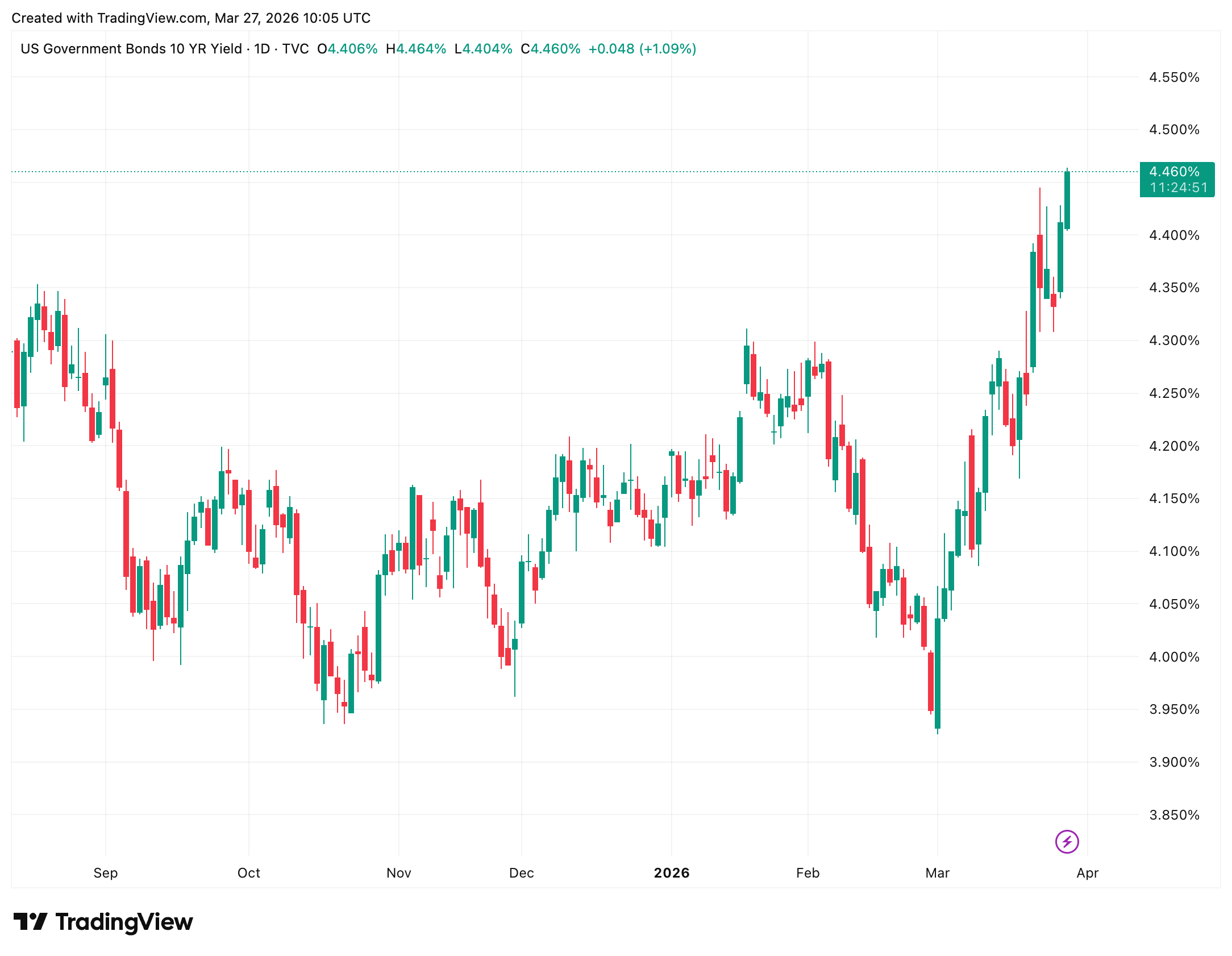
Bond yields climbed alongside energy prices. The 10-year Treasury yield rose to 4.43% from 4.33% late Wednesday and from 3.97% before the war began, before giving back part of the move later in the day. Higher Treasury yields tend to lift borrowing costs for mortgages and business loans.
Economic data pointed to a labor market that remains firm. New applications for unemployment benefits ticked up last week but stayed low by historical standards. Expectations for interest-rate cuts this year have faded as higher energy costs increase the risk of faster inflation.
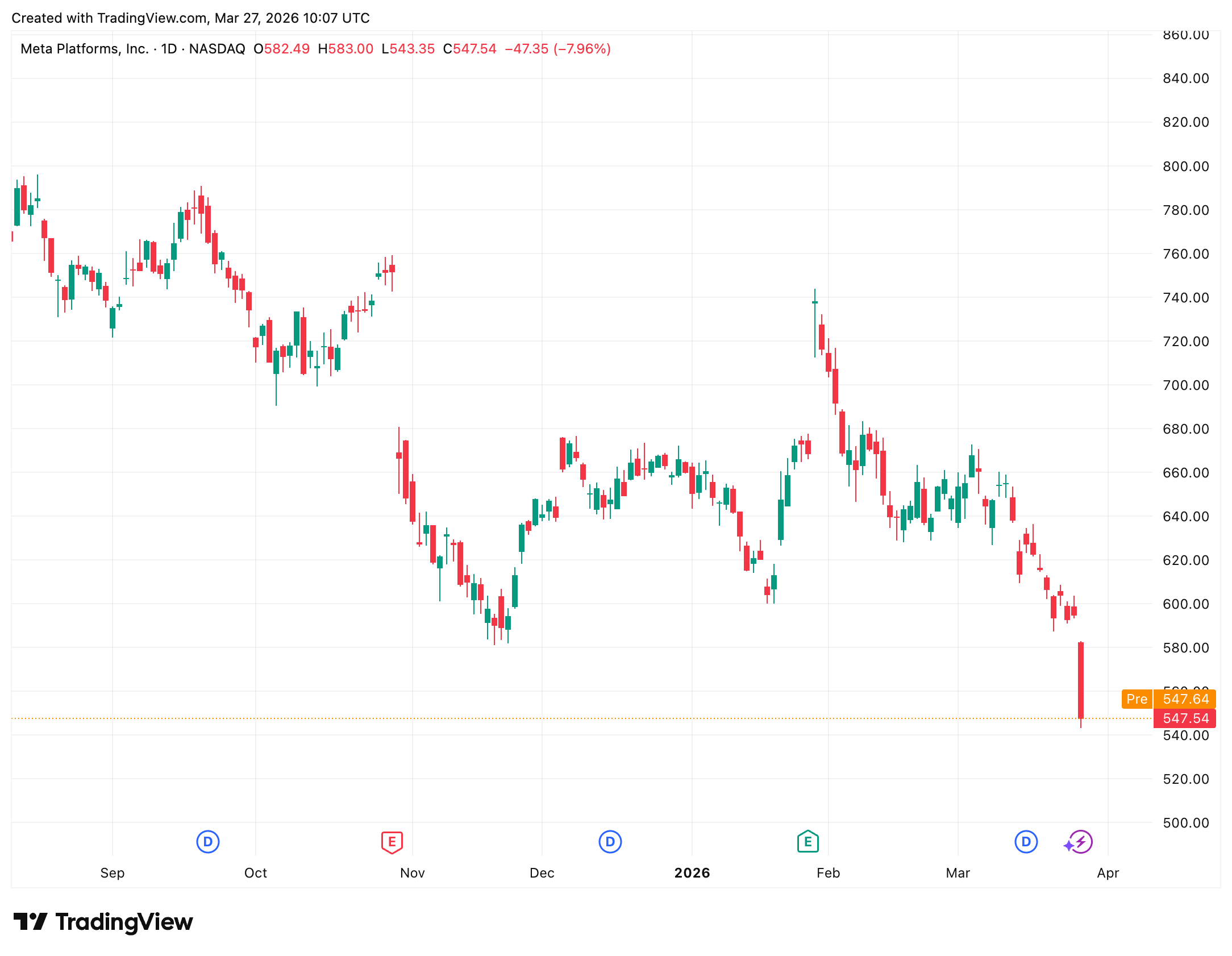
Technology stocks weighed on the market. Meta Platforms fell 8%, and Alphabet dropped 3.4% after a jury found Instagram and YouTube liable in a social-media addiction case. Nvidia declined 4.2%, Amazon lost 2%, and Apple edged up 0.1%.
In materials, Commercial Metals slipped 4.7% after quarterly profit missed analysts’ estimates. Chief Executive Peter Matt pointed to severe weather in North America during the quarter and noted that “underlying market conditions looked favorable.”
At the close, the S&P 500 fell 114.74 points to 6,477.16, leaving it 7.2% below its record set a couple of months ago. The Dow declined 469.38 points to 45,960.11, and the Nasdaq dropped 521.74 points to 21,408.08.
Overseas markets also weakened. Germany’s DAX fell 1.5%, Hong Kong’s Hang Seng lost 1.9%, South Korea’s Kospi slid 3.2%, and Japan’s Nikkei 225 eased 0.3%.
Oil’s climb from roughly $70 a barrel before the conflict to triple digits for Brent has raised costs for businesses and threatened household budgets. Reports that Iran is operating a de facto toll system for tankers at the Strait of Hormuz have lowered expectations for a near-term normalization of shipments from the Persian Gulf.
The stock market’s pullback has unfolded over five weeks, beginning before fighting intensified, as investors contended with higher bond yields, volatile energy prices, and mounting legal and regulatory pressures on large technology firms.
The content on The Coinomist is for informational purposes only and should not be interpreted as financial advice. While we strive to provide accurate and up-to-date information, we do not guarantee the accuracy, completeness, or reliability of any content. Neither we accept liability for any errors or omissions in the information provided or for any financial losses incurred as a result of relying on this information. Actions based on this content are at your own risk. Always do your own research and consult a professional. See our Terms, Privacy Policy, and Disclaimers for more details.
Tags
Articles by this author