Oil rises on Hormuz risk; Trump urges help, IEA readies release

Brent settled at $104.41 and WTI at $99.25 as traders weighed disruption risk in the Strait of Hormuz. Trump urged nations to help secure the route, and the IEA prepared a 400+ million-barrel release.
Oil prices rose on renewed risks to shipments through the Strait of Hormuz. Brent settled at $104.41 a barrel, up $1.27, or 1.2%, after a $2.68 gain in the prior session. U.S. West Texas Intermediate closed at $99.25, up 54 cents, or 0.6%, after nearly $3 on Friday. Both benchmarks have advanced more than 40% this month, reaching the highest levels since 2022.
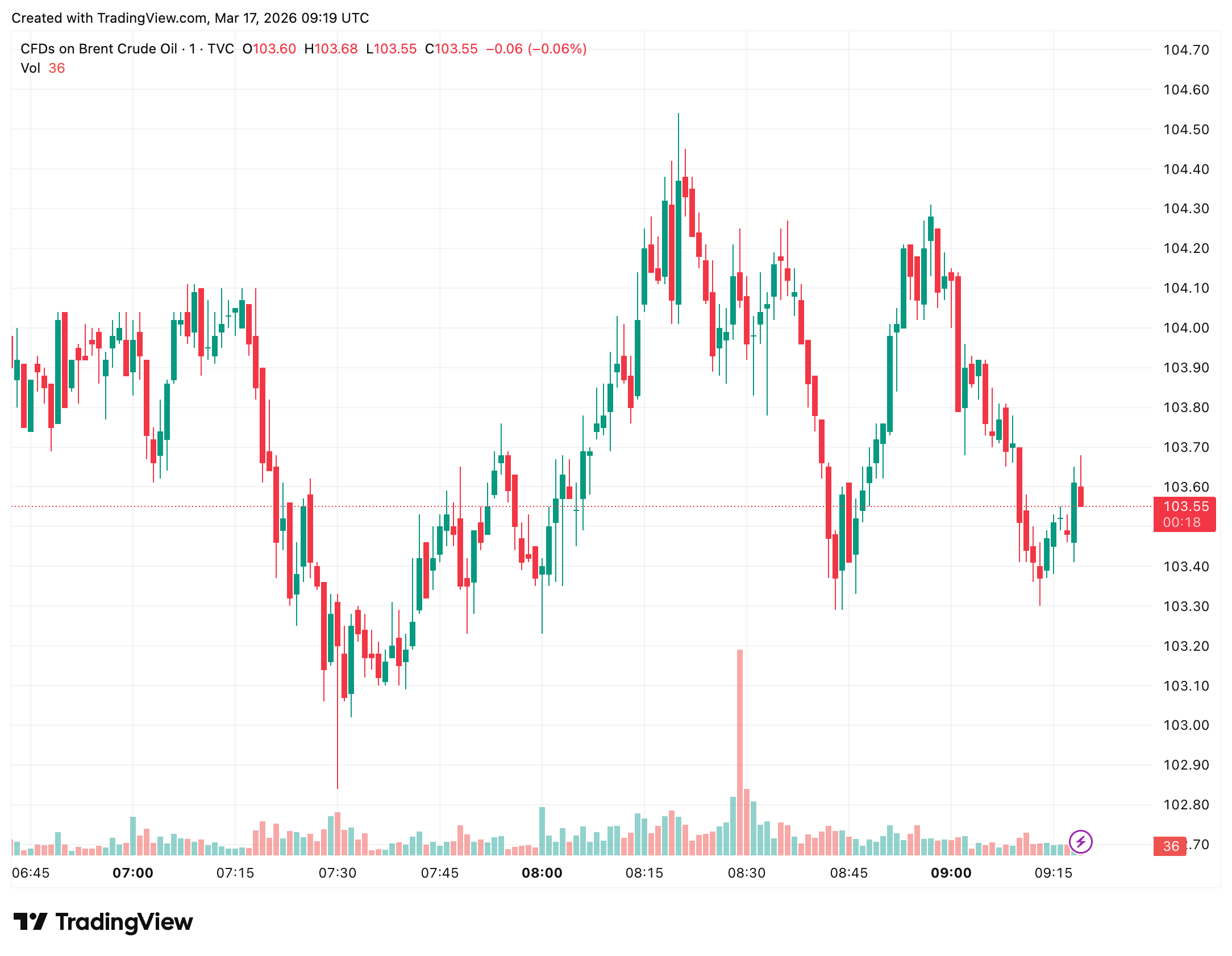
Traders focused on threats to Middle East oil infrastructure and transport lanes following U.S. and Israeli strikes on Iran. Tehran halted shipping through the Strait of Hormuz, a narrow channel that typically carries about one-fifth of global oil supply, raising concern about near-term availability.
Over the weekend, Trump warned of further strikes on Iran’s Kharg Island, which handles about 90% of the country’s crude exports, after earlier hits on military targets there. Soon after, Iranian drones targeted an oil terminal in Fujairah in the United Arab Emirates. Loading operations in Fujairah later resumed, though it was unclear whether full capacity had returned. Outside the strait, Fujairah ships about 1 million barrels per day of the UAE’s Murban crude, equal to roughly 1% of global demand.
Trump urged other countries to help protect the energy corridor and noted that Washington is in talks with several governments about policing the waterway. He also indicated that the United States remains in contact with Iran while questioning Tehran’s readiness for substantive talks.
The International Energy Agency outlined plans for a record draw from emergency oil reserves, stating that more than 400 million barrels will start reaching the market soon. The release is designed to counter price spikes linked to the conflict and to provide a buffer while shipping and production face intermittent disruptions.
Despite recent strikes being directed at military sites rather than energy assets, infrastructure around the Gulf remains exposed. With most non-Iranian flows through the Strait of Hormuz curtailed, any further incident could interrupt the remaining shipments. Market participants tracked these risks alongside the timing of the IEA’s release and government efforts to strengthen maritime security.
The content on The Coinomist is for informational purposes only and should not be interpreted as financial advice. While we strive to provide accurate and up-to-date information, we do not guarantee the accuracy, completeness, or reliability of any content. Neither we accept liability for any errors or omissions in the information provided or for any financial losses incurred as a result of relying on this information. Actions based on this content are at your own risk. Always do your own research and consult a professional. See our Terms, Privacy Policy, and Disclaimers for more details.
Tags
Articles by this author