Gold sinks 11% in worst week since 1983

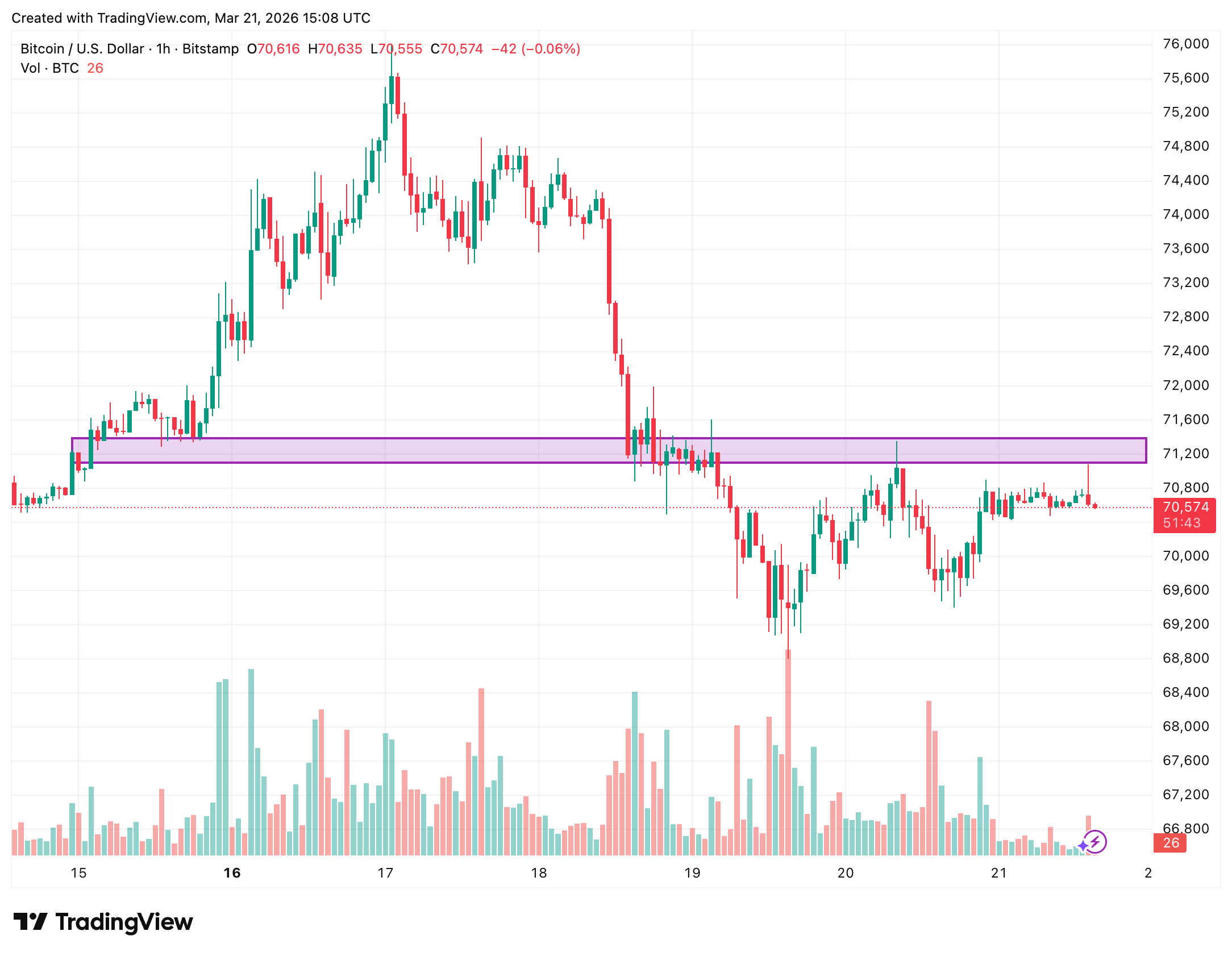
Gold fell 11% in the Mar. 16–20 week to about $4,488 per ounce, the steepest weekly drop since 1983. Since late Feb., Bitcoin is up 11.6% to near $70,535.
Gold prices slumped 11% during the week of March 16–20, finishing near $4,488 per ounce. The decline was the metal’s largest weekly loss since 1983 and erased more than $2 trillion in market value. The drop followed rising expectations that U.S. interest rates will stay higher for longer.
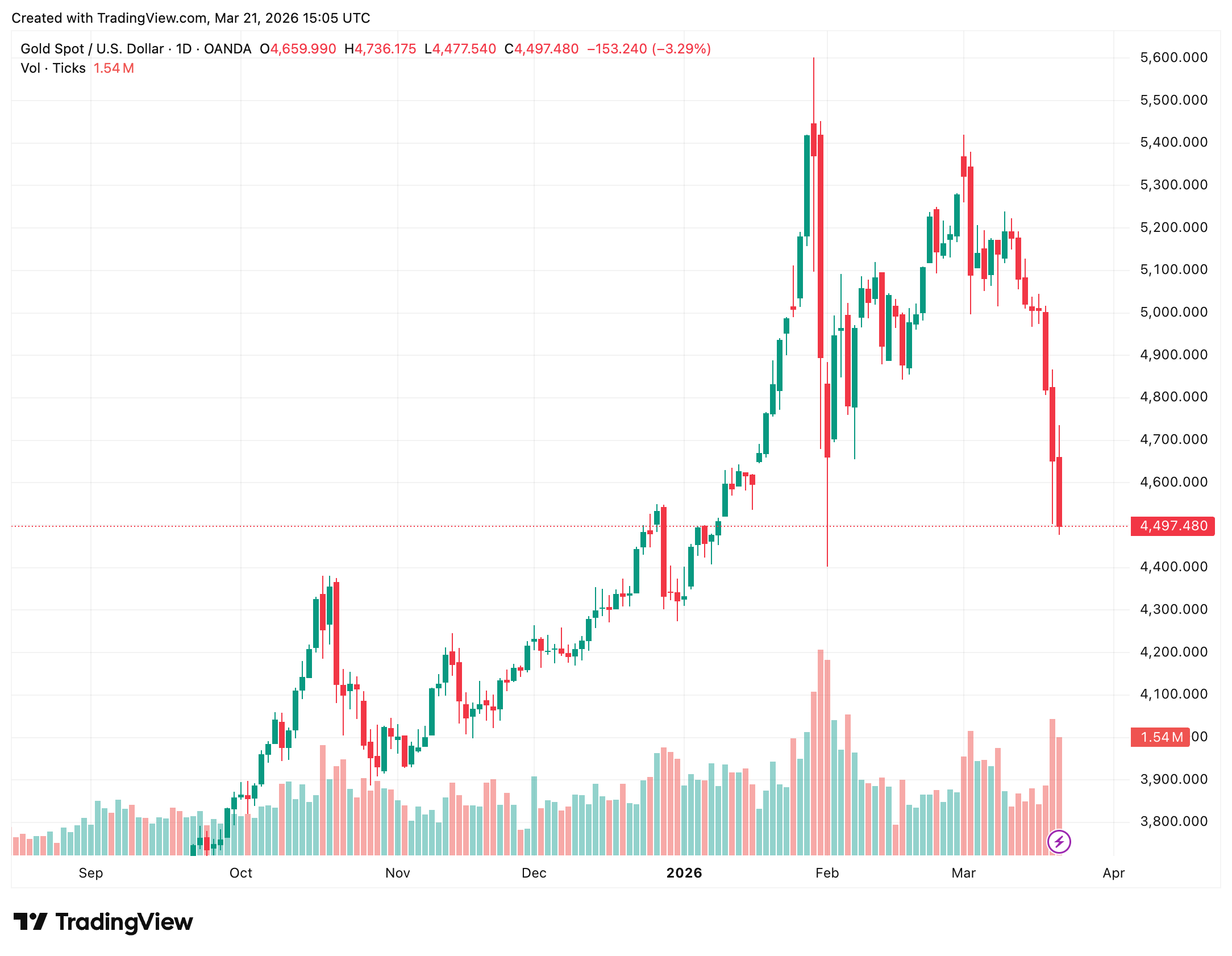
The selloff topped the late-January slide, when prices fell from roughly $5,320 to $4,650 in a matter of days. Since Feb. 28, when U.S.-Israeli strikes on Iran began, gold has fallen more than 15% from record levels near $5,500.
Energy supply risks have been central to the shift. Disruptions to shipments through the Strait of Hormuz and higher oil prices have pushed up inflation expectations, reinforcing the case for the Federal Reserve to keep rates elevated. Fed Chair Jerome Powell has indicated that inflation could remain firm in the near term because of energy pressures.
Higher rates raise the opportunity cost of holding gold, which does not pay interest, and can steer capital toward bonds and other income-producing assets.
Signals from the security front remain mixed. On March 20, President Trump raised the possibility of scaling back military efforts, while the U.S. has continued to deploy additional troops and conduct airstrikes in the region.
While gold has fallen, Bitcoin has strengthened in recent weeks. Since late February, it has gained about 11.6% and was recently trading near $70,535. Over the past 12 months, gold is up 48.5% compared with a 16.5% decline for Bitcoin.
Some investors are reassessing hedges and perceived stores of value in light of firmer inflation and tight policy settings. The backdrop has parallels with the early 1980s, when aggressive rate increases under Paul Volcker coincided with a drop in gold from about $850 to $300 per ounce.
In the near term, market focus is on oil benchmarks, shipping conditions in the Gulf, and upcoming inflation data.
The content on The Coinomist is for informational purposes only and should not be interpreted as financial advice. While we strive to provide accurate and up-to-date information, we do not guarantee the accuracy, completeness, or reliability of any content. Neither we accept liability for any errors or omissions in the information provided or for any financial losses incurred as a result of relying on this information. Actions based on this content are at your own risk. Always do your own research and consult a professional. See our Terms, Privacy Policy, and Disclaimers for more details.
Articles by this author