

Phemex Com Reviews 2026: Fees, Premium Model, and Safety
Affiliate Disclosure:
The Coinomist publishes reviews and ratings produced by GNcrypto as part of a content partnership. GNcrypto’s editorial team tests platforms independently using real funds. If you click on affiliate links, GNcrypto may earn commissions, which support their testing infrastructure. All opinions, ratings, and assessments are GNcrypto’s. The Coinomist does not influence evaluations and may not share these views.
Phemex

Phemex is a strong pick if you want fast execution, pro-grade tools, and the option to cut spot fees to zero with Premium. However, card buys can be expensive, and its track record includes a hot-wallet incident and strict regional restrictions.
GNcrypto's Verdict

Phemex is a centralized exchange built for active, non U.S. traders, with a fast trading terminal and a Premium plan that can reduce spot fees to 0% within program limits. GNcrypto found the interface responsive and execution smooth on major pairs. Сard buys can cost more. It suits high-frequency spot traders and derivatives users who value speed and pro-grade order controls.
- 0% spot fees with Premium membership (within stated limits)
- High-speed CrossEngine matching engine (claimed 300k TPS)
- Customizable, pro-style trading dashboard
- Card buys can be pricey (often ~3.5% all-in, depending on provider)
- Strict availability limits in key regions, including the U.S. and U.K.
- Security track record includes a hot-wallet incident
On this page
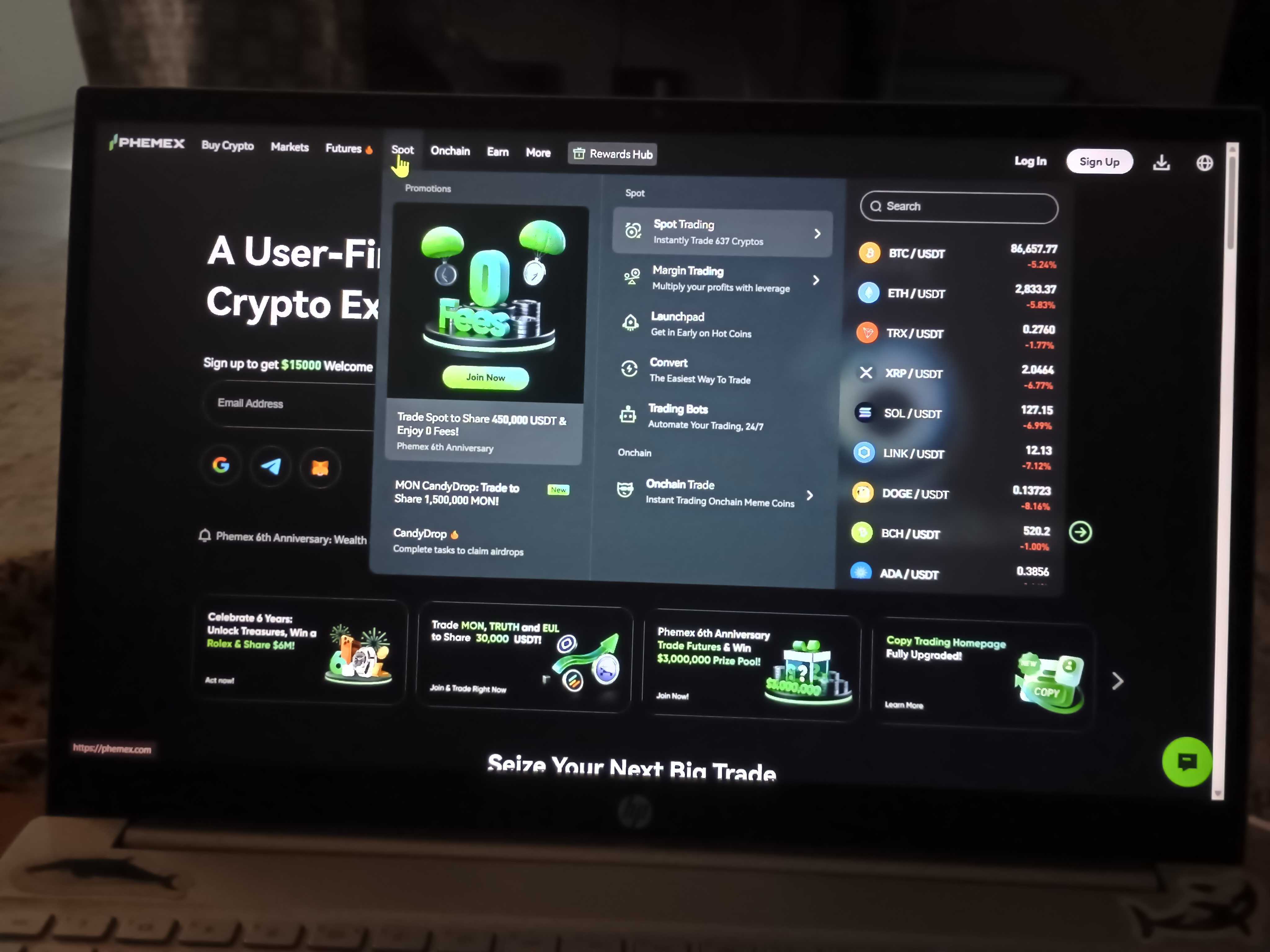
GNcrypto checked Phemex with a $200 spot test and The Coinomist summarizes what matters for 2026. We focus on what matters to beginners: when Premium can actually cut fees, where card buys get expensive, and how to set up basic protections before you trade.
Key Features That Make Phemex Stand Out
The Coinomist is summarizing GNcrypto research and a $200 spot test on Phemex. Two themes dominated the results: a Premium subscription that can cut spot fees to zero, and a fast, trader-style interface, which is why the exchange keeps popping up in Phemex reviews.
The biggest differentiator is Phemex Premium. Standard spot trading uses a 0.10% maker and 0.10% taker fee schedule, but Premium can reduce spot fees to 0% within the program limits and eligibility rules. The subscription only pays off if you trade enough volume, and you should read the current caps and requirements, including KYC, before assuming your fees will be zero.
On performance, Phemex promotes its CrossEngine matching engine and a very high throughput claim. GNcrypto reported the desktop terminal felt extremely responsive in normal use, and its $200 BTC trade on a major pair filled instantly during a volatile window. That speed mostly means fewer glitches when you place, cancel, or adjust an order.
Tools also stand out. GNcrypto noted you can rearrange and resize modules to build a custom workspace, while TradingView charts support common indicators without bogging down the browser. Order controls go beyond basic market and limit: Phemex supports trigger style entries and bracket take profit and stop loss controls in the ticket, which makes it easier to trade with a plan.
Phemex positions itself as both a spot and derivatives venue, and it lists 600 plus spot pairs. Funding options exist, but they differ by route: crypto deposits are straightforward, while card buys, bank transfers, and P2P paths can run through partners and come with different costs and processing times.
Is Phemex Safe and Reliable?
When beginners ask is Phemex safe, The Coinomist points to what GNcrypto checked and what Phemex documents publicly: account security tools, reserve transparency signals, incident communication, and jurisdiction limits. It also matters where you live, since Phemex blocks some regions, including the US and UK. None a guarantee, but these controls reduce avoidable risk.
Start with account level protections. Phemex supports passkeys and also offers two factor authentication for important actions. It also includes withdrawal safety controls around address management and additional checks when sensitive settings change. Practical setup: enable passkeys or 2FA, then tighten withdrawal settings before first deposit.
Next, look at Proof of Reserves. Phemex publishes a PoR page and explains how users can verify elements of the snapshot, including Merkle style verification. Treat this as a transparency check, not a real time solvency guarantee. A beginner friendly habit is to confirm the PoR page exists, understand what assets it covers, and recheck it periodically.
Finally, factor in the platform history. Phemex publicly disclosed a hot wallet security incident in early 2025, paused deposits and withdrawals, and posted recovery updates. Disciplined hygiene: use official domain only, ignore unofficial promos, keep long term holdings in self custody when possible, and leave on the exchange only what you trade.
Pros and Cons of Using Phemex
GNcrypto’s test suggests Phemex is best for active traders who value speed, advanced order controls, and the option to optimize fees with Premium. It is less ideal for casual buyers who want the simplest, most regulated fiat experience.
The cost math depends on how you fund and how often you trade. Premium can remove spot fees within limits, but the subscription must be earned back through volume. GNcrypto also reported that card on ramps can quote total costs around 3.5%, which can wipe out the fee advantage, while bank transfers may be cheaper but slower and often processed through partners. That mix is why Phemex com reviews can disagree on what the platform costs.
For new users: start on major pairs and use limit orders when you can. Compare the all in cost of card buys versus crypto deposits or bank transfers before you fund. Lock down account security so convenience does not turn into an avoidable loss.
Pros and Cons
Strengths:
- Zero fee spot trading with Premium membership within stated limits
- Fast trader first interface with a strong execution focus
- Pro grade workspace customization plus advanced order controls
Weaknesses:
- Premium is a paid model, so 0% fees only makes sense at higher volume
- Fiat card buys can be expensive, while bank transfers may be slower via partners
- Track record includes a hot wallet security incident and strict regional restrictions
Trustworthiness Check
- Account security: supports 2FA and passkeys, plus withdrawal safety controls for address changes
- Proof of Reserves: publishes PoR materials and a verification approach, but PoR is still a snapshot
- Regional limits: access is restricted in certain jurisdictions, so availability is not universal
- Public incidents: Phemex disclosed a hot wallet security incident with a temporary service pause and recovery updates
- Regulatory context: regulator actions and warnings exist in some regions, so users should weigh jurisdiction risk before funding
GNcrypto’s Overall Phemex.com Rating
| Assessment criteria | Rating (out of 5) |
|---|---|
| Liquidity & Volume | 4 |
| Execution Quality / Market Quality | 5 |
| Tools & Order Controls | 5 |
| Asset Selection & Trading Pairs | 4 |
| Fees & Total Cost to Trade | 4 |
| Reliability & Transparency | 3 |
| Fiat Access & Minimum Trade Size | 3 |
Methodology – Why You Should Trust GNcrypto Reviews
GNcrypto’s testing team uses a weighted, category-based model, collects standardized data from each platform (open data + hands-on testing), and converts that into a 1.0–5.0 star score in 0.1 increments.
Testers focus is spot trading quality: real fees, minimum trade size, crypto availability, market quality, and the user-facing experience.
How GNcrypto Collects Data
– Public sources: fee schedules, supported asset/pair lists, proof‑of‑reserves or reserve disclosures, and system status pages.
– First-hand testing: team place test spot trades, observe effective fees (fee + spread), measure slippage/spreads on majors, and evaluate UI speed and order controls.
GNcrypto’s experts do not rate solvency or make guarantees about financial stability. These ratings reflect user experience, access, and trading quality – not a balance‑sheet audit.
Categories & Weights
– Liquidity & Volume – 25%
– Fees & Total Cost to Trade – 25%
– Asset Selection & Trading Pairs – 15%
– Execution Quality (Market Quality) – 10%
– Tools & Order Controls – 10%
– Fiat Access & Minimum Trade Size – 5%
– Reliability & Transparency – 10%
Latest News




Recommended Articles/Reviews





The content on The Coinomist is for informational purposes only and should not be interpreted as financial advice. While we strive to provide accurate and up-to-date information, we do not guarantee the accuracy, completeness, or reliability of any content. Neither we accept liability for any errors or omissions in the information provided or for any financial losses incurred as a result of relying on this information. Actions based on this content are at your own risk. Always do your own research and consult a professional. See our Terms, Privacy Policy, and Disclaimers for more details.
