

MEXC Exchange Reviews 2026: Fees, Liquidity, Risks
Affiliate Disclosure:
The Coinomist publishes reviews and ratings produced by GNcrypto as part of a content partnership. GNcrypto’s editorial team tests platforms independently using real funds. If you click on affiliate links, GNcrypto may earn commissions, which support their testing infrastructure. All opinions, ratings, and assessments are GNcrypto’s. The Coinomist does not influence evaluations and may not share these views.
MEXC

MEXC is a good fit for traders who value low spot fees, fast order book execution, and access to a wide range of niche altcoins. However, the lack of licenses in major jurisdictions and frequent listings of high-risk tokens make it a less straightforward choice for beginners and conservative investors.
GNcrypto's Verdict

MEXC is an international exchange built for spot traders who prioritize fast order execution and a broad selection of coins, including early-stage altcoins. In this tests, both the web terminal and mobile app were stable: charts were easy to read, orders were placed and filled quickly, and the overall trading experience felt smooth.
- Competitive base fees: 0% maker and 0.05% taker on spot trading, excluding additional discounts.
- Solid liquidity on major pairs and a very broad selection of altcoins, including early listings.
- A user-friendly interface for active trading: deep order books, advanced order types, and stable web and mobile apps.
- The exchange targets a global audience but remains restricted or unavailable in several countries and lacks full licenses in major Western jurisdictions.
- Withdrawal fees and fiat on-ramp costs depend on the network and third-party providers, so the final amount becomes clear only at the confirmation step.
On this page
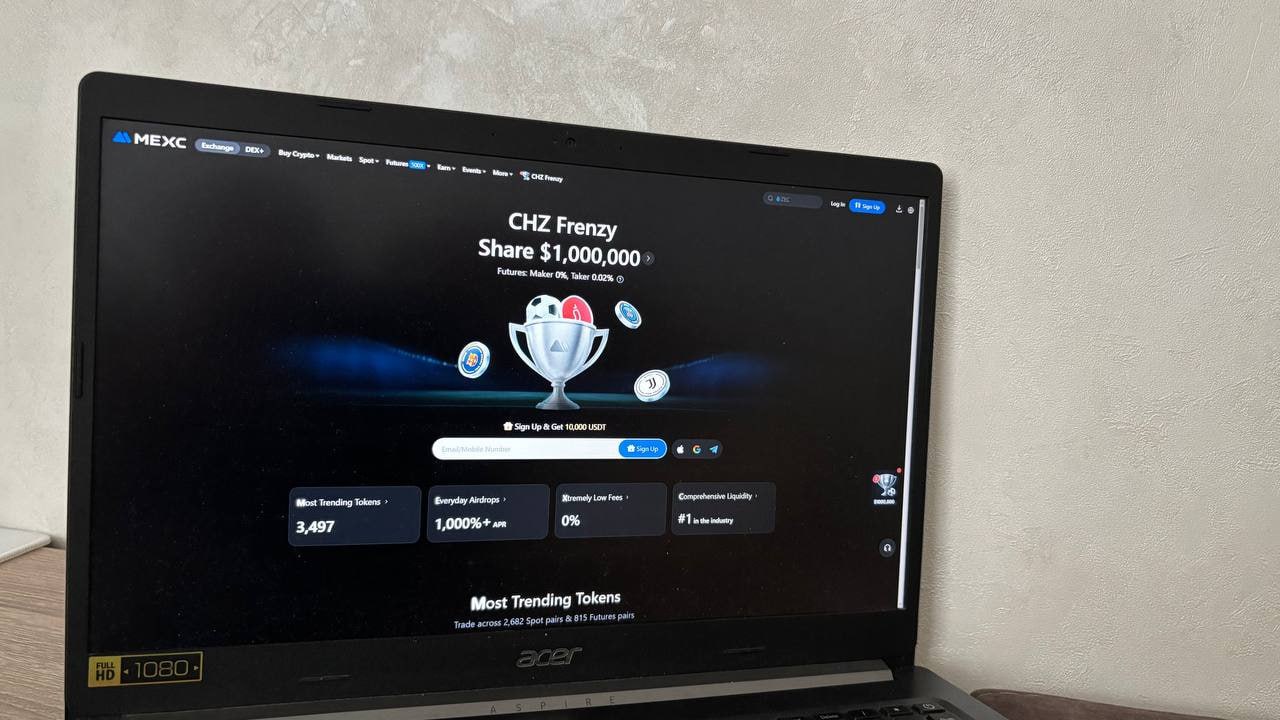
We tested MEXC the way an active spot trader would: opened a fresh account, completed KYC, deposited USDT and BTC, traded both majors and thin altcoins, watched slippage and order book depth, and checked how the 0% maker and reduced taker fees show up in real fills.
MEXC at a Glance: Platform Scope and Trading Focus
MEXC is a centralized exchange focused on spot and derivatives trading. It lists thousands of pairs, from major BTC/USDT and ETH/USDT markets to exotic altcoins, futures, and leveraged ETFs. We also saw copy trading, staking, Launchpad, and basic earn products, so part of the feature set will feel familiar to any CEX user, while another part clearly targets traders who like to experiment with new instruments.
This is primarily an international platform with no focus on the US market. MEXC makes the most sense if you are looking for unique listings and solid liquidity on major pairs, or if you actively trade with leverage and derivatives.
Beginners get a simplified interface and basic order types, while advanced traders have access to a full-featured terminal, grid and other strategies, and the option to use copy trading.
This MEXC review highlights the platform's core strength: serving as a hub for traders who hunt for low-liquidity altcoins and aren't afraid to allocate capital toward high-risk assets.
Pros and Cons of Using MEXC
How MEXC behaves in daily use:
Strengths:
- A wide selection of altcoins and derivatives, including many early listings.
- Competitive base fees with additional discounts for paying in MX or increasing trading volume.
- A solid trading terminal with clear charts, fast order placement, and built-in strategies and copy trading.
Weaknesses:
- Weaker regulatory coverage in major Western jurisdictions, with some features restricted by country.
- Fiat deposits and withdrawals rely on third-party providers, with fees and limits varying by provider.
- A large number of low-liquidity tokens and hot listings increases the risk of sharp drawdowns and delistings.
- The interface is crowded with promotions and banners, making it harder for beginners to navigate.
To wrap up this MEXC Global review, we recommend the platform for seasoned traders who can navigate a complex UI in exchange for deep liquidity and the widest altcoin variety on the market.
Who MEXC Is Best Suited For
After two weeks of trading on MEXC, the platform proved well suited for:
- traders who actively trade altcoins and look for rare listings
- those who use leverage, futures, and structured products, not just spot
- experienced users who are comfortable managing risk and security settings
- traders who trade frequently and are willing to optimize fees and VIP tiers
MEXC felt like a platform built for active trading. If you watch the order book daily and are comfortable with volatility, the breadth of trading pairs and access to high leverage create plenty of room for ideas, from scalping to mid-term futures strategies.
For traders focused on low-cap altcoins, the exchange offers a chance to enter projects before they appear on more conservative platforms. That is also the main risk: liquidity in such coins is not always stable, spreads can be wide, and drawdowns may have to be endured without any guarantee of a quick exit.
If you are reading this and other MEXC exchange reviews in search of a “universal, safe, and fully regulated crypto bank,” this platform is unlikely to be the right fit. MEXC is clearly not suitable as a sole venue for conservative, long-term investing.
Trustworthiness Check
The first thing we checked was the account’s basic security setup. MEXC offers two-factor authentication via Google Authenticator, phone and email binding, an anti-phishing code in emails, and a withdrawal address whitelist, meaning funds can be sent only to pre-approved wallets.
All critical actions – logging in from a new device, withdrawals, and password changes – require additional confirmation via an SMS code or authenticator app.
MEXC states it uses a standard hot and cold wallet model, multi-signature controls, and internal risk monitoring systems that track suspicious activity and large transfers.
We also found public MEXC Proof-of-Reserves reports based on a Merkle tree, showing that reserves for major assets are maintained at no less than a 1:1 ratio to user balances. However, this format feels more like a transparency statement than a full financial audit.
The platform positions itself as global but is registered in an offshore jurisdiction and officially does not serve users from the US, the UK, Canada, Singapore, mainland China, and several other countries, as stated in the user agreement. For many traders, this means MEXC operates as an unregulated venue without local protections or a clear supervisory framework.
Overall, MEXC’s technical account security is comparable to other large CEXs: 2FA, withdrawal whitelists, and basic risk controls are in place. At the same time, the lack of strict regulation in major jurisdictions, limited transparency around the corporate structure, and unaudited PoR reports remain risks that users must accept.
GNcrypto’s Overall MEXC Rating
| Criteria | Rating (out of 5) |
|---|---|
| Fees and Cost to Use | 4 |
| Ease of Use | 4 |
| Security and Compliance | 3 |
| Supported Assets | 5 |
| Reliability and Transparency | 3.5 |
| Customer Support | 3 |
| Liquidity & Volume | 3 |
Methodology – Why You Should Trust Us
GNcrypto’s testing team uses a weighted, category-based model, collects standardized data (open data + hands-on testing), and converts that into a 1.0–5.0 star score in 0.1 increments.
Testers focus is spot trading quality: real fees, minimum trade size, crypto availability, market quality, and the user-facing experience.
How We Collect Data
– Public data: fee schedules, supported pairs, proof-of-reserves statements, status pages.
– First-hand testing: we place test trades, measure slippage and spreads, check UI features and speed.
We do not assess the financial stability of the exchange or make guarantees about its future operations. Our ratings reflect the quality of the spot trading experience and available functionality, not institutional reliability.
Categories & Weights
– Liquidity & Volume – 25%
– Fees & Total Cost to Trade – 25%
– Asset Selection & Trading Pairs – 15%
– Execution Quality (Market Quality) – 10%
– Tools & Order Controls – 10%
– Fiat Access & Minimum Trade Size – 5%
– Reliability & Transparency – 10%
Latest News





Recommended Articles/Reviews






The content on The Coinomist is for informational purposes only and should not be interpreted as financial advice. While we strive to provide accurate and up-to-date information, we do not guarantee the accuracy, completeness, or reliability of any content. Neither we accept liability for any errors or omissions in the information provided or for any financial losses incurred as a result of relying on this information. Actions based on this content are at your own risk. Always do your own research and consult a professional. See our Terms, Privacy Policy, and Disclaimers for more details.
