

Kraken vs Gemini: Key Features and Fees Compared in 2026
Affiliate Disclosure:
The Coinomist publishes reviews and ratings produced by GNcrypto as part of a content partnership. GNcrypto’s editorial team tests platforms independently using real funds. If you click on affiliate links, GNcrypto may earn commissions, which support their testing infrastructure. All opinions, ratings, and assessments are GNcrypto’s. The Coinomist does not influence evaluations and may not share these views.
Gemini vs Kraken

Kraken (3.6/5) is better suited for active spot trading: it offers more tools and gives you clearer control over each trade. Gemini (3.5/5) is an option for users who prefer a stricter, more conservative setup, even if it comes with fewer features.
GNcrypto's Verdict

After testing both platforms, Kraken feels a more practical choice if you are active in spot markets and prioritize execution quality, order types, and a streamlined interface. Gemini, by comparison, feels more conservative and compliance-focused, which may suit some users, but its narrower asset selection, higher taker fees, and added costs on instant purchases can be limiting if you trade often.
- Kraken: lower base spot fees (0.16% maker / 0.26% taker) and a straightforward volume-based discount model.
- Kraken: a broader spot offering (450+ assets), stronger liquidity on major pairs, and advanced order types such as iceberg orders.
- Gemini: a more conservative, compliance-focused platform with strong security and custodial standards.
- Gemini: an easy fiat on-ramp for beginners and a clean, minimal interface without unnecessary features.
- Kraken: protective settings are not enabled by default – 2FA and withdrawal whitelisting must be set up manually.
- Kraken: liquidity for smaller tokens can be weaker than for major pairs, resulting in wider spreads.
- Gemini: a more limited asset list (80+), with many mid-cap and newer projects unavailable.
- Gemini: small “instant” purchases often cost more due to added markup, and the Android app can be unstable.
On this page
GNcrypto tested Kraken and Gemini with a real $200 spot trade to compare costs, execution, and day-to-day usability. Which one fits your spot strategy in 2026? Let’s break it down.
Gemini vs Kraken at a Glance
| Category | Gemini | Kraken | Winner |
|---|---|---|---|
| Overall GNcrypto rating | 3.5 / 5 | 3.6 / 5 | Kraken (overall) |
| Daily spot turnover (approx.) | ≈$48.6M | ≈$505M | Kraken |
| Tradable assets (spot) | 80+ | 450+ | Kraken |
| Liquidity & volume rating | 3.5 / 5 | 3.5 / 5 | Draw |
| Fees & total cost rating | 2.5 / 5 | 3 / 5 | Kraken |
| Asset selection rating | 3 / 5 | 4 / 5 | Kraken |
| Tools & order controls | 3.5 / 5 | 4 / 5 | Kraken |
| Fiat access & minimum trade size | 4 / 5 | 4 / 5 | Draw |
| Reliability & transparency rating | 4 / 5 | 4.5 / 5 | Kraken |
Gemini vs Kraken: Detailed Feature-by-Feature Comparison
Gemini and Kraken differ less in the cost of opening trades and more in how each platform structures the trading process. Gemini is geared toward spot trading and account-level services. Kraken is designed for active, continuous trading where order tools, automation, and volume handling are central.
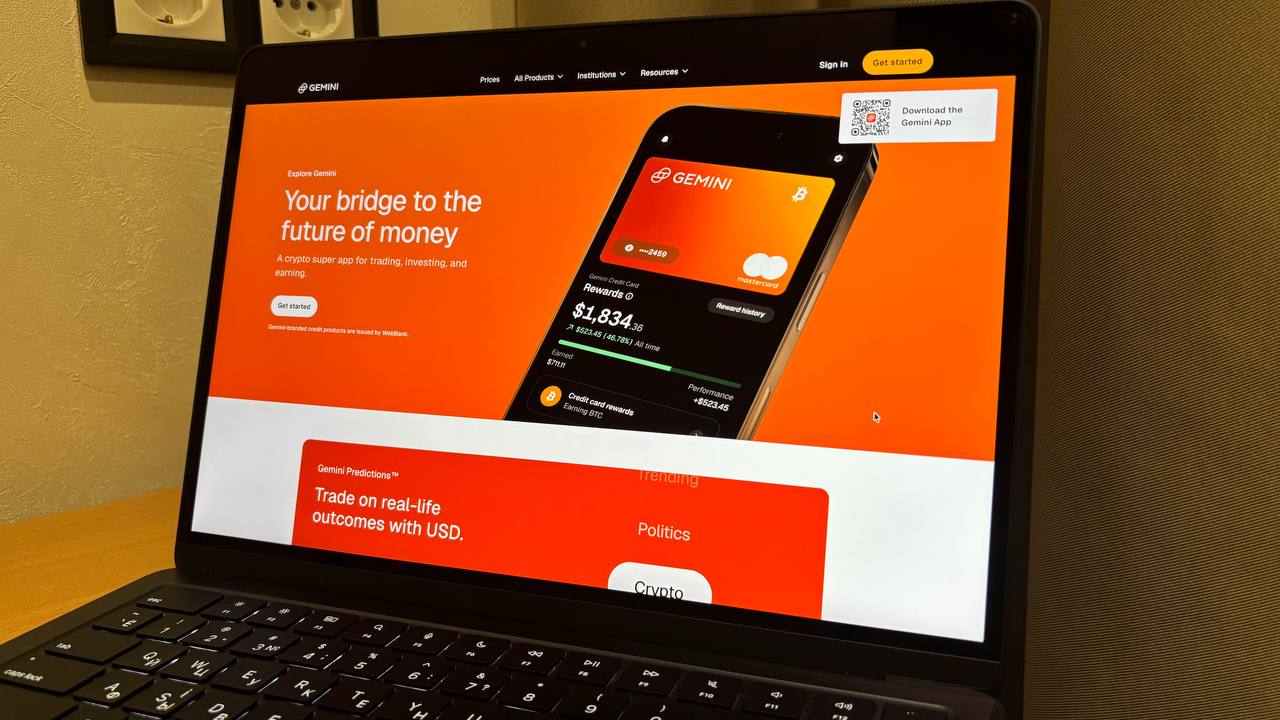
Gemini’s core module is ActiveTrader – a standalone interface with an order book and charts for manual spot trading. It supports market, limit, and stop-limit orders, along with standard execution settings such as time-in-force. This covers the essentials of spot trading: buying or selling at market, placing limits, or entering through stop-limit orders. The platform supplements this with account-focused products like the Gemini Dollar (GUSD) stablecoin, staking for selected assets, and a credit card that pays rewards in crypto.
On the other hand, Kraken emphasizes managing a position after entry. Kraken Pro provides linked exit and risk-management orders, including bracket orders with take-profit and stop-loss, trailing stops, and OCO. These tools allow traders to define exit scenarios in advance and reduce manual oversight. For automation, Kraken offers a trading API for both spot and derivatives, plus a permissioned key-management system. An OTC desk is available for executing large trades outside the public order book.
This brings us to the conclusion of the Kraken vs Gemini comparison. Gemini fits users who trade spot with a basic set of orders and want additional products within a single account. Kraken is a stronger choice for those who rely on advanced order logic, APIs, and infrastructure built for frequent trading and higher volumes.
Kraken vs Gemini Comparison of Fees, Coins, and Trading Tools
The difference between the exchanges comes down to three things: how much trading costs, how many markets are available, and how easy it is to manage orders. These factors determine the winner in the Gemini vs Kraken showdown – and how quickly a trader can enter and exit positions while maintaining tight risk control.
On the Gemini side, the setup works best for major pairs but tends to be pricier and narrower overall. The exchange uses a tiered maker/taker model starting at roughly 0.20% (maker) and 0.40% (taker) for low-volume traders. Its spot-trading lineup includes around 80 supported pairs, primarily in BTC, ETH, and stablecoins. Some stablecoin pairs (such as GUSD/USD) even offer promotional pricing (0% maker fees and taker fees of ~0.01%), but these incentives do not extend to most non-stablecoin spot markets. While Gemini handles major pairs well, it is less appealing for active altcoin trading: fewer diversification options and less flexibility in shaping entries and exits.
On Kraken’s side, the same metrics perform better. Its spot trading fees start at approximately 0.16% (maker) and 0.26% (taker) on Kraken Pro and decrease at higher trading volumes. The exchange lists 450+ spot assets, covering majors, mid-cap altcoins, and a broader range of fiat and crypto pairs. In testing, this translated into a clear gap: more markets with sufficient liquidity and more control over execution.
These differences compound over time. A wider asset list simplifies capital rotation, and stronger order-management tools reduce manual workload and the risk of errors. This makes Kraken the more practical primary venue for regular spot trading.
Gemini, meanwhile, is suitable for a simpler workflow – trading the most liquid pairs without frequent market rotation. The trade-off is a higher total cost of opening positions and a narrower selection of assets.
Gemini vs Kraken: Final Verdict and Best Use Cases
The final Kraken vs Gemini takeaway is based on what was observed during spot testing and on the same scorecard across both venues: fees/total cost, spot market breadth, order controls, liquidity, and transparency.
Gemini fits a conservative spot workflow built around majors. In testing, its spot catalog was smaller (80+ assets), the cost score was lower (0.16% maker / 0.26% taker vs Kraken’s 0.20% / 0.40%), and the order-control score was more limited. The result is a cleaner, simpler setup for basic spot execution, but with fewer markets and fewer levers for managing entries, exits, and risk when trading beyond the most liquid pairs.
That’s where Kraken pulls ahead as a more practical venue for regular spot trading. It scored higher overall (3.6/5 vs. 3.5/5), listed more spot assets (450+), and provided stronger trading controls. Combined with a higher transparency/reliability score (4.5/5), this translates into broader spot coverage and more consistent execution control across different market conditions and order types.

Verdict: Kraken covers more practical spot use cases and is the stronger default choice for ongoing trading. Gemini works best when the requirement is a restrained setup focused on major assets, and the smaller market range and simpler toolset are acceptable.
Gemini vs Kraken – Which Should You Choose?
If you’re a beginner or a first-time buyer
Choose: Gemini
If your priority is a calmer, simpler start, Gemini is the more straightforward option. In our comparison, Gemini’s spot lineup is more compact (80+ assets), which usually means fewer markets to sift through and a less overwhelming product surface. For a first purchase of major coins, that simplicity is the point.
If you’re an active spot trader and you care about tools
Choose: Kraken
This exchange is stronger as a daily trading venue. In a spot trading test, its tools and order controls scored 4/5 versus 3.5/5 for Gemini. If you place orders often and rely on tighter execution control, the extra tooling matters more than a minimal interface.
If you want a broader list of coins
Choose: Kraken
Kraken offers a much wider spot selection: 450+ tradable assets versus 80+ on Gemini. That doesn’t guarantee better outcomes, but it gives you more room to diversify beyond majors and access more markets from one account.
If you prioritize a more “trust-first” profile
Choose: Kraken
In GNcrypto’s ratings, Kraken scored higher on reliability and transparency: 4.5/5 versus 4/5 for Gemini. The gap is not huge, but if you’re choosing a primary exchange for routine use, that edge can be decisive – especially if you keep balances on-platform.
How GNcrypto Traders Tested Gemini vs Kraken
According to published methodology, the team applies a standardized scoring framework across multiple categories – including liquidity/volume, fees and total cost, asset selection, execution quality, tools and order controls, fiat access and minimum trade size, and reliability/transparency. Those scores are then normalized into a star rating.
Testing combined:
- Public checks (fee schedules, supported asset/pair lists, proof-of-reserves pages, security documentation, status pages, and available regulatory information)
- Hands-on steps (account creation, identity verification where applicable, funding an account, and placing real spot trades).
Latest News





Recommended Articles/Reviews





The content on The Coinomist is for informational purposes only and should not be interpreted as financial advice. While we strive to provide accurate and up-to-date information, we do not guarantee the accuracy, completeness, or reliability of any content. Neither we accept liability for any errors or omissions in the information provided or for any financial losses incurred as a result of relying on this information. Actions based on this content are at your own risk. Always do your own research and consult a professional. See our Terms, Privacy Policy, and Disclaimers for more details.
