

Gemini vs Coinbase Review 2026 – Fees, Assets, and Reliability
Affiliate Disclosure:
The Coinomist publishes reviews and ratings produced by GNcrypto as part of a content partnership. GNcrypto’s editorial team tests platforms independently using real funds. If you click on affiliate links, GNcrypto may earn commissions, which support their testing infrastructure. All opinions, ratings, and assessments are GNcrypto’s. The Coinomist does not influence evaluations and may not share these views.
Gemini vs Coinbase

According to the deep dive performed by the analysts at GNcrypto, Coinbase (4/5) takes the W in this head-to-head. The on-chain metrics don’t lie: the liquidity gap is massive ($2.18B daily volume vs Gemini’s $93M), and Coinbase’s asset garden is significantly lusher (354 coins vs 94). However, Gemini (3.5/5) still has a specific utility.
GNcrypto's Verdict

Coinbase absolutely dominated on the technicals. Spreads stayed tight (under 0.05%) even during evening volatility, and limit orders filled in seconds. GNcrypto’s team also found the Advanced Trade interface to be much cleaner and more intuitive than Gemini’s ActiveTrader. While Gemini impressed the testers with its regulatory clarity (giving off strong TradFi vibes), it hurt the wallet. A $200 instant card purchase on Gemini carried a heavy 3.5–4.5% total fee load, whereas Coinbase kept that friction lower, in the 2.8–3.2% range.
- Gemini: The “sleep-well-at-night” option. GNcrypto highlights their consistent SOC 2 compliance reports – a level of transparency most offshore exchanges simply don’t offer.
- Gemini: The ActiveTrader mode is legit. Testers found the charting and order types (limit, stop-limit) robust enough for serious setups.
- Coinbase: Liquidity king. GNcrypto reported zero execution issues; limit orders filled in under 10 seconds with no partials, even during price swings.
- Coinbase: Superior UX. Fiat onboarding is seamless, and Advanced Trade offers granular control without the clunky interface.
- Gemini: The Android app is buggy. GNcrypto experienced two crashes during their 3-day test (one right in the middle of a trade), though iOS ran smooth.
- Gemini: Limited scope. With only ~80 assets, you miss out on newer alts. Plus, support is slow and form-based.
- Coinbase: The “convenience fee” is steep. A $100 card buy costs $103 (3% fee), whereas Advanced Trade would have cost just $0.80.
- Coinbase: Region-locked features and a lack of “degen” tokens compared to competitors with thousands of listings.
On this page
Gemini vs Coinbase – it is the classic battle of the US regulatory heavyweights. But who actually ships a better product? GNcrypto tested both platforms to see which one deserves your liquidity. Here is the verdict on which exchange fits your flow best.
After dissecting the results, the GNcrypto team found the divide pretty sharp. If your priority is low-friction fiat ramps and a UI that actually flows – specifically using Advanced Trade for your major stacks – Coinbase is the play.
On the flip side, Gemini is the move if you have an ultra-conservative risk profile. The testers identified it as the superior choice for those who value “bank-grade” compliance above all else – provided you're willing to pay the “security premium” on smaller trades and can live with a much tighter selection of assets.
Coinbase vs Gemini at a Glance
We grabbed the raw scoring sheet from GNcrypto’s test bench to see how the numbers stack up side-by-side. It’s almost a clean sweep for Coinbase on the liquidity and utility fronts, but notice where Gemini snags its points – specifically in the fee rating.
| Category | Coinbase | Gemini | Winner |
|---|---|---|---|
| Overall GNcrypto rating | 4.0 / 5 | 3.5 / 5 | Coinbase |
| Daily spot turnover (approx.) | ~$2.18B (24h) | ~$0.093B (24h) | Coinbase |
| Tradable assets (spot) | 354 | 94 | Coinbase |
| Liquidity & volume rating | 5 / 5 | 3.5 / 5 | Coinbase |
| Fees & total cost rating | 2 / 5 | 2.5 / 5 | Gemini |
| Asset selection rating | 4 / 5 | 3 / 5 | Coinbase |
| Tools & order controls | 4 / 5 | 3.5 / 5 | Coinbase |
| Fiat access & trade size | 5 / 5 | 4 / 5 | Coinbase |
| Reliability & transparency | 4 / 5 | 4 / 5 | Coinbase |
Coinbase vs Gemini: Platform Overview
Both of these platforms are U.S.-regulated heavyweights that make getting fiat into crypto painless, but that's where the similarities end. To get the real data, GNcrypto funded both accounts with a $200 deposit and executed real spot trades to stress-test Coinbase vs Gemini fees, liquidity depth, and overall vibe.
Coinbase is a publicly traded giant that prioritizes smooth onboarding for US and EU traders.
- The Cost of Business: In GNcrypto's testing, the base fees hit 0.40% for makers and 0.60% for takers. To give you a concrete number: executing a $1,000 order via Advanced Trade cost the testers $1.20. That's definitely pricier than what you'd find on Kraken or Binance, but you’re paying for reliability.
- Execution Quality: The premium seems to be worth it. The execution was instant with zero slippage. This aligns with external data – LiquidityFinder awards Coinbase a massive score of 735, confirming it as a top-tier venue for fast BTC and ETH fills, even for retail size.
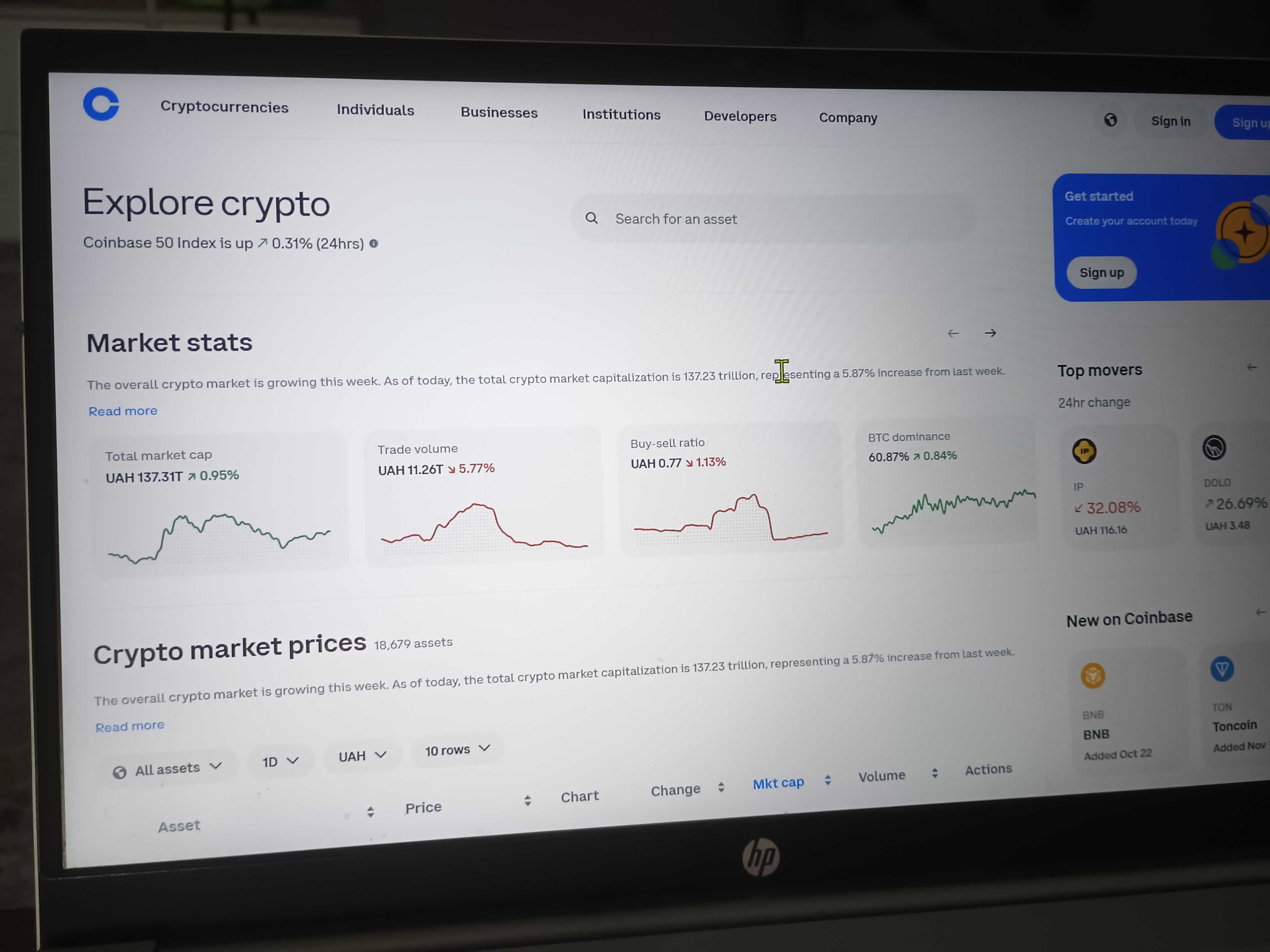
In contrast, Gemini feels less like a trading pit and more like a private bank. The interface is structured, and the focus is heavily on compliance and custody audits.
- The Friction: While liquidity on major pairs was solid, GNcrypto found the costs for smaller players to be steep. A quick card purchase of ~$200 racked up total costs between 3.5% and 4.5%. Standard trading fees sat at 0.20% maker / 0.40% taker.
- The Tech Stack: Gemini hosts around 80 assets and pushes about $150M in daily volume. However, GNcrypto flagged a notable technical foul: the Android app crashed twice during their 3-day test run – once right in the middle of a trade and again while loading the order book. (iOS users, you're in the clear; the iPhone app ran perfectly).
Asset Availability and Account Features
GNcrypto approached this comparison with a simple question: “If I want to ape into a project, can I actually do it here?” They evaluated the depth of the listings and how much friction stands between your fiat and your tokens.
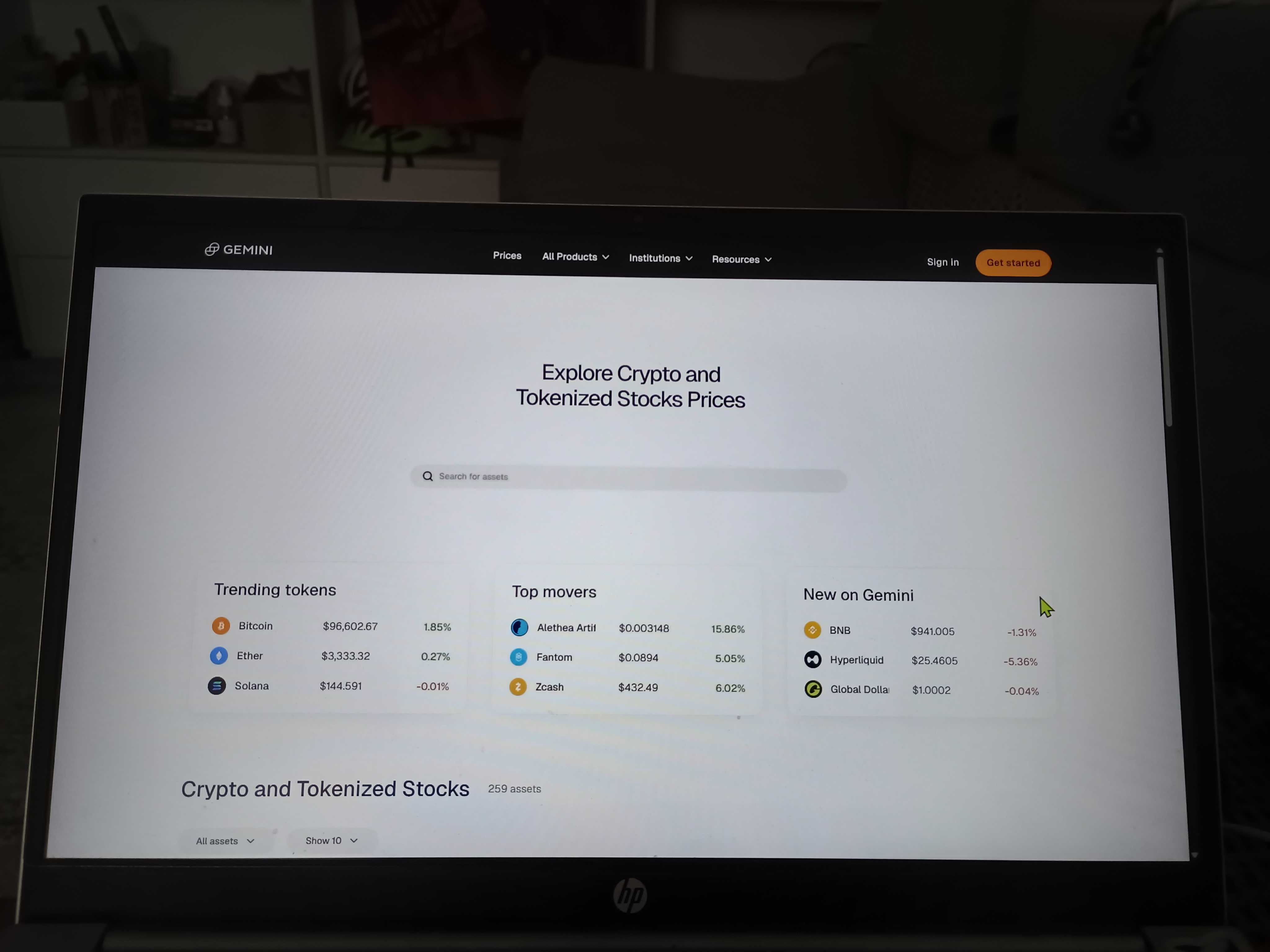
Gemini emerged as the conservative choice. With a tighter roster of roughly 80 assets, it’s clearly curated for traders who stick to the blue chips (BTC, ETH) and the top-tier alts. You won't have to wade through hundreds of meme coins to find what you need, but you also won't find the latest 100x micro-cap.
- The Tools: GNcrypto highlighted ActiveTrader as a solid, pro-level interface.
- The Catch: They noted that product availability is heavily geo-fenced. Depending on your region, some features might be locked, and if you opt for small “instant” purchases, prepare to pay a premium.
Coinbase is playing a different game entirely. GNcrypto logged 354 assets, offering a significantly wider playground.
- The Alpha: The testers found plenty of DeFi governance tokens, Layer 2 scaling plays, and fresh listings on Coinbase that were completely absent on Gemini.
- The Interface: The Advanced Trade mode was praised for its intuitive setup and fee transparency, especially for limit orders.
- Warning: Just like with Gemini, GNcrypto warned that using the “simple” fiat buy option for small amounts is a wallet-drainer compared to using the Advanced Trade order books.
GNcrypto calls this one a blowout: Coinbase wins Gemini vs Coinbase duel. The math (354 coins vs ~94) doesn't lie. Gemini is perfectly fine if you only trade the top 20 assets and value regulatory peace of mind, but if you want true market exposure, Coinbase is the superior venue.
User Experience and Interface
GNcrypto's test scenario was specific: deposit $200, execute spot buys and sells, set limit orders, and audit the fees across every available mode.
Coinbase took the gold for onboarding speed and clarity. The app makes finding transaction history or fiat on-ramps intuitive, but the real alpha is in Advanced Trade.
- Execution: GNcrypto’s data showed rock-solid stability. When they market-bought $150 of ETH/USDT, the price moved less than 0.01%. That is institutional-grade execution for a retail size.
- The Trap: The main risk for newbies is the “Simple Buy” button. The Coinbase vs Gemini fees gap between this instant mode and the standard order book is massive – GNcrypto warns that convenience here costs a premium.
Gemini offers a very clean, “bank-like” interface, and ActiveTrader is a solid environment for order book trading. However, the workflow felt heavier.
- Friction: In the “Time-to-Trade” metric, Coinbase won easily. GNcrypto counted two taps to reach Advanced Trade on Coinbase, compared to four taps to dig up ActiveTrader on Gemini.
- Slippage: While still decent, Gemini showed slightly more weakness. That same $150 trade resulted in 0.03% slippage – worse than Coinbase’s <0.01%.
- Gemini fees vs Coinbase: The “quick purchase” tax is steeper here. On a $200 debit card buy, Gemini charged a total of $207.20 ($7.20 in fees/spread). Coinbase was slightly cheaper at $206.00.
If you want speed, stability, and a UI that gets out of your way, GNcrypto points to Coinbase. If you prioritize compliance and don't mind navigating a few extra menus (and paying a bit more) for that “fortress” feeling, Gemini is your spot—just make sure you stick to ActiveTrader to avoid the high instant-buy fees.
Which Platform Is the Better Choice?
There is no “one size fits all” here – it comes down to your specific volume and risk tolerance. Here is how GNcrypto's exchange test data maps to different user archetypes:
If you’re a beginner buying crypto with fiat
Choose: Coinbase
According to GNcrypto’s onboarding logs, the UX friction here is effectively zero. The fiat rails are seamless, and the transition from the simple interface to Advanced Trade allows you to level up without migrating funds. Crucially, the liquidity on major pairs is deep enough that retail market orders get filled without any nasty slippage surprises.
If you trade manually and want fee control
Choose: Gemini
GNcrypto highlights ActiveTrader as the superior environment for traders who audit every basis point. Unlike the simplified “convert” widgets that bake the spread into the price, Gemini’s active interface displays the raw maker/taker schedule upfront. It is the correct environment if you prefer managing your own limit orders over paying for convenience.
If you want a wide selection of coins in one account
Choose: Coinbase
The asset count speaks for itself. GNcrypto verified a roster of 354 assets on Coinbase versus just 80+ on Gemini. If you are looking to build a portfolio that extends into DeFi governance tokens and Layer 2s without juggling multiple exchange logins, Coinbase is the necessary aggregator.
If your priority is compliance and a conservative risk profile
Choose: Gemini
If you view “not your keys, not your coins” as a commandment but still need a centralized on-ramp, Gemini is the solution. GNcrypto emphasizes their “bank-grade” custody standards and regulatory posture. You are accepting higher fees and a smaller sandbox in exchange for institutional-level oversight and solvency transparency.
Coinbase vs Gemini: The GNcrypto Team’s Methodology
According to published methodology, the team applies a standardized scoring framework across multiple categories – including liquidity/volume, fees and total cost, asset selection, execution quality, tools and order controls, fiat access and minimum trade size, and reliability/transparency. Those scores are then normalized into a star rating.
Testing combined:
- Public checks (fee schedules, supported asset/pair lists, proof-of-reserves pages, security documentation, status pages, and available regulatory information)
- Hands-on steps (account creation, identity verification where applicable, funding an account, and placing real spot trades).
Latest News





Recommended Articles/Reviews





The content on The Coinomist is for informational purposes only and should not be interpreted as financial advice. While we strive to provide accurate and up-to-date information, we do not guarantee the accuracy, completeness, or reliability of any content. Neither we accept liability for any errors or omissions in the information provided or for any financial losses incurred as a result of relying on this information. Actions based on this content are at your own risk. Always do your own research and consult a professional. See our Terms, Privacy Policy, and Disclaimers for more details.
