

MEXC vs Bybit: Fees, Liquidity, and Altcoin Selection Compared
Affiliate Disclosure:
The Coinomist publishes reviews and ratings produced by GNcrypto as part of a content partnership. GNcrypto’s editorial team tests platforms independently using real funds. If you click on affiliate links, GNcrypto may earn commissions, which support their testing infrastructure. All opinions, ratings, and assessments are GNcrypto’s. The Coinomist does not influence evaluations and may not share these views.
MEXC vs Bybit

Bybit (4.3/5) is better suited for active traders who value institutional-grade liquidity, tight spreads on BTC, ETH, and majors, and a more advanced spot trading terminal. MEXC (3.6/5) appeals to fee-sensitive users who want very low spot taker/maker fees and access to thousands of long-tail altcoins, but can accept a rougher UX and less consistent liquidity on small caps.
MEXC vs Bybit: The Verdict

After testing both platforms side by side with live spot trades, it’s clear that if you care most about stable order-book depth, tight spreads on majors, and consistent order execution, Bybit is the stronger choice. If your priority is hunting early-stage coins, farming listings that never make it to Tier-1 exchanges, and keeping trading costs close to the floor, MEXC is the better fit.
- MEXC: Spot maker fees from 0% and taker from 0.1% on the standard schedule, often reduced to 0%/0.06% during promos and for higher VIP tiers.
- MEXC: More than 2,000 spot coins and pairs, including low-cap alt and memecoin listings that are not available on Bybit.
- Bybit: Deep liquidity in BTC, ETH, and top alts: daily spot volume stays in the billions of $, with tight spreads even during the Asian session.
- Bybit: Advanced spot trading terminal with order types including OCO, iceberg, and post-only, plus built-in TradingView charts and depth visualization.
- MEXC: A less strict registration jurisdiction and lower compliance scores in external rankings compared with Bybit.
- MEXC: A high share of low-liquidity alts.
- Bybit: Regional restrictions: the platform is unavailable to residents of the US, Canada, and some EU countries, and it requires KYC for most features.
- Bybit: Base fees are higher than MEXC’s.
On this page


We traded on Bybit and MEXC with real accounts to see which exchange offers better spot fees, liquidity, and altcoin selection for active traders.
After testing both platforms, the GNcrypto team found a clear difference. If you need deep liquidity in BTC and ETH, plus advanced order types and tight spreads for scalping, Bybit makes more sense. If your goal is to trade early listings and low-liquidity altcoins, MEXC is the more practical choice.
Bybit vs MEXC at a Glance
| Category | Bybit | MEXC | Winner |
|---|---|---|---|
| Overall GNcrypto rating | 4.3 / 5 | 3.6 / 5 | Bybit (overall) |
| Daily spot turnover (approx.) | ≈$3.5B | ≈$3.2B | Bybit |
| Tradable assets (spot) | ~500 | 2,000+ | MEXC |
| Liquidity & volume rating | 5 / 5 | 3 / 5 | Bybit |
| Fees & total cost rating | 4 / 5 | 4 / 5 | Draw (MEXC cheaper, Bybit more stable) |
| Asset selection rating | 4 / 5 | 5 / 5 | MEXC |
| Tools & order controls | 5 / 5 | 4 / 5 | Bybit |
| Fiat access & minimum trade size | 3 / 5 | 2 / 5 | Bybit |
| Reliability & transparency rating | 4 / 5 | 3.5 / 5 | Bybit |
Quick Overview
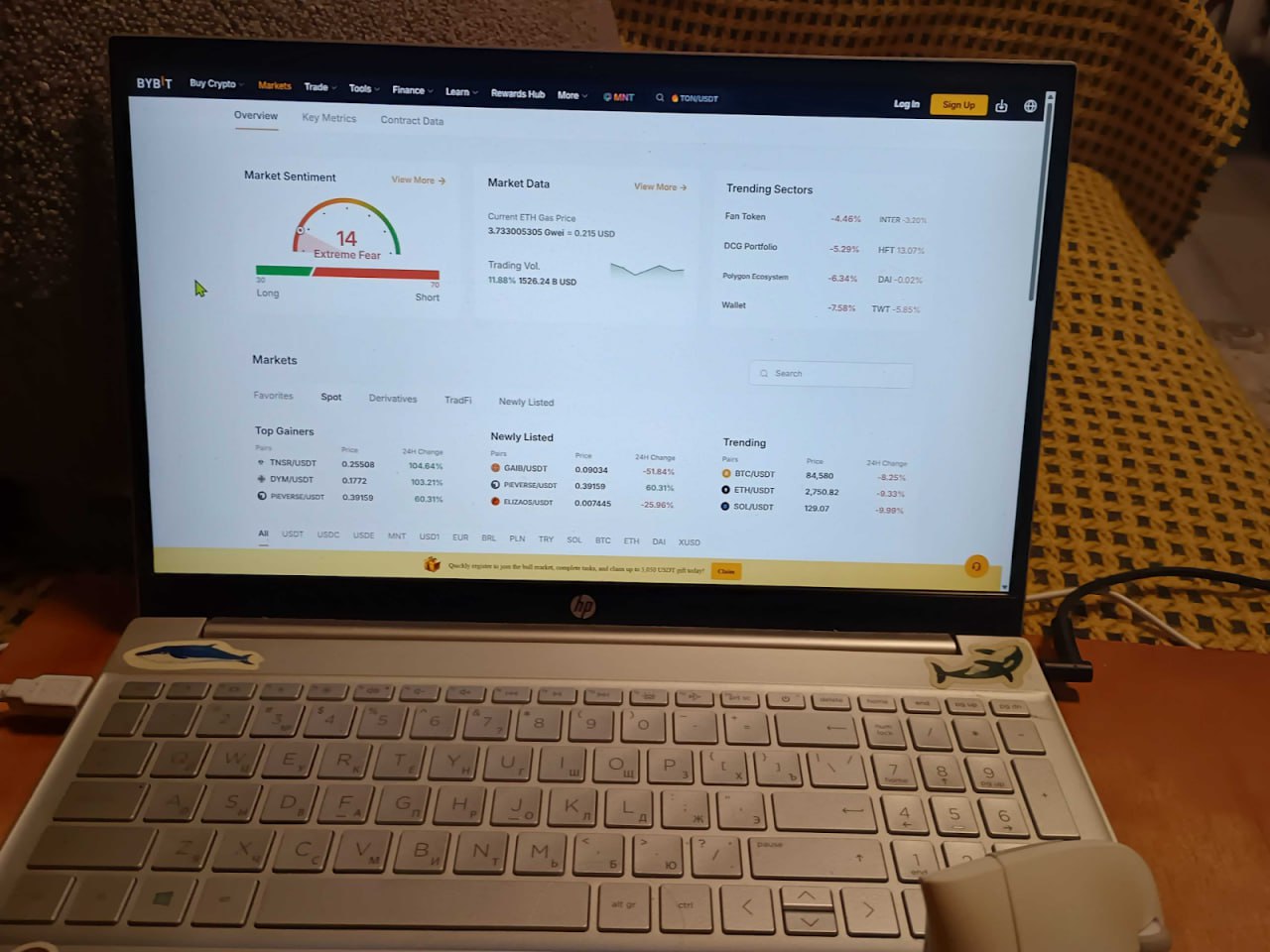
Bybit and MEXC serve different use cases, and that’s the key to choosing in a MEXC vs Bybit comparison. Bybit delivers a more “professional” experience: deeper spot liquidity, tighter spreads on majors (BTC, ETH, top alts), and more consistent order execution.
On average, tracker data shows the exchange doing several billion dollars in daily volume and offering around 500 spot pairs – fewer than its competitor, but with a more selective listing approach. Add an advanced terminal with sophisticated order types, built-in charting, and solid infrastructure for scalping and active intraday spot trading.
MEXC focuses on breadth and ultra-low fees. The exchange offers 2,000+ spot coins, aggressively lists early altcoins, and lets you trade with zero or near-zero maker fees and a reduced taker rate.
The trade-off is a weaker regulatory perimeter and higher risk in low-liquidity assets, so conservative traders and larger capital will need to be more careful with pair selection and risk management.
Available Assets, Liquidity and Market Coverage
Running a Bybit vs MEXC comparison purely on markets and liquidity isn’t quite fair because the exchanges specialize in different things. Bybit focuses on high-quality liquidity in majors: hundreds of pairs trade across spot with deep order books and tight spreads, and the exchange itself highlights “deep liquidity” on the spot market.
The core focus is BTC, ETH, major L1/L2 projects, and popular altcoins.
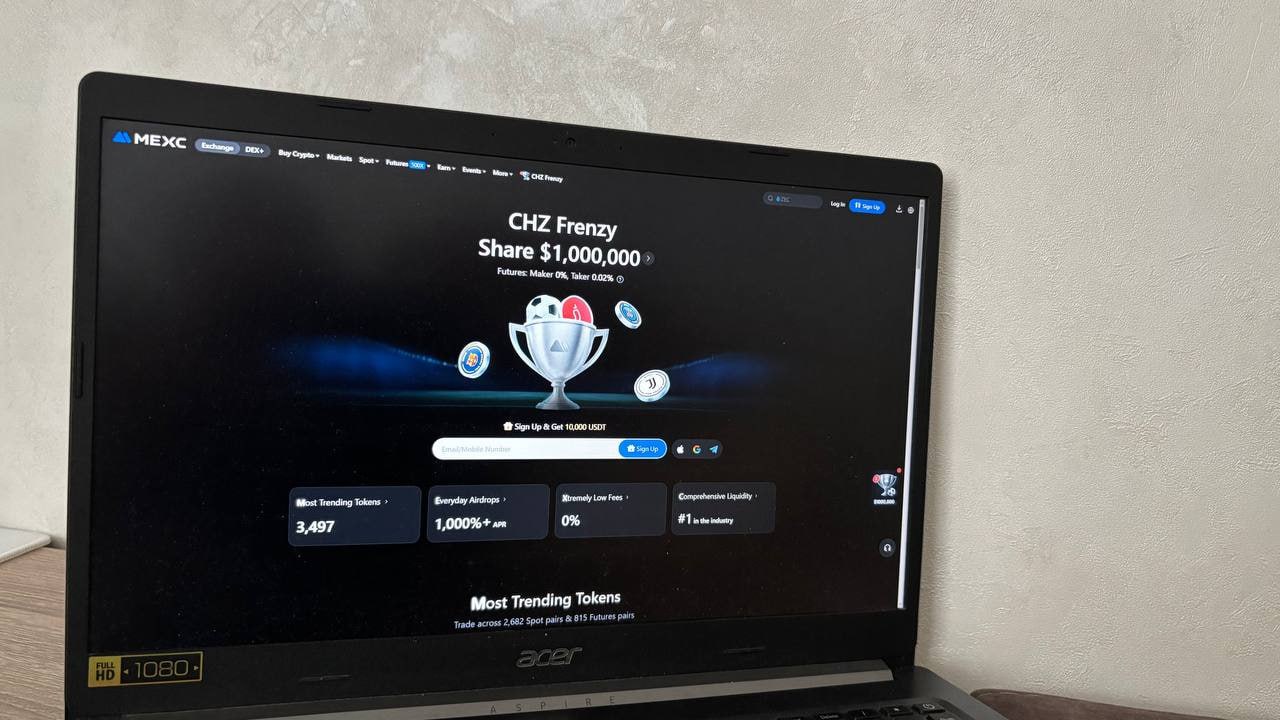
MEXC focuses on breadth. The platform lets you trade Bitcoin, Ethereum, and more than 3,000 altcoins. In short, Bybit covers the core spot and margin markets with an emphasis on execution quality, while MEXC offers the broadest possible asset list and access to early tokens.
Conclusion
The Bybit vs MEXC matchup, in GNcrypto testers’ view, ends like this: Bybit makes more sense for active spot traders in major pairs – liquidity in BTC/ETH and top alts is deeper, execution is more consistent, and the infrastructure is better suited for scalping and intraday.
MEXC is a better fit for retrohunters and people hunting for new potential projects. Both use early listings on MEXC for their own goals: the former sell assets they received from drops, while the latter buy in hopes of finding a gamechanger.
MEXC vs Bybit – Which Should You Choose?
If you’re a beginner or first-time buyer
Choose: MEXC
The exchange offers 2,000+ spot assets, including memecoins and illiquid altcoins that major platforms rarely list. The minimum spot order starts at $5, and it supports instant card buys and a P2P marketplace.
If you’re an active, fee-sensitive spot trader
Choose: Bybit
The exchange provides BTC and ETH liquidity on a top-3 global level by daily volume, with spreads typically under 0.02% on majors. The base fee is 0.1% maker/taker and drops to 0.02% maker at monthly volumes of 250,000 USDT and above, which matters for scalping and active intraday trading.
If you mainly trade BTC/ETH and want low fees
Choose: MEXC
Here, you can stick to BTC, ETH, and large L1s, while the base 0% maker and 0.05% taker fee remains among the lowest on the market even without VIP status. For a holding strategy or occasional trades once a week, this delivers meaningful savings over time.
If you want maximum asset variety and global reach
Choose: Bybit
The platform runs stricter compliance, publishes regular reserve reports, and does not serve users in a range of jurisdictions.
How We Tested MEXC vs Bybit
We evaluated both exchanges using the same methodology, which is why a Bybit vs MEXC comparison is consistent.
GNcrypto uses a standardized rating framework with 7 major categories: liquidity & volume, fees & total cost, asset selection & trading pairs, execution quality, tools & order controls, fiat access & minimum trade size, reliability & transparency.
Scores are normalized into a 1.0–5.0 star rating in 0.1-point steps and then rolled into an overall rating ($3.6 for MEXC, $4.3 for Bybit). For both exchanges, we reviewed public data: fee schedules, supported pairs/asset lists, status pages, proof-of-reserves and security documentation, and regulatory filings. We then compared it against our first-hand testing, which included opening accounts, completing KYC, funding balances with 200 USDT on each platform, and placing spot trades on BTC/USDT, ETH/USDT, and low-cap altcoins to compare execution quality, slippage, and order-book depth.
Latest News





Recommended Articles/Reviews





The content on The Coinomist is for informational purposes only and should not be interpreted as financial advice. While we strive to provide accurate and up-to-date information, we do not guarantee the accuracy, completeness, or reliability of any content. Neither we accept liability for any errors or omissions in the information provided or for any financial losses incurred as a result of relying on this information. Actions based on this content are at your own risk. Always do your own research and consult a professional. See our Terms, Privacy Policy, and Disclaimers for more details.
