

Bybit Exchange Review 2026 – The Terminal for Pros?
Affiliate Disclosure:
The Coinomist publishes reviews and ratings produced by GNcrypto as part of a content partnership. GNcrypto’s editorial team tests platforms independently using real funds. If you click on affiliate links, GNcrypto may earn commissions, which support their testing infrastructure. All opinions, ratings, and assessments are GNcrypto’s. The Coinomist does not influence evaluations and may not share these views.
Bybit

Bybit scores highly on liquidity, execution, and fees. Major caveats are the strict geo-fencing (no US/UK/Canada/France) and a steep learning curve.
GNcrypto's Verdict

If you are looking for a simplified “buy button” experience, keep walking. But if you want a platform that feels less like a retail shop and more like a professional trading terminal, Bybit is a serious contender. The data from the GNcrypto stress test paints a clear picture: this is a venue defined by deep liquidity, low base fees (0.10%), and execution speed that doesn’t stutter during volatility. However, there is a massive catch. The geo-fencing is strict. If you reside in the US, UK, Canada, or France, you are geoblocked at the door.
- The liquidity on major pairs is deep enough to absorb significant size without moving the needle. Spreads remained tight throughout the testing period.
- Starting at a flat 0.10% for both maker and taker (spot), the pricing is competitive. If you push volume, the VIP discounts kick in to lower costs further.
- It’s fully loaded. From native trading bots to a robust copy-trading module, the tools available for automated and social strategies are top-tier.
- This is the dealbreaker for many. The platform is strictly off-limits to residents of major jurisdictions like the US, UK, and Canada.
- The interface is powerful, but complex. Beginners might find the array of charts, order types, and margin settings overwhelming.
- Unlike the retail-friendly exchanges, the direct bank on-ramps here are limited. Getting fiat in isn’t as seamless as it is on competitors like Coinbase.
On this page
- Bybit Overview: Platform Focus and Market Position
- Bybit Trading Tools and Feature Set
- Where Bybit Excels – and Where It Doesn’t
- Is Bybit Worth Using?
- Trustworthiness & Security
- GNcrypto's Overall Bybit Rating
- Methodology – Why You Should Trust GNcrypto Reviews
- How GNcrypto Collects Data
- Categories & Weights
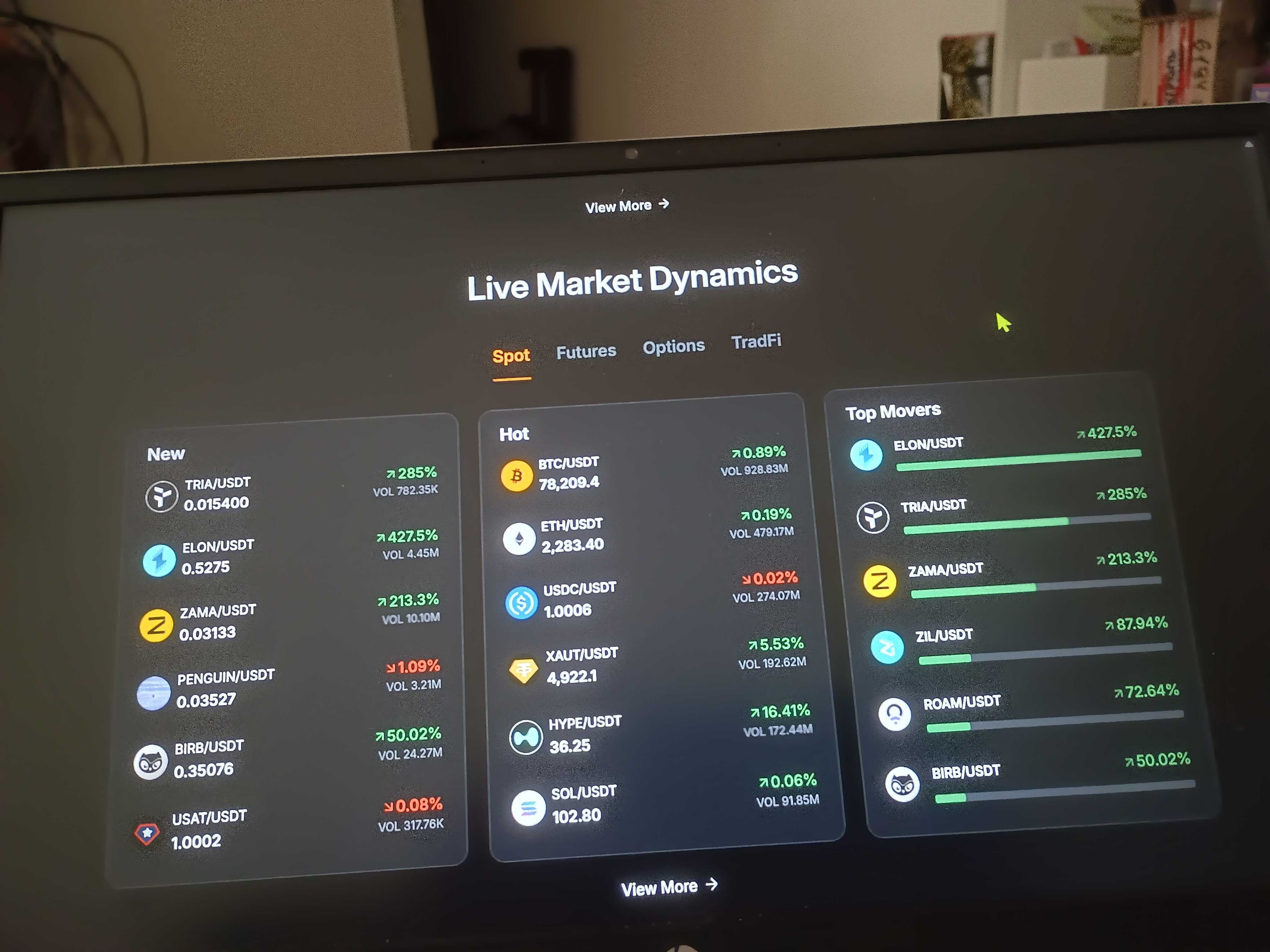
Bybit isn't trying to be a wallet for your grandma. It’s a high-performance engine built for traders who know what “cross-margin” means. GNcrypto tested the exchange to see if the liquidity and toolset justify the steep learning curve.
Exchange has effectively shed its old skin. Founded in 2018 as a specialized engine for leverage junkies, it has successfully pivoted into a global juggernaut that is now legitimately trading blows with Binance for the top spot in the hierarchy. The draw? Deeply liquid order books and a Unified Trading Account (UTA) that gives pros the capital efficiency they crave.
However, the “Wild West” days are officially over. With mandatory KYC now strictly enforced and regulatory pressure forcing exits from key jurisdictions, the question remains: is the friction worth the liquidity? To build a realistic outlook, GNcrypto conducted a field test, where analysts acted as mystery shoppers – deploying a $200 spot allocation to see if the engine actually purrs under real market conditions.
Bybit Overview: Platform Focus and Market Position
Under the hood, the platform reflects the pedigree of its CEO, Ben Zhou. Bringing his background in retail forex to the crypto wild west, Zhou made matching engine throughput and uptime the prime directives. Bybit is now widely recognized as the “technological fortress” of the market – an engine engineered to stay live even when volatility forces competitors to pull the plug.
That infrastructure obsession has translated Bybit exchange review into raw market share. The platform has successfully flipped legacy competitors to secure the title of the world’s second-largest exchange, now servicing a user base of 70 million. While the platform’s DNA is still deeply rooted in derivatives, it has shed the “leverage-only” label. Today, it operates as a full-stack ecosystem, offering deep Spot order books, a heavy-duty “Earn” suite, and native Web3 wallet tooling alongside its flagship perp markets.
Bybit Trading Tools and Feature Set
GNcrypto validated the exchange with a live $200 spot test on the BTC/USDT pair, and the results were clinical. The trade executed instantly at the 0.10% base fee (costing a negligible ~$0.20), with the fill matching the top-of-book price perfectly. There was zero perceptible slippage, confirming that Bybit’s matching engine treats retail-sized flow with institutional efficiency.
Unlike competitors that list every memecoin with a pulse, Bybit has opted for curation. GNcrypto counted 496 coins across 664 pairs – a roster that prioritizes liquidity depth over infinite variety. The order books for BTC and ETH are exceptionally deep, often quoting spreads tight enough to rival Binance directly. For those hunting early-stage alpha, the Launchpool and ByStarter sections provide a regulated surface for new tokens, though access here is heavily geo-fenced.
This isn't a “lite” app. GNcrypto Bybit reviews found the interface dense but logical, effectively mirroring a professional desktop setup.
- Visuals: The native TradingView integration allows you to layer indicators directly over the price action, while the pane simultaneously displays the Level 2 order book and recent trade history.
- The Ticket: It supports the full professional suite: Market, Limit, Stop, OCO, Reduce-Only, and Post-Only. The testers specifically appreciated the ability to set bracket Take Profit/Stop Loss (TP/SL) orders directly from the entry ticket – a feature often missing on spot desks.
Unified Trading Account (UTA) is Bybit’s “killer app.” The UTA allows for instant, internal friction-less transfers between Spot and Derivatives desks. In practice, this means your spot Bitcoin holdings can immediately serve as collateral for a levered position elsewhere, maximizing capital efficiency.
Getting money in is the only variable. Funding options are entirely dependent on your passport. While some regions get direct bank transfers, others are forced onto P2P markets or third-party processors. Crucially, though, the system is transparent – displaying all network and withdrawal fees clearly before you click confirm.
Where Bybit Excels – and Where It Doesn’t
Based on the hands-on analysis from the GNcrypto test bench, Bybit is a platform defined by raw power. It isn't trying to be a wallet for everyone; it excels specifically for users who demand professional tooling and deep liquidity. The question “is Bybit good” is effectively moot here – for the right user, it is exceptional. But that performance comes with a steep learning curve and some hard regional borders.
Strengths:
- Market Quality: The engine purrs. GNcrypto reported instant fills and tight spreads on majors (BTC/ETH) during their $200 live test, confirming that the liquidity is real, not just wash trading.
- Competitive Costs: The fee structure is aggressive. With a low 0.10% base rate, active traders can grind that down even further using “Post-Only” orders and frequent volume promotions.
- The Power User Terminal: It’s a complete cockpit. GNcrypto highlighted the native OCO orders, Grid Bots, Copy Trading modules, and TradingView charts as features that usually require third-party subscriptions elsewhere.
- Asset Depth: With 496+ coins and an aggressive listing cadence, it provides early liquidity for altcoin hunters before those tokens hit the slower, more regulated exchanges.
Weaknesses:
- The Geo-Wall: The biggest downside is the map. GNcrypto warns that the platform is strictly blocked in major jurisdictions, including the U.S., UK, Canada, and France.
- Fiat Friction: Getting cash in can be a headache. Direct bank rails are limited compared to competitors like Coinbase; funding often relies on P2P markets or pricier third-party gateways.
- Audit Status: Trust, but verify. While Bybit publishes a self-reported Proof of Reserves, GNcrypto notes the absence of a fully independent, external financial audit – a standard that is becoming increasingly non-negotiable.
- The Complexity Tax: The feature density is a double-edged sword. For absolute beginners, the interface is often overwhelming, presenting a “wall of data” that can be intimidating compared to simpler apps
Is Bybit Worth Using?
Reading through recent Bybit reviews can be confusing because the platform is polarizing by design. GNcrypto’s testing clarifies why: Bybit isn't built for the casual “buy and hodl” crowd – it is engineered for active participants who need speed and API-driven precision.
Is Bybit good? Horsepower comes at a cost.
- The Friction: New users will likely hit a wall. The feature set is overwhelming for beginners, and the fiat on-ramps are limited compared to regulated exchanges.
- The Map: It is strictly off-limits in the U.S., UK, and other major jurisdictions.
- The Safety: If you treat crypto like a savings account and demand fully audited financials, look elsewhere. But for active traders running multi-position portfolios, Bybit offers a toolset that competitors either charge a premium for – or simply don't provide at all.
If you are running automated grid bots, managing a complex altcoin portfolio, or need a Unified Trading Account that lets you cross-margin effectively, GNcrypto data confirms that Bybit delivers execution quality that few competitors can match. The spreads are tight, and the engine doesn't choke during volatility.
Trustworthiness & Security
While the matching engine is pristine, the legal history is… complicated. Bybit’s aggressive growth strategy has often involved moving faster than regulators can update their rulebooks, and the platform has the battle scars to prove it. GNcrypto’s reliability rating took a noticeable hit here, not because of system uptime, but because of the sheer volume of “red tape” friction.
The platform has faced a rolling series of enforcement actions across major jurisdictions:
- The UK Exit (2021): After a direct warning from the FCA regarding unauthorized operations, Bybit suspended all services for UK customers.
- Canada (2021–2023): This was a multi-year saga. It started with an enforcement action by the Ontario Securities Commission (OSC), led to a hefty ~$2.5M settlement in 2022, and ultimately resulted in Bybit completely exiting the Canadian market by mid-2023.
- France & Europe (2022–2024): France’s AMF placed Bybit on its blacklist in 2022 and reiterated the warning in 2024, clarifying that the platform was operating without the necessary DASP registration.
- Asia Pacific (2021–2025): Japan’s FSA issued multiple warnings over the years, culminating in October 2025 when Bybit finally halted new user registrations in Japan. Similarly, Malaysia ramped up regulatory pressure in late 2024.
The biggest stress test, however, wasn't legal – it was existential. In February 2025, Bybit suffered one of the largest security breaches in industry history, with hackers draining approximately $1.5 billion.
GNcrypto's Overall Bybit Rating
| Assessment Criteria | Rating (out of 5) |
|---|---|
| Total Score | 4.3 / 5 |
| Liquidity & Market Volume | 5 |
| Tools & Order Controls | 5 |
| Execution Quality / Market Quality | 5 |
| Asset Selection & Trading Pairs | 4 |
| Fees & Total Cost to Trade | 4 |
| Reliability & Transparency | 4 |
| Fiat Access & Minimum Trade Size | 3 |
Methodology – Why You Should Trust GNcrypto Reviews
GNcrypto’s testing team uses a weighted, category-based model, collects standardized data from each platform (open data + hands-on testing), and converts that into a 1.0–5.0 star score in 0.1 increments.
Testers focus is spot trading quality: real fees, minimum trade size, crypto availability, market quality, and the user-facing experience.
How GNcrypto Collects Data
– Public sources: fee schedules, supported asset/pair lists, proof‑of‑reserves or reserve disclosures, and system status pages.
– First-hand testing: team place test spot trades, observe effective fees (fee + spread), measure slippage/spreads on majors, and evaluate UI speed and order controls.
GNcrypto’s experts do not rate solvency or make guarantees about financial stability. These ratings reflect user experience, access, and trading quality – not a balance‑sheet audit.
Categories & Weights
– Liquidity & Volume – 25%
– Fees & Total Cost to Trade – 25%
– Asset Selection & Trading Pairs – 15%
– Execution Quality (Market Quality) – 10%
– Tools & Order Controls – 10%
– Fiat Access & Minimum Trade Size – 5%
– Reliability & Transparency – 10%
Latest News




Recommended Articles/Reviews





The content on The Coinomist is for informational purposes only and should not be interpreted as financial advice. While we strive to provide accurate and up-to-date information, we do not guarantee the accuracy, completeness, or reliability of any content. Neither we accept liability for any errors or omissions in the information provided or for any financial losses incurred as a result of relying on this information. Actions based on this content are at your own risk. Always do your own research and consult a professional. See our Terms, Privacy Policy, and Disclaimers for more details.
