

Bitget vs Binance Spot Trading Comparison in 2026
Affiliate Disclosure:
The Coinomist publishes reviews and ratings produced by GNcrypto as part of a content partnership. GNcrypto’s editorial team tests platforms independently using real funds. If you click on affiliate links, GNcrypto may earn commissions, which support their testing infrastructure. All opinions, ratings, and assessments are GNcrypto’s. The Coinomist does not influence evaluations and may not share these views.
Bitget vs Binance

Binance (4.4/5) is superior for spot traders who want elite grade liquidity on majors and the widest selection of markets, while Bitget (4.3/5) fits beginners who prefer a simpler buy and sell flow and small ticket entry without feeling overwhelmed.
GNcrypto's Verdict

GNcrypto tested both platforms with a $200 mystery-shopping run. The takeaway is simple: if you value elite liquidity on major pairs, a huge catalog of tradable assets, and a more professional spot trading environment, Binance is the stronger pick. If you care more about a smoother beginner workflow, smaller minimum trade friction, and a cleaner path to basic buy and sell routines, Bitget is the better fit.
- Bitget: Easier small ticket entry and smoother beginner spot flow
- Bitget: Full spot tool set and order controls (5/5)
- Binance: Elite liquidity and daily spot turnover around $31B
- Binance: Massive spot selection with 500+ tradable coins
- Bitget: Lower spot turnover than Binance, about $1.4B to $1.9B daily
- Bitget: Smaller spot catalog than Binance, around 200+ tradable assets
- Binance: Dense interface with multiple buy modes that can confuse beginners
- Binance: Fiat access and minimum trade size score lower than Bitget (4/5 vs 5/5)
On this page
GNcrypto tested Binance and Bitget with a real $200 spot trading run as part of a partner project. This guide explains how the two exchanges compare on spot liquidity, costs, and beginner workflows, so you can pick the better fit for your first buys and sells.
After a live $200 spot test by the GNcrypto team, the distinction is clear. Choose Binance if you demand elite liquidity on majors and a more professional market environment. Choose Bitget if you want a simpler first month workflow and easier small ticket entry. Binance is built for scale, while Bitget is built for smoother onboarding.
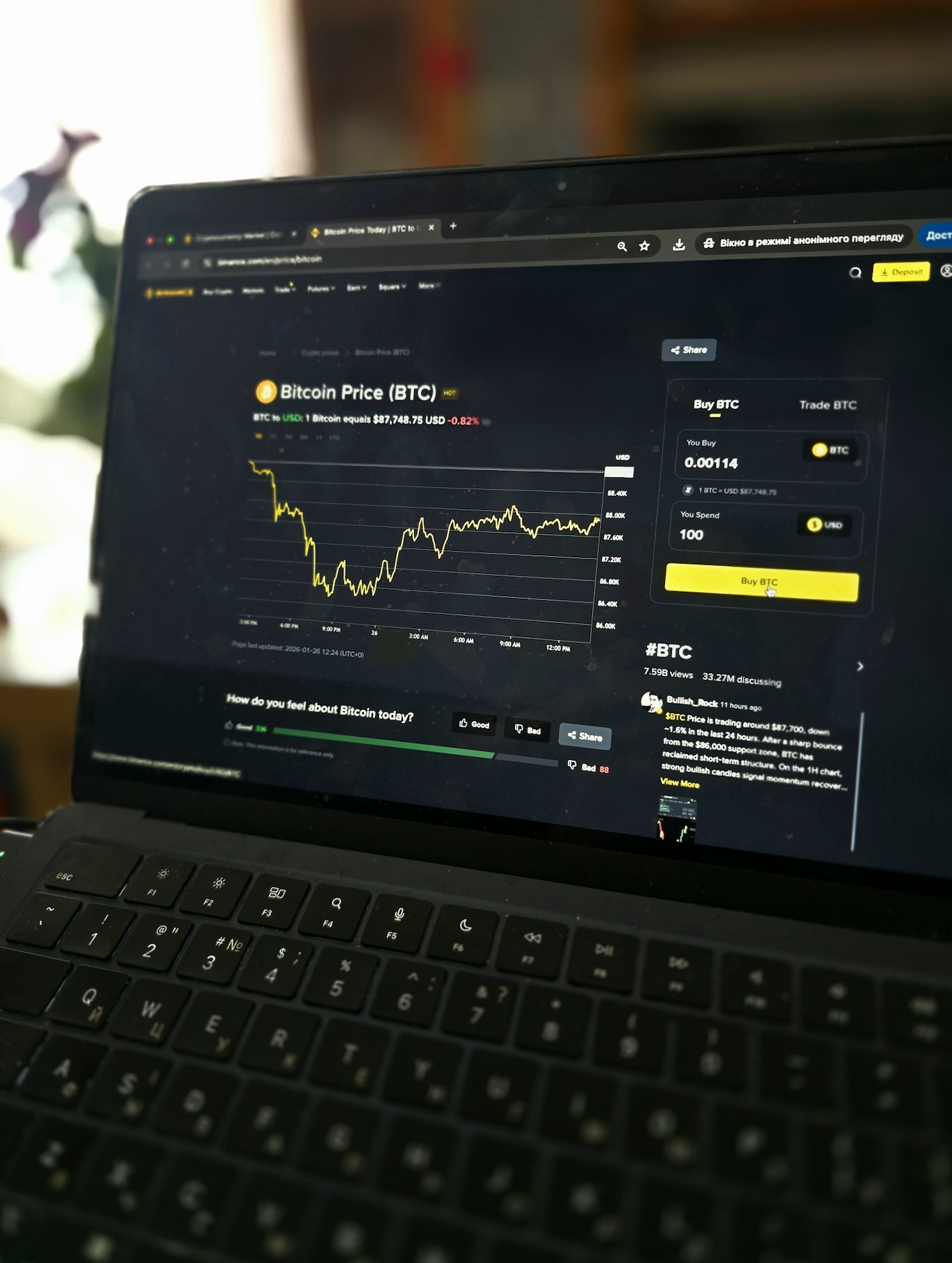
Binance vs Bitget at a Glance
| Category | Binance | Bitget | Winner |
|---|---|---|---|
| Overall GNcrypto rating | 4.4 | 4.3 | Binance (overall) |
| Daily spot turnover (approx.) | ≈ $31B | ≈ $1.4–$1.9B | Binance |
| Tradable assets (spot) | 500+ coins | 200+ | Binance |
| Liquidity & volume rating | 5/5 | 4/5 | Binance |
| Fees & total cost rating | 5/5 | 4/5 | Binance |
| Asset selection rating | 5/5 | 4/5 | Binance |
| Tools & order controls | 5/5 | 5/5 | Draw |
| Fiat access & minimum trade size | 4/5 | 5/5 | Binance |
| Reliability & transparency rating | 4/5 | 4/5 | Draw |
Binance and Bitget Overview
The biggest difference between Binance or Bitget for spot trading wasn’t some hidden feature – it was the everyday feel. Binance operates as the dense, everything-in-one mega exchange, while Bitget runs more linear and beginner-friendly when you just want to buy and sell real coins.
What spot trading looks like on both platforms. On both Binance and Bitget, a beginner quickly runs into two “modes” of spot.
- A simple buy/convert flow that is fast and friendly, where you can swap one asset for another without thinking about the order book.
- A more advanced spot trading screen, where you see the chart, the order book, and you can place limit and other orders for more control.
The important beginner takeaway here is not which mode is “better” (we will talk about costs later). It is that these modes work differently: one is optimized for speed and comfort, the other is optimized for control.
Binance offers more paths and more buttons – powerful, but overwhelming if you’re new. You can usually find everything, but it takes time to locate your average buy price, order history, and basic PnL view.
Real beginner scenario from test:
On Binance, clicking “Buy Crypto” from the homepage led to a card purchase flow. Clicking “Trade” → “Spot” led to the order book terminal. Clicking “Convert” led to a third interface. Each showed different BTC prices (within 0.3-0.5% of each other due to spreads), creating confusion about “which price is real.”
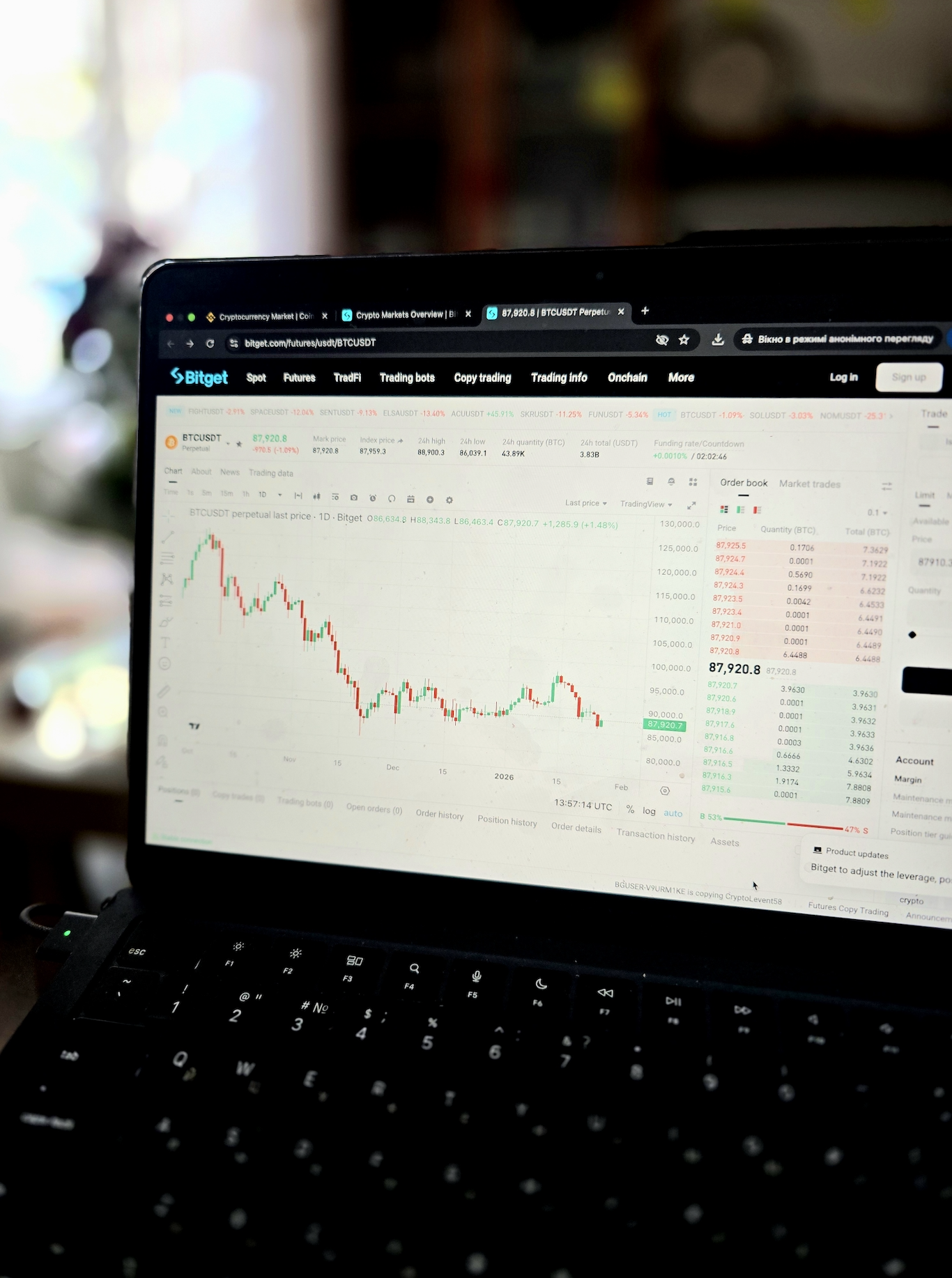
On Bitget, the “Buy Crypto” button was more prominent, and the flow to spot terminal was clearer (one extra click vs. three navigation choices on Binance). Both platforms eventually worked, but Bitget required fewer “wait, where am I?” moments. The core path on Bitget: pick the asset, pick the mode, place the trade. Less “choose from 12 workflows.”
Asset selection
Binance: 500+ tradable spot pairs covering majors, mid-caps, and long-tail altcoins. New listings appear quickly, often within days of token launch. This breadth suits traders chasing emerging narratives or building diversified portfolios beyond BTC/ETH.
Bitget: 200+ pairs focusing on established assets and top-tier altcoins. The catalog covers most beginner needs (BTC, ETH, major DeFi tokens, top meme coins) but lacks the deep long-tail selection Binance offers.
Practical difference: If you're buying top 50 coins, both platforms work. If you want to trade a newly launched DeFi token or regional altcoin, Binance lists it first – or exclusively.
Liquidity & execution quality
Liquidity test:
Binance: Placed market order on BTC/USDT during US hours. Fill with 0.06% slippage from mid-price. Order book depth: $2.5M within 0.1% of mid.
Bitget: Same BTC/USDT market order. Fill with 0.18% slippage. Order book depth: $800K within 0.1% of mid.
For major pairs like BTC and ETH, both platforms handle beginner-sized orders ($100-1000) without issues. Binance's advantage appears at $5K+ order sizes or on smaller altcoin pairs where Bitget's book thins faster.
Execution speed: Both platforms filled orders within 1-2 seconds during normal market conditions. No failed transactions or lag during moderate volatility (3% BTC intraday moves).
Fees Comparison
When people search Bitget vs Binance fees, they usually compare the maker and taker chart and call it a day. In the partner $200 mystery-shopping run, the real cost of spot trading showed up in three places: the trading fee, the spread baked into instant buy quotes, and the cost to withdraw to self custody.
Cost example from $200 test:
Binance instant buy: Bought $200 BTC via “Buy Crypto” – received $195.80 worth of BTC (effective 2.1% spread + fees). Same trade via spot terminal with limit order: $198.20 worth of BTC received (0.10% taker fee = $0.20, plus tighter mid-price). Difference: $2.40 on a $200 trade.
Bitget instant buy: Bought $200 BTC via “Quick Buy” – received $196.50 worth of BTC (effective 1.75% spread + fees). Same trade via spot terminal: $198.30 worth (0.10% taker fee, tighter execution). Difference: $1.80.
For this test, Bitget's instant buy was slightly cheaper than Binance's, but both were significantly more expensive than using the spot terminal.
Withdrawals are part of the total bill. A lot of beginners forget this step until they try moving BTC to a wallet and see the network fee hit.
Withdrawal fee test:
Binance: withdrew 0.001 BTC ($98 at test time) to external wallet. Network fee: $2.50 (fixed regardless of amount). On a $98 withdrawal, that's 2.55% in fees. Bitget: withdrew the same 0.001 BTC. Network fee: $2.20. On $98, that's 2.24%.
Reality check: withdrawing $20 of BTC would cost the same $2.20-2.50, meaning 11-12.5% in fees. This is why five $20 withdrawals hurt more than one $100 withdrawal.
A practical rule set for beginners. Use instant buy only when speed and simplicity matter more than price. When you have time, use the spot terminal and prefer limit orders. And before you buy, check what it will cost to withdraw the same asset, because the cheapest buy is not always the cheapest ownership.
Final Verdict
Bottom line, this Binance vs Bitget comparison comes down to your first-month priorities. Binance is the better pick if you value market scale and a more pro trading environment on majors. Bitget is the better pick if you want a smoother learning curve and a more straightforward path to simple buy and sell routines.
Here is the trade off: Binance’s strength – maximum depth and options, but that same breadth can push beginners into the wrong mode at the wrong time. People bounce between Buy, Convert, and Spot, then wonder why prices and fees look different each time.
Bitget runs more linearly, helping beginners stay focused. But you still need to respect market quality on smaller pairs – treating every alt like BTC and slamming market orders will surprise you with slippage.
Two quick reality checks from a $200 style beginner journey:
- You buy fast in a simple flow, feel good, then notice later that the spot screen was trading slightly better at that moment. That is not a scandal. It is the cost of convenience.
- You withdraw a small amount to a wallet and the fee feels huge in percent terms. That is not the exchange being evil. It is you discovering that withdrawal costs do not scale down nicely.
Practical advice: stick to one buy flow for your first week – don't bounce between Buy/Convert/Spot. Use the spot terminal when price matters (saves 1.5-2% vs instant buy). Batch your withdrawals – five $20 moves cost 5× more in fees than one $100 move.
Which Should You Choose?
If you mostly buy BTC and ETH and care about the cleanest fills
Choose: Binance
It is the safer default when your main goal is to get in and out at a fair price on majors without worrying about market quality.
If you want a simpler first month spot routine with less UI overload
Choose: Bitget
It often feels more linear for beginners, which makes it easier to stick to one workflow and avoid bouncing between Buy, Convert, and Spot.
If you plan to use advanced spot orders early like limit, stop, or OCO
Choose: Binance
The advanced spot environment is deep and feature rich, so it fits better when you want to control entries and risk with proper order tools.
If you mainly do small buys and want a smoother learning curve
Choose: Bitget
For beginner sized trades, it usually gives you the basics in a cleaner path, which reduces early mistakes caused by interface overload.
If you expect to move assets to self custody often
Choose: Binance
Not because withdrawals are magically free, but because the overall ecosystem tends to make repeat workflows easier once you learn where the key settings live.
How we tested Binance vs Bitget
This article uses a partner mystery shopping style test run by GNcrypto under its Spot Trading Score methodology. Coinomist is summarizing those partner findings in a beginner friendly way.
The framework scores each exchange across 7 weighted categories that matter for normal spot users: liquidity and volume, fees and total cost to trade, asset selection and trading pairs, execution quality, tools and order controls, fiat access and minimum trade size, and reliability and transparency. Each category is scored from 1.0 to 5.0 in 0.1 steps, then multiplied by the weight and summed into the final Spot Trading Score.
For this comparison, the partner team combined public data with hands on checks. Public data included fee schedules, supported assets and pairs, proof of reserves and security pages, and any status or transparency disclosures. The hands on part followed a simple beginner path with around $200: account setup and verification where required, funding the account, making spot buys and sells in both the simple buy flow and the advanced spot screen, and checking how clearly the platform shows price, fees, order status, and withdrawal costs before confirming.
Important note: these scores reflect spot trading experience and usability, not solvency. The final Spot Trading Scores used in this article are 4.4 for Binance and 4.3 for Bitget.
Latest News




Recommended Articles/Reviews





The content on The Coinomist is for informational purposes only and should not be interpreted as financial advice. While we strive to provide accurate and up-to-date information, we do not guarantee the accuracy, completeness, or reliability of any content. Neither we accept liability for any errors or omissions in the information provided or for any financial losses incurred as a result of relying on this information. Actions based on this content are at your own risk. Always do your own research and consult a professional. See our Terms, Privacy Policy, and Disclaimers for more details.
