

Bitget Exchange Reviews 2026: Testing Spot Trading, Fees, and Safety
Affiliate Disclosure:
The Coinomist publishes reviews and ratings produced by GNcrypto as part of a content partnership. GNcrypto’s editorial team tests platforms independently using real funds. If you click on affiliate links, GNcrypto may earn commissions, which support their testing infrastructure. All opinions, ratings, and assessments are GNcrypto’s. The Coinomist does not influence evaluations and may not share these views.
Bitget

Based on GNcrypto testing, Bitget suits spot traders who want low base fees, strong liquidity on major pairs, and a clean Pro interface. The tradeoff is higher all-in costs on card buys and network-based withdrawal fees that are finalized at confirmation.
GNcrypto's Verdict

Bitget is a centralized exchange for non-U.S. traders with deep spot liquidity on major pairs and a clean Pro interface. GNcrypto testing found order book trading cost-efficient, with a 0.10% base taker fee and typically tight spreads, while instant card buys tend to cost more. It suits casual and light pro traders who value regular proof of reserves updates.
- Low base spot fees
- Strong liquidity on major pairs
- Clean, beginner-friendly Pro interface
- Not available to U.S. residents
- Withdrawal fees are finalized at confirmation
On this page
- How Bitget Works: Platform Overview
- Bitget Core Features and Trading Options
- Who Should Use Bitget? Final Verdict and Takeaways
- Pros and Cons of Using Bitget
- Trustworthiness Check
- GNcrypto's Overall Bitget Rating
- Methodology – Why You Should Trust GNcrypto Reviews
- How GNcrypto Collects Data
- Categories & Weights
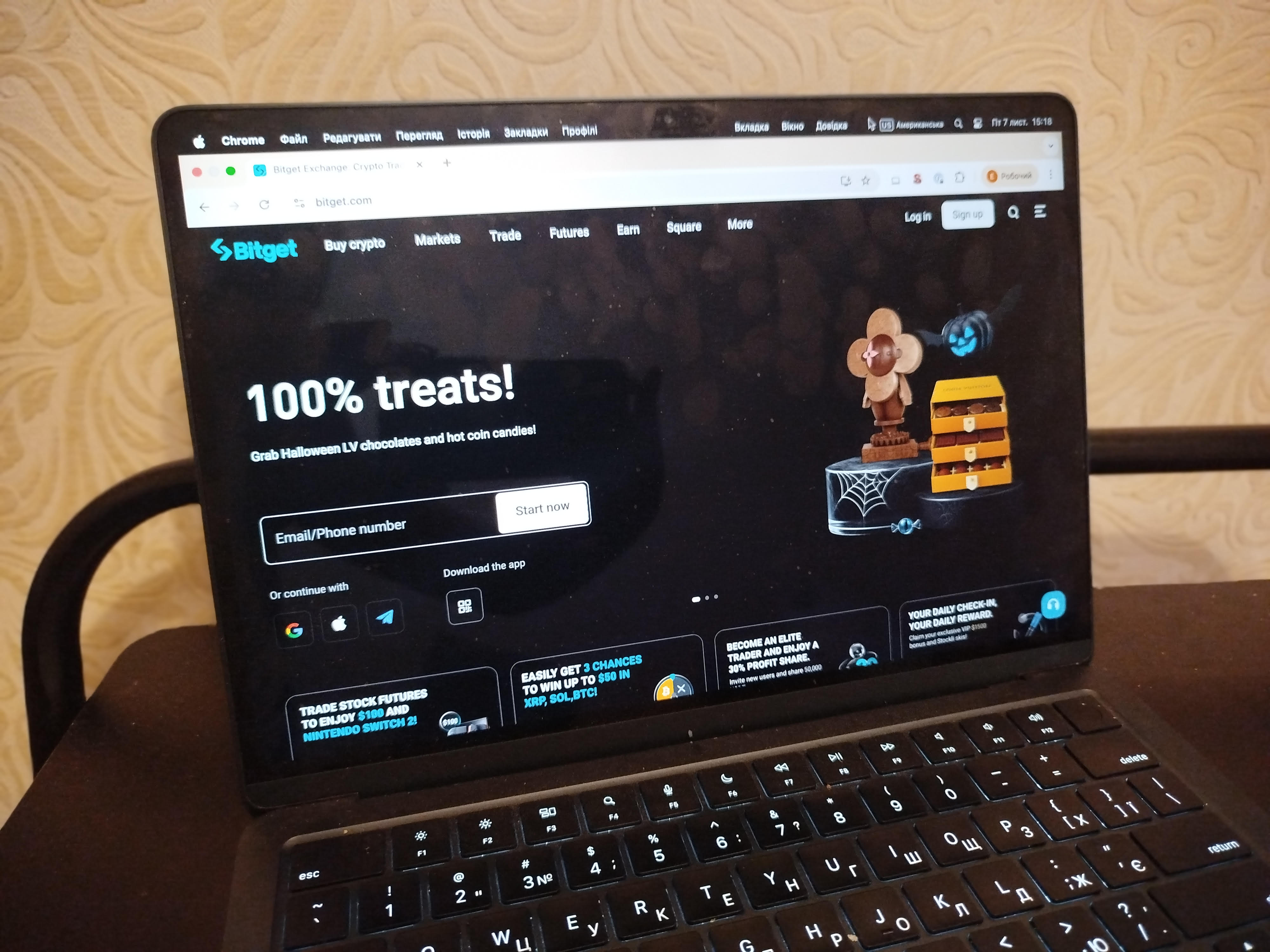
GNcrypto checked Bitget for 2026 from a beginner spot perspective and translated it into simple steps: how to fund, place your first order, and confirm key settings. Expect a practical checklist, common cost traps, and what to verify before you move funds off the exchange.
How Bitget Works: Platform Overview
Bitget is a centralized crypto exchange built for global, non-U.S. users who want a straightforward way to trade popular coins. GNcrypto focuses on what a beginner actually experiences on spot: what it costs to place a trade, how clean the execution feels on major pairs, and whether the interface supports simple, disciplined order placement without extra complexity. That is the lens behind this Bitget review.
From a new user's point of view, the path is usually the same: create an account, complete identity checks if your region or payment method requires it, then fund the account with crypto or with a fiat rail. Once funded, you choose between simple buy flows and the Pro or Spot trading view, pick a pair like BTC/USDT, and place either a market order for speed or a limit order for price control. In practice, that choice matters because order book trading tends to be more cost-efficient than instant buy options.
In the sections below, GNcrypto keeps the discussion practical and beginner-friendly, breaking down the core spot tools you will actually use, ways to minimize common mistakes like overpaying via instant buys, and which account protections are worth enabling early.
Bitget Core Features and Trading Options
Before your first spot trade, the biggest cost lever is how you fund and buy. A crypto deposit or a bank-style top-up often keeps the all in cost closer to the market price, while card and third-party instant buys can add extra spread or processing fees. GNcrypto's rule of thumb is simple: check the final quote and any added charges before you click buy, and if you plan to trade more than once, consider funding in advance and using the order book.
On the Pro or Spot terminal, Bitget gives you the familiar three-panel layout: an order book, a chart, and an order ticket on one screen. For beginners, that is a plus because you can see where liquidity sits and what price you are accepting. The only tools you truly need on day one are market and limit, then one protective order type once you are comfortable managing risk.
Here is how GNcrypto maps order types to real situations. Use a limit order when you want to control your entry price and avoid chasing a moving market. Use a market order when speed matters and you are trading a highly liquid pair, but expect to pay the current spread. Stop and stop limit orders help you define your downside if the market moves against you. OCO can be useful once you want a simple take profit plus stop loss structure in one setup, but it is optional for absolute beginners.
In GNcrypto’s $200 spot test on BTC/USDT using the Pro or Spot view, the base spot trading fee was 0.10%, which worked out to about $0.20 in fees for that order. During liquid hours, the visible bid-ask spread on majors typically looked very tight, around 0.01% to 0.03%, so the effective cost landed roughly in the 0.11% to 0.13% range when you combine fee plus spread. Bitget also advertises small minimum order sizes, often around $5, which helps first-time buyers test the interface without committing a large amount. On withdrawals, fees are network dependent and the final total is shown before you confirm, so we would always review the network and the displayed cost right at checkout.
Is Bitget safe is a fair question for beginners, and GNcrypto thinks the most useful answer is a checklist of concrete account-level controls. Bitget documents two-factor authentication options such as Google Authenticator, passkeys, and SMS verification, depending on the setup, plus an anti-phishing code to help you spot fake emails. It also supports withdrawal address whitelisting, and it includes a 24-hour withdrawal suspension after certain sensitive security changes, which can reduce damage if someone gains access to your account.
Who Should Use Bitget? Final Verdict and Takeaways
In GNcrypto view, Bitget makes the most sense for beginners who are willing to place simple spot orders on major pairs rather than relying on instant buy buttons. If you want a clean trading screen, basic order controls, and competitive base fees on the order book, it can feel like a practical upgrade from app-only buy flows. It also fits casual and light pro users who trade a handful of liquid assets and care about keeping execution predictable.
Bitget may be a weaker fit if you are a U.S. resident, since access is restricted, or if your entire plan is to buy tiny amounts by card and withdraw frequently. In those cases, the convenience premium on instant buys and the variability of network-based withdrawal costs can matter more than low base spot fees. It can also be less appealing if you mainly trade small, illiquid alt pairs, where spreads and depth are more variable across any exchange.
GNcrypto bottom line for Bitget exchange reviews is simple: it is strongest when you use the order book on major pairs and treat security setup as part of your first day routine.
Beginner takeaways:
- Start with a major pair and a small limit order to learn the interface.
- Compare instant buy pricing against funding first and buying on the order book.
- Before any withdrawal, double-check the chosen network and the final fee shown at confirmation.
Pros and Cons of Using Bitget
Based on GNcrypto testing:
Strengths:
- Competitive base spot fees on Pro or Spot
- Strong liquidity on major pairs
- Beginner-friendly terminal and core order types
- Solid mobile experience
- Multiple funding routes such as SEPA, cards, and P2P
Weaknesses:
- Not available in the U.S.
- Withdrawal cost is finalized at confirmation and depends on the network
- Instant buy flows can cost more than order book trading
- Liquidity varies more on smaller alt pairs
- Fiat quote pair lineup is not presented as a simple one-page list
Trustworthiness Check
GNcrypto checked public disclosures and platform documentation:
- Proof of Reserves: Bitget publishes proof of reserves disclosures using Merkle tree-style verification and regular reporting.
- Account security tools: Documented protections include 2FA options, anti-phishing code, withdrawal address whitelist, and a 24-hour withdrawal lock after certain security changes.
- System monitoring: Bitget maintains a public system status page for incidents and maintenance updates.
- Availability: Terms and access rules specify prohibited jurisdictions, including the United States.
GNcrypto's Overall Bitget Rating
| Criteria | Rating (out of 5) |
|---|---|
| Liquidity & Volume | 4 |
| Fees & Total Cost to Trade | 4 |
| Asset Selection & Trading Pairs | 4 |
| Execution Quality / Market Quality | 4 |
| Tools & Order Controls | 5 |
| Fiat Access & Minimum Trade Size | 5 |
| Reliability & Transparency | 4 |
Methodology – Why You Should Trust GNcrypto Reviews
GNcrypto’s testing team uses a weighted, category-based model, collects standardized data from each platform (open data + hands-on testing), and converts that into a 1.0–5.0 star score in 0.1 increments.
Testers' focus is spot trading quality: real fees, minimum trade size, crypto availability, market quality, and the user-facing experience.
How GNcrypto Collects Data
– Public sources: fee schedules, supported asset/pair lists, proof‑of‑reserves or reserve disclosures, and system status pages.
– First-hand testing: the team places test spot trades, observes effective fees (fee + spread), measures slippage/spreads on majors, and evaluates UI speed and order controls.
GNcrypto’s experts do not rate solvency or make guarantees about financial stability. These ratings reflect user experience, access, and trading quality – not a balance‑sheet audit.
Categories & Weights
– Liquidity & Volume – 25%
– Fees & Total Cost to Trade – 25%
– Asset Selection & Trading Pairs – 15%
– Execution Quality (Market Quality) – 10%
– Tools & Order Controls – 10%
– Fiat Access & Minimum Trade Size – 5%
– Reliability & Transparency – 10%
Latest News





Recommended Articles/Reviews





The content on The Coinomist is for informational purposes only and should not be interpreted as financial advice. While we strive to provide accurate and up-to-date information, we do not guarantee the accuracy, completeness, or reliability of any content. Neither we accept liability for any errors or omissions in the information provided or for any financial losses incurred as a result of relying on this information. Actions based on this content are at your own risk. Always do your own research and consult a professional. See our Terms, Privacy Policy, and Disclaimers for more details.
