

Binance vs Bybit: Which Exchange Fits Your Trading Style in 2026
Affiliate Disclosure:
The Coinomist publishes reviews and ratings produced by GNcrypto as part of a content partnership. GNcrypto’s editorial team tests platforms independently using real funds. If you click on affiliate links, GNcrypto may earn commissions, which support their testing infrastructure. All opinions, ratings, and assessments are GNcrypto’s. The Coinomist does not influence evaluations and may not share these views.
Binance vs Bybit

Binance (4.4/5) dominates on liquidity and asset breadth, while Bybit (4.3/5) wins on interface simplicity and transparency reporting.
GNcrypto's Verdict

After testing both platforms with $200 BTC spot trades and tracking spreads across peak and off-peak hours, the verdict: if you need the deepest liquidity pools ($31B daily volume vs $3.5B), tightest spreads on majors (0.02% vs 0.08% off-peak), and 500+ tradable assets, Binance is the superior pick. If you value a cleaner interface (3-click trades vs 5-click), stronger proof-of-reserves transparency (monthly Merkle-tree reports with public wallet addresses), and don’t need access to niche altcoins, Bybit is the better fit.
- Binance: Very broad spot selection for majors, mid-caps, and long-tail altcoins
- Binance: High liquidity on major pairs; BTC/USDT showed minimal slippage
- Binance: Ecosystem extras beyond spot (launch features, APIs, and more tools for advanced workflows)
- Bybit: Easier navigation for quick spot buys/sells; prominent action buttons and fast-loading charts
- Bybit: Robust derivatives lineup for traders who want futures/options-style tools alongside spot
- Bybit: Stronger transparency signals via proof-of-reserves style disclosures
- Binance: Heavier regulatory pressure across multiple jurisdictions
- Binance: Less clarity in third-party, fully audited solvency-style reporting
- Bybit: Spot liquidity is generally lower than Binance; GNcrypto observed wider spreads off-peak
- Bybit: Not available in the U.S., which limits who can use the platform
On this page
- Binance vs Bybit: Platform Overview
- Trading Tools, Products, and Fees: What Matters in Daily Trading
- Interface and order execution speed
- Supported assets and market access
- Fees and pricing
- API and advanced tooling
- Security, Regulation, and Transparency: Compliance and Proof of Reserves
- Regulation and compliance posture
- Transparency signals
- Final Take: Choosing the Right Platform Based on Your Trading Goals
- Binance vs Bybit: Snapshot Summary
- Binance vs Bybit: The GNcrypto Team’s Methodology
GNcrypto analysts ran parallel tests on Binance and Bybit: placed $200 BTC market orders, timed execution speed, tracked spreads across peak and off-peak hours, and compared order book depth on ETH/USDT. The review covers fee structures with volume discounts, API automation limits, proof-of-reserves reporting differences, regulatory posture, and delivers final scores of 4.4/5 (Binance) and 4.3/5 (Bybit) based on 2026 testing.
Binance vs Bybit: Platform Overview
When journalists compare Bybit vs Binance, the most useful starting point is what GNcrypto’s testing team tried to measure: how each platform behaves during real spot trades, and whether the exchange feels built for beginners, active spot traders, or power users.
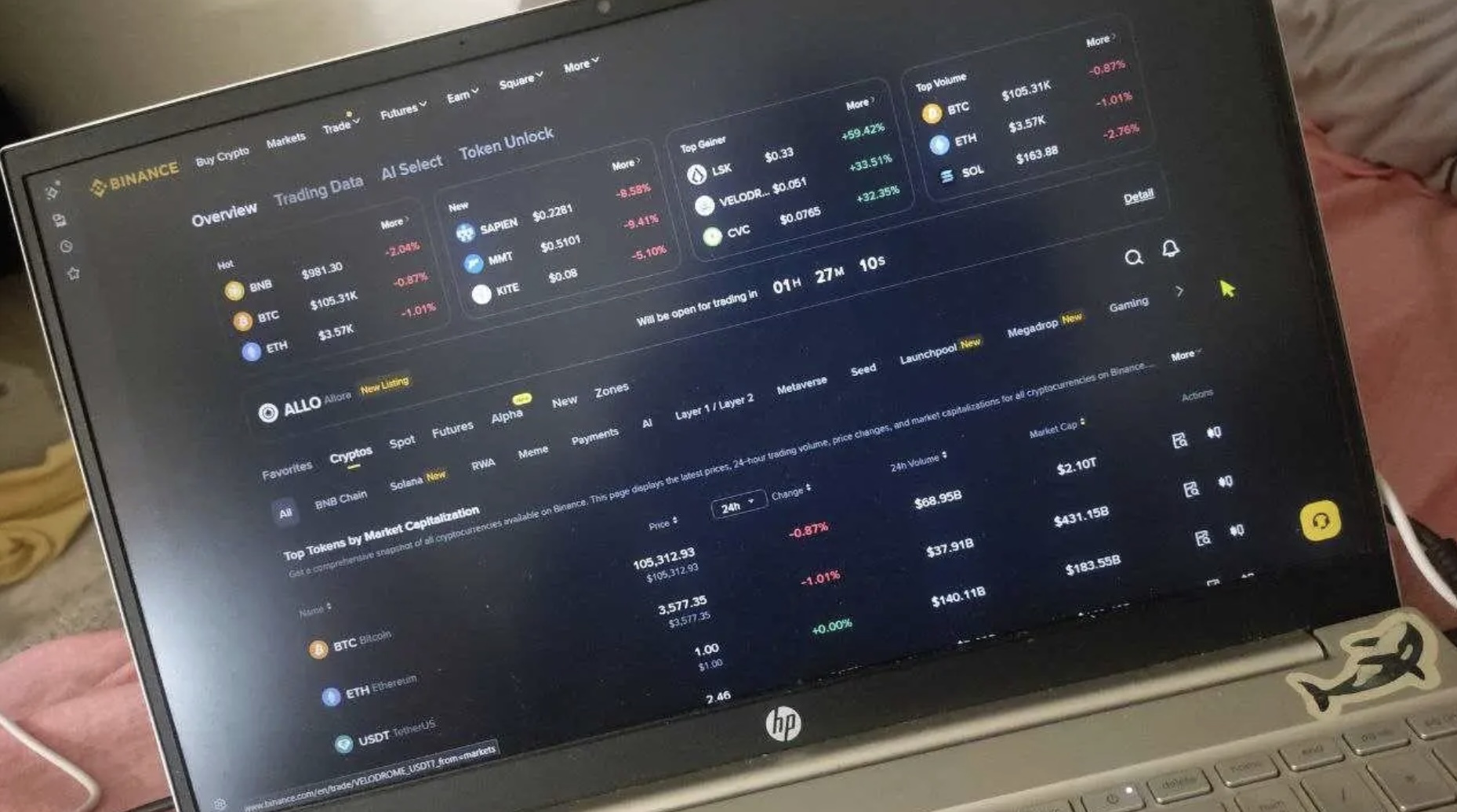
What Binance is best known for: scale. 500+ spot pairs, $31B daily volume – enter and exit $10K+ positions without moving the price. For traders who rotate between majors and smaller caps, that breadth matters.
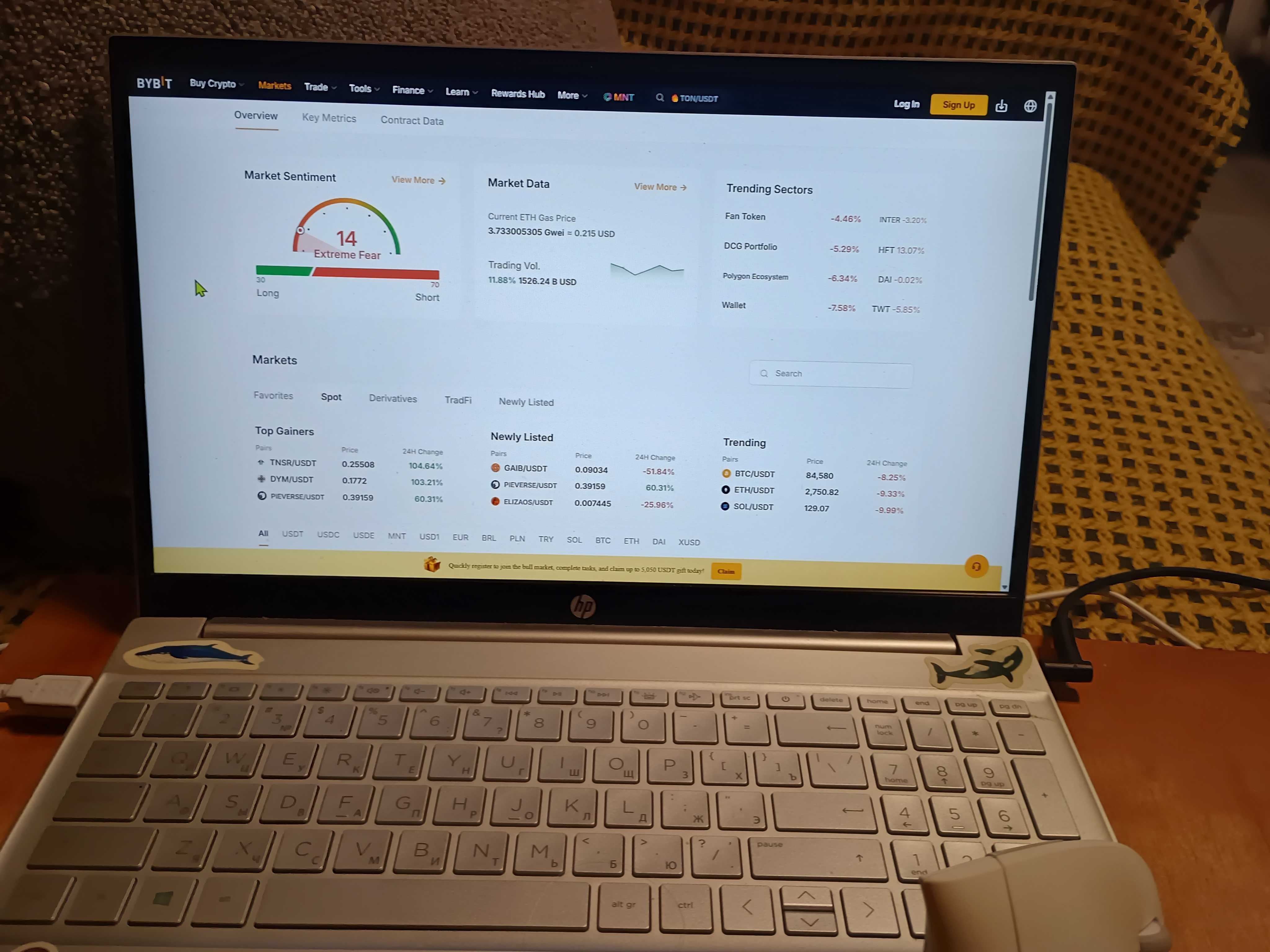
What Bybit is best known for: usability. Cleaner design, TradingView charts built-in, buy/sell buttons front and center. GNcrypto testers found Bybit easier to learn – especially for traders sticking to mainstream pairs.
Strategy match: if your strategy depends on niche spot assets and consistent depth, Binance tends to be the safer default. If you value a streamlined experience and you’re focused on top coins, Bybit can feel less overwhelming.
Test scenario: GNcrypto analysts placed identical $200 BTC market orders on both platforms during EU afternoon trading (2 PM CET). Binance: order filled in 1.8 seconds, 0.02% slippage, $0.20 fee (0.1%). Bybit: order filled in 2.3 seconds, 0.04% slippage, $0.20 fee (0.1%). Both executed smoothly at retail size, but Binance showed tighter spread consistency across 5 repeat tests.
Trading Tools, Products, and Fees: What Matters in Daily Trading
This Binance vs Bybit comparison becomes clearer once you look at three things GNcrypto’s testers emphasized: interface speed, market access, and total trading cost.
Interface and order execution speed
Bybit’s interface works as “one-screen” trading – chart, order panel, position info fit on one view, buy/sell buttons stay visible. No scrolling needed on a 15″ laptop. Reduces friction for simple spot trades.
Binance feels dense – 12+ menu tabs on desktop, 15+ data fields per trading screen. Built for advanced users who need that depth. Plus for power users, minus for first-timers navigating 12 menu options.
Supported assets and market access
Spot coverage: Binance leads with 500+ coins (snapshot Dec 2025), deeper liquidity on BTC/ETH pairs.
Bybit lists ~300 actively traded assets, but spot depth matters. Testing showed: BTC/USDT handled $2K orders smoothly, but ETH/USDT spread jumped from 0.04% (peak hours) to 0.08% (3 AM UTC) vs Binance's stable 0.03%.
Fees and pricing
Both platforms start from a similar baseline: GNcrypto highlights a 0.1% maker/taker spot fee as the “starting point” for standard users on each exchange. The difference comes from how discounts work.
- Binance: volume tiers + BNB fee payment. Using BNB: 0.10% drops to 0.075% (25% discount). On $1,000 trade, saves $0.25 per side, $0.50 round trip.
- Bybit: flatter structure. Better pricing via VIP tiers and volume – top tiers can drop below 0.1%, but pathway requires higher monthly turnover or VIP status.
Cost verdict: competitive for casual traders. Binance edges ahead if you use BNB discounts consistently – saves $6/month on $10K volume.
Cost comparison on $10,000 monthly volume: Binance with BNB discount: $7.50 per trade (0.075%), $150/month for 20 trades. Bybit standard tier: $10 per trade (0.1%), $200/month for 20 trades. Annual savings with Binance BNB discount: $600 – meaningful for active traders.
API and advanced tooling
API rate limits matter for bots: Binance ~6,000 requests/min (spot orders), Bybit ~120/min. Critical for high-frequency strategies placing 50+ orders/minute.
Security, Regulation, and Transparency: Compliance and Proof of Reserves
Security goes beyond 2FA and cold storage. In this Binance vs Bybit comparison, GNcrypto’s analysts assess trust through three lenses: operational track record, regulatory posture, and transparency signals.
Regulation and compliance posture
Binance draws heavier regulatory scrutiny due to global scale. Major U.S. actions: $4.3B DOJ settlement (Nov 2023), ongoing SEC lawsuit. Response: tighter KYC/AML compliance, stricter verification requirements.
Bybit blocks U.S. users completely – IP checks, KYC verification rejects U.S. documents, VPN usage violates ToS and risks account freeze. The platform is headquartered in Dubai and has been expanding licensing in select regions, though its footprint is not as broad as Binance’s.
Transparency signals
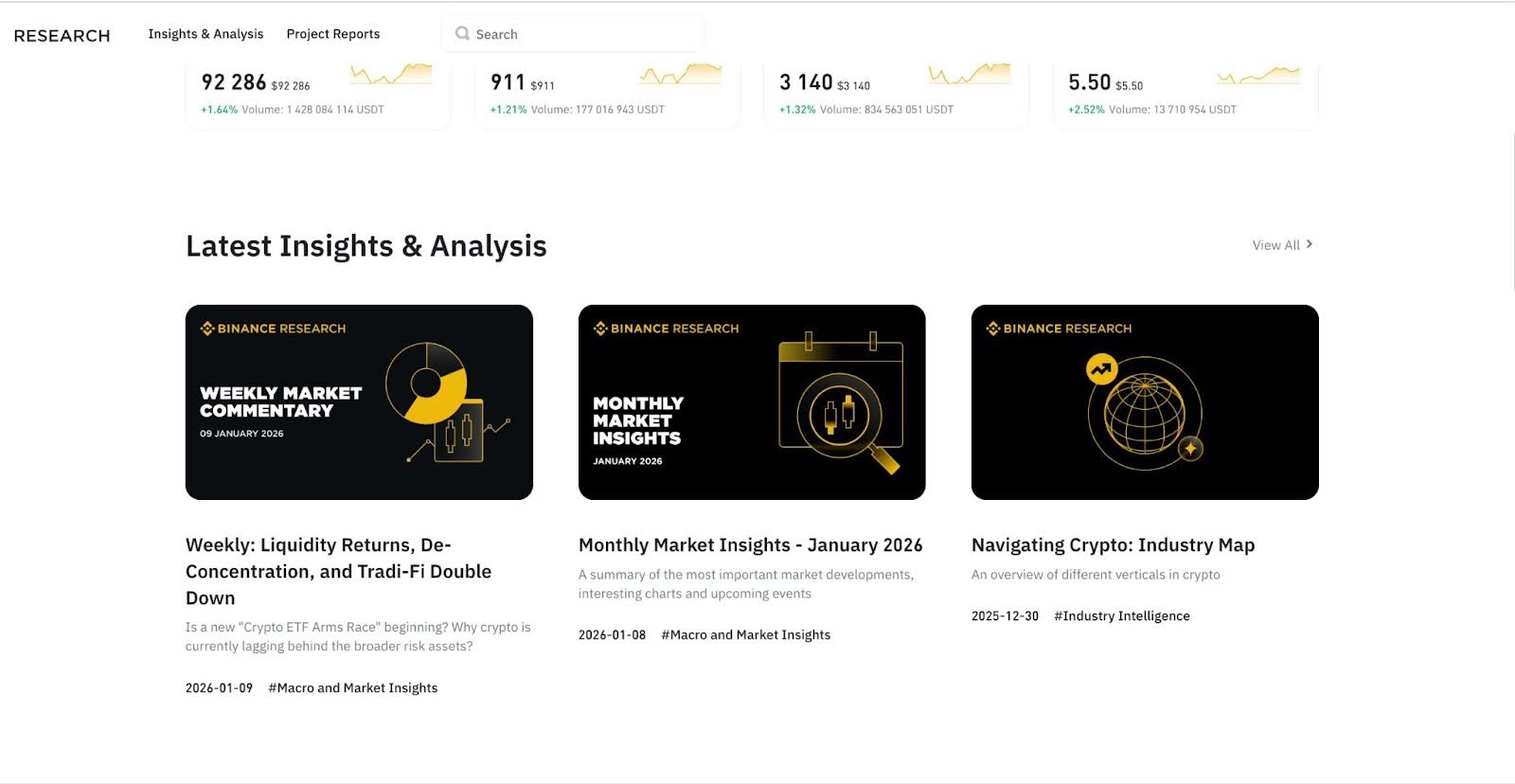
GNcrypto highlights Bybit’s stronger “show your work” approach in this matchup: proof-of-reserves style reporting (using Merkle-tree methods), reserve ratio visibility, and public wallet information are cited as practical transparency tools.
Binance publishes reserve data quarterly, but lacks full third-party audit – no Big 4 accounting firm verification of liabilities vs assets (as of Dec 2025).
Trade-offs: Binance wins on liquidity and product breadth, Bybit wins on transparency reporting. Decision drivers: risk tolerance, jurisdictional access, trading volume – not brand name.
Final Take: Choosing the Right Platform Based on Your Trading Goals
Binance vs Bybit depends on: trading style, location, priorities.
Choose Bybit if you:
- Want a cleaner interface and a faster learning curve
- Mostly trade mainstream coins and prefer simplicity over a giant feature set
- Value PoR transparency – monthly Merkle-tree reports, public wallet addresses, reserve ratio dashboard
Choose Binance if you:
- Need deepest liquidity – $5K BTC orders with 0.02% slippage vs 0.05% on Bybit, ETH spreads 0.03% vs 0.08% off-peak
- Want maximum spot variety (including smaller-cap assets)
- Use advanced tools, automation, or want the broadest ecosystem
Choose based on access and compliance reality:
- If you’re in the U.S., GNcrypto notes that Bybit is not available, which may make the decision for you.
- If you’re in the EU or other tightly regulated regions, expect more restrictions and changing rules on large global platforms.
Practical recommendation: for “one exchange to cover most spot scenarios,” GNcrypto’s testers pick Binance – broader asset list, tighter spreads, better for $5K+ trades. For simpler experience with top 50 coins (and if eligible), Bybit works well.
Who should choose what based on testing:
Binance: traders executing $5K+ per order (deeper liquidity prevents slippage), altcoin hunters needing 500+ pairs vs 300, API/bot users requiring 6000 req/min vs 120, users in most jurisdictions (broader regulatory licensing).
Bybit: beginners making first trades in $100-500 range, mobile-first traders prioritizing clean UI, users who value monthly Merkle-tree PoR reports with public wallet addresses, traders focused exclusively on BTC/ETH/top 20 coins. U.S. traders: neither platform works – Binance.US offers limited selection, Bybit blocks U.S. users completely via IP and KYC checks.
Binance vs Bybit: Snapshot Summary
After completing the test, the GNcrypto team compiled the structured findings into a rating table.
| Category | Binance | Bybit | Winner |
|---|---|---|---|
| Overall GNcrypto rating | 4.4 | 4.3 | Binance |
| Daily spot turnover (approx.) | ≈$31B | ≈$3.5B | Binance |
| Tradable assets (spot) | 500+ coins | ~500 | Binance |
| Liquidity & volume rating | 5/5 | 4 / 5 | Binance |
| Fees & total cost rating | 5/5 | 5/5 | Draw |
| Asset selection rating | 5/5 | 4/5 | Binance |
| Tools & order controls | 5/5 | 5/5 | Draw |
| Fiat access & minimum trade size | 4/5 | 3 / 5 | Binance |
| Reliability & transparency rating | 4/5 | 4/5 | Draw |
Binance vs Bybit: The GNcrypto Team’s Methodology
According to published methodology, the team applies a standardized scoring framework across multiple categories – including liquidity/volume, fees and total cost, asset selection, execution quality, tools and order controls, fiat access and minimum trade size, and reliability/transparency. Those scores are then normalized into a star rating.
Testing combined:
- Public checks (fee schedules, supported asset/pair lists, proof-of-reserves pages, security documentation, status pages, and available regulatory information)
- Hands-on steps (account creation, identity verification where applicable, funding an account, and placing real spot trades).
In the Binance vs Bybit matchup, GNcrypto’s snapshot places Binance slightly ahead overall, with Bybit staying close behind – driven largely by Binance’s liquidity and breadth versus Bybit’s user experience advantages.
Latest News





Recommended Articles/Reviews





The content on The Coinomist is for informational purposes only and should not be interpreted as financial advice. While we strive to provide accurate and up-to-date information, we do not guarantee the accuracy, completeness, or reliability of any content. Neither we accept liability for any errors or omissions in the information provided or for any financial losses incurred as a result of relying on this information. Actions based on this content are at your own risk. Always do your own research and consult a professional. See our Terms, Privacy Policy, and Disclaimers for more details.
