‘Mined in America Act’ targets U.S. Bitcoin mining, reserve
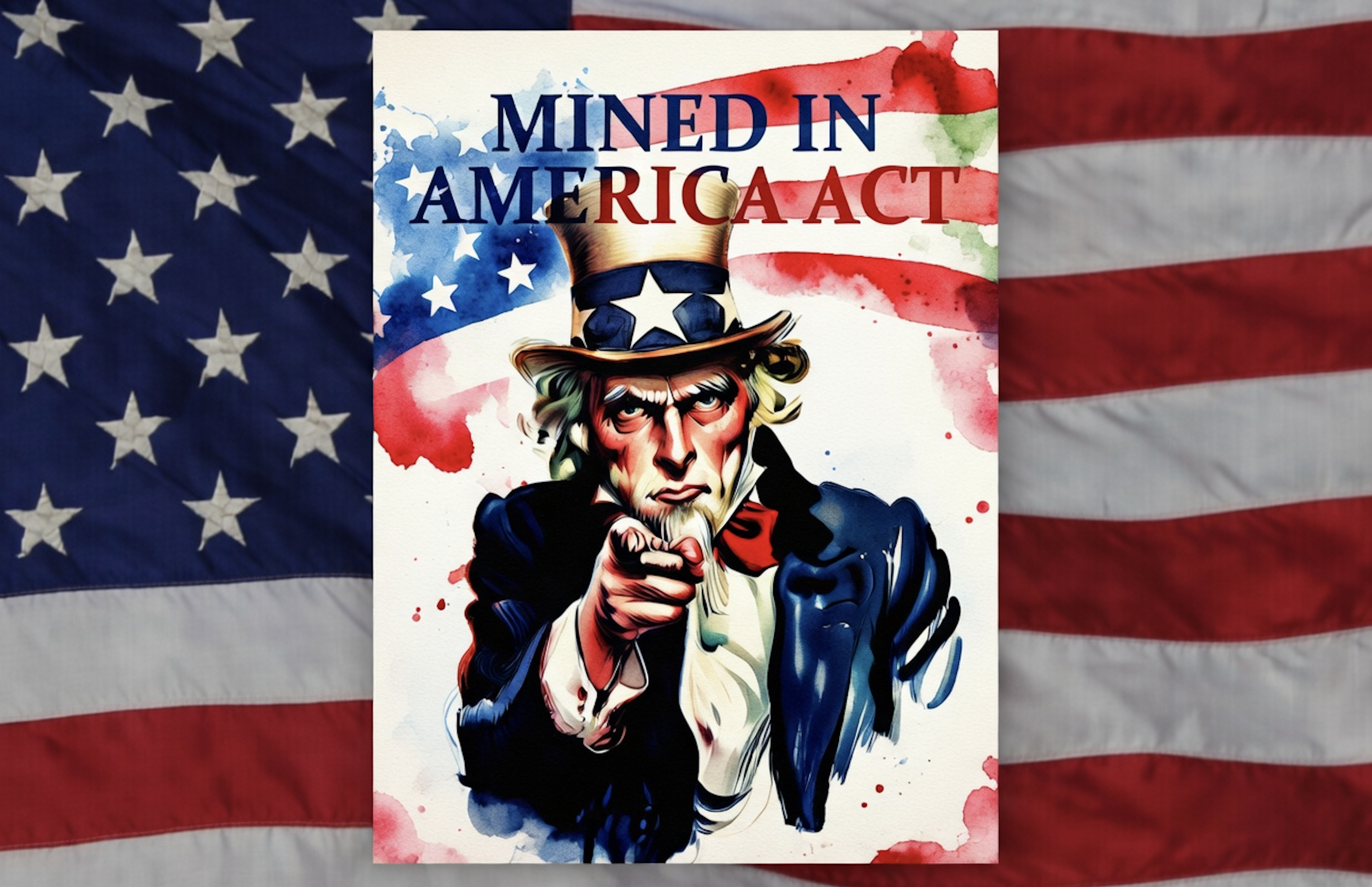
Sens. Bill Cassidy and Cynthia Lummis proposed a bill to certify U.S. Bitcoin mining sites, phase out gear tied to “foreign adversaries,” and set a process for a Strategic Bitcoin Reserve.
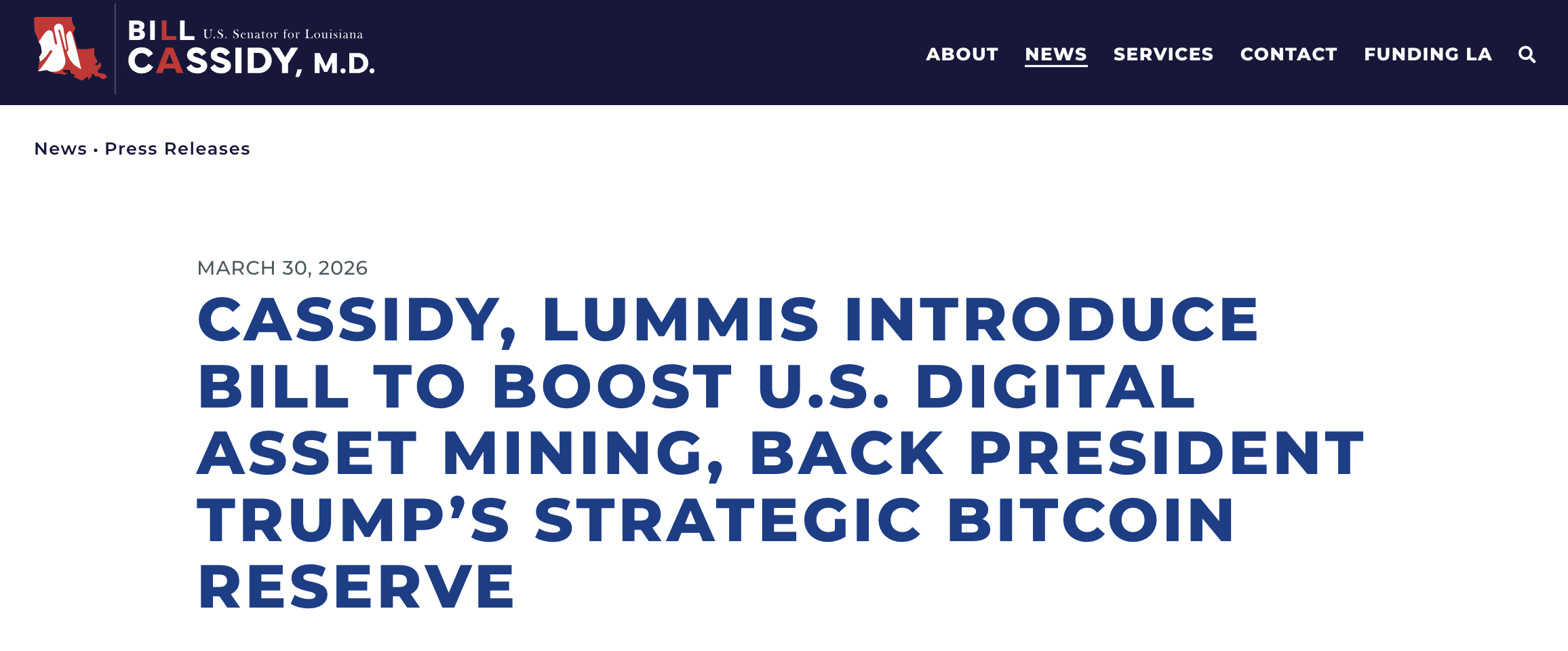
Republican Sens. Bill Cassidy of Louisiana and Cynthia Lummis of Wyoming on Monday introduced the ‘Mined in America Act,' a bill to certify U.S. Bitcoin mining facilities, reduce reliance on foreign-made gear tied to “foreign adversaries,” and outline a path to a Strategic Bitcoin Reserve.
The measure creates a voluntary certification program for mining facilities and mining pools operating in the United States. Participants would be required to phase out hardware linked to countries the U.S. deems foreign adversaries and transition to domestically manufactured equipment.
The bill directs the National Institute of Standards and Technology and the Manufacturing Extension Partnership to help U.S. companies design and produce mining machines with stronger security features and lower energy use. Certification would indicate that a facility's hardware meets security benchmarks and complies with sourcing restrictions.
U.S. miners account for about 38% of the Bitcoin network's computing power. Major equipment makers Bitmain and MicroBT are based in China and dominate global supply, leaving American operators exposed to shipping disruptions and policy scrutiny.
In March, customs officials suspended shipments of mining rigs at ports over concerns about radio frequency emissions, causing delays for U.S. operators. More recently, Sen. Elizabeth Warren asked the Commerce Department to review potential national security risks tied to Bitmain's hardware.
Cassidy highlighted the intent in a statement:
“Digital asset mining is a big part of our economy. We should be doing it here in America.”
Industrial-scale mining has expanded across several states, increasing electricity demand and prompting utilities and regulators to seek more visibility into operations. The proposal centers on hardware origin and standards rather than imposing energy-use mandates.
The bill enters the Senate's legislative process and could change before a vote.
The content on The Coinomist is for informational purposes only and should not be interpreted as financial advice. While we strive to provide accurate and up-to-date information, we do not guarantee the accuracy, completeness, or reliability of any content. Neither we accept liability for any errors or omissions in the information provided or for any financial losses incurred as a result of relying on this information. Actions based on this content are at your own risk. Always do your own research and consult a professional. See our Terms, Privacy Policy, and Disclaimers for more details.
Articles by this author