Sanders, Warren ask Labor to Withdraw 401(k) crypto rule

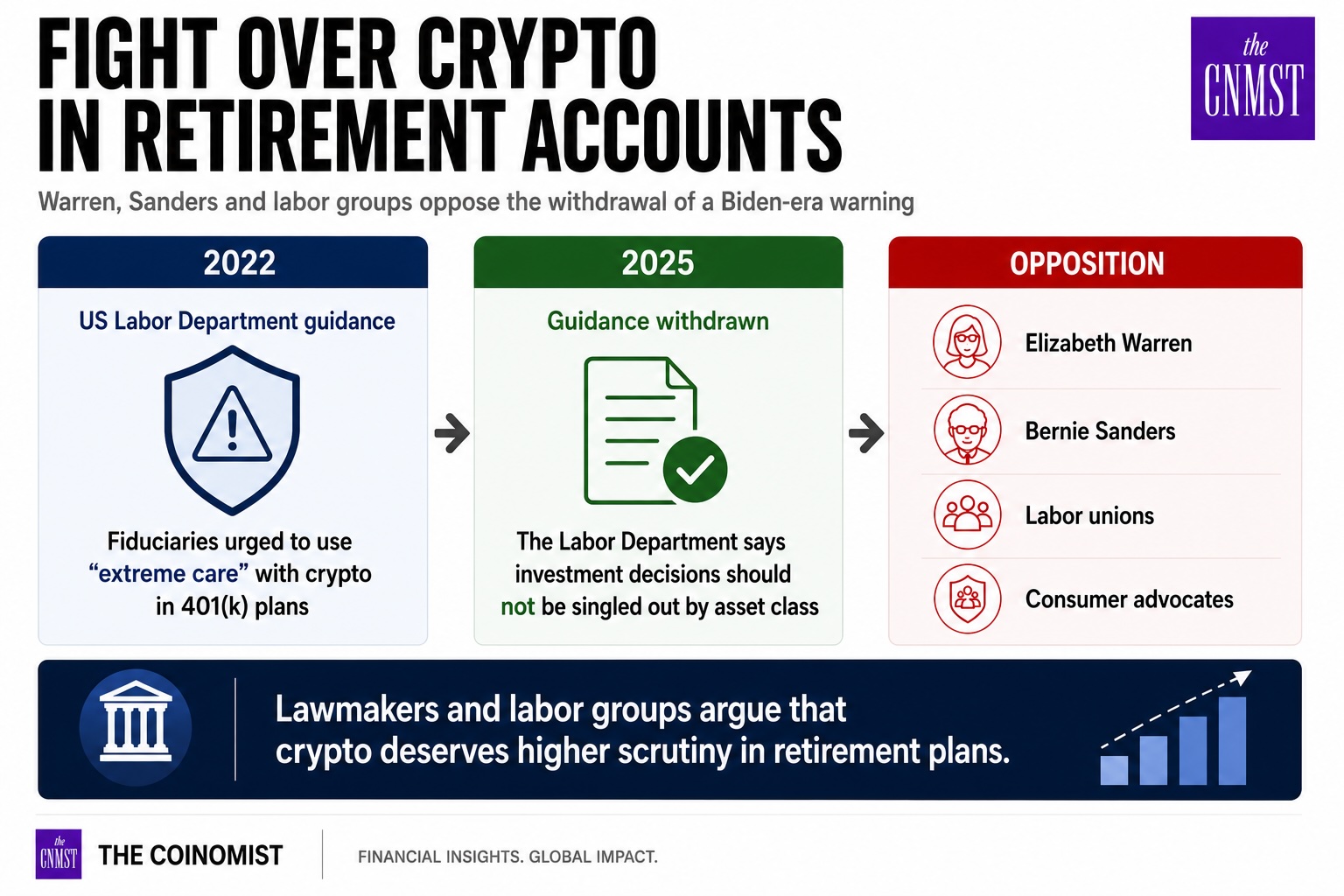
Sanders, Warren and Rep. Bobby Scott urged Acting Labor Secretary Keith Sonderling on June 1 to withdraw a proposed rule allowing alternative assets, including cryptocurrencies, in 401(k) plans.
Senators Bernie Sanders and Elizabeth Warren, joined by Rep. Robert ‘Bobby' Scott, sent a June 1 letter to Acting Labor Secretary Keith Sonderling asking the Department of Labor to withdraw a proposed rule that would allow 401(k) plans to include alternative assets, including cryptocurrencies. The lawmakers argued the proposal would reduce protections for retirement savers and increase exposure to risky, complex and costly investments.
The Department of Labor released the proposal in March. It outlines steps fiduciaries should take when considering alternative assets such as private equity, real estate and digital assets for 401(k) plan menus. The guidance followed an executive order directing the agency to facilitate the inclusion of alternative investments in retirement plans.
In the letter the lawmakers wrote: “The proposed rule would establish a so-called safe harbor for fiduciaries who offer alternative investments in retirement plans. This would strip long-held investor protections from retirement savers and encourage the use of more risky, complex, and expensive investments.” They asked the department to explain the rationale for creating a safe harbor and to provide the analyses the agency relied on.
The letter raised specific concerns about digital assets, citing sharp price swings and rising crypto-related fraud. It noted a token associated with the President that briefly traded above $73 before falling to about $2 and referenced a federal report that found crypto-linked fraud losses exceeded $11 billion in 2025. The lawmakers also pointed to reports that the President's family recorded substantial paper gains after launching a family-linked token.
Lawmakers requested information on how the rule would address valuation challenges, liquidity constraints and fee transparency for alternative investments. They asked for the agency's analysis of potential risks to plan participants and whether the rule includes safeguards against fraud and conflicts of interest involving token issuers and promoters.
The proposed guidance directs plan fiduciaries to perform heightened due diligence, consider valuation and liquidity issues, and document their decision-making when adding alternatives to plan menus. Proponents say the guidance could expand investment choices and may improve returns for some savers. Opponents argue employer-sponsored retirement accounts are intended to be low-cost, broadly diversified vehicles and that illiquid or speculative holdings are not well suited to most 401(k) plans.
A Labor Department spokesperson did not immediately respond to a request for comment. The proposed rule remains subject to public notice and comment before any final action.
Current federal rules require plan fiduciaries to act prudently and in participants' best interests when selecting investments. Alternative assets are often harder to value, less liquid and more expensive than mutual funds and exchange-traded funds commonly used in 401(k) plans, and regulators and lawmakers are debating whether allowing such assets would broaden options for savers or introduce additional risks.
The content on The Coinomist is for informational purposes only and should not be interpreted as financial advice. While we strive to provide accurate and up-to-date information, we do not guarantee the accuracy, completeness, or reliability of any content. Neither we accept liability for any errors or omissions in the information provided or for any financial losses incurred as a result of relying on this information. Actions based on this content are at your own risk. Always do your own research and consult a professional. See our Terms, Privacy Policy, and Disclaimers for more details.
Articles by this author