Saudi Arabia boosts East–West pipeline flows after Hormuz disruption
Saudi Arabia is increasing flows through its East–West pipeline to restore about 7 million barrels per day after shipping was disrupted in the Strait of Hormuz.
Saudi Arabia has started increasing flows through its East–West pipeline to bring back roughly 7 million barrels per day of exports after shipping through the Strait of Hormuz was disrupted. Officials expect the line to reach full capacity within the next couple of days.
The ramp-up is intended to offset volumes lost when incidents in the Gulf restricted traffic through the strait, a key export chokepoint. Company executives said adjustments to customer routings temporarily slowed the acceleration but that rerouting should be completed soon and allow the pipeline to operate at full throughput.
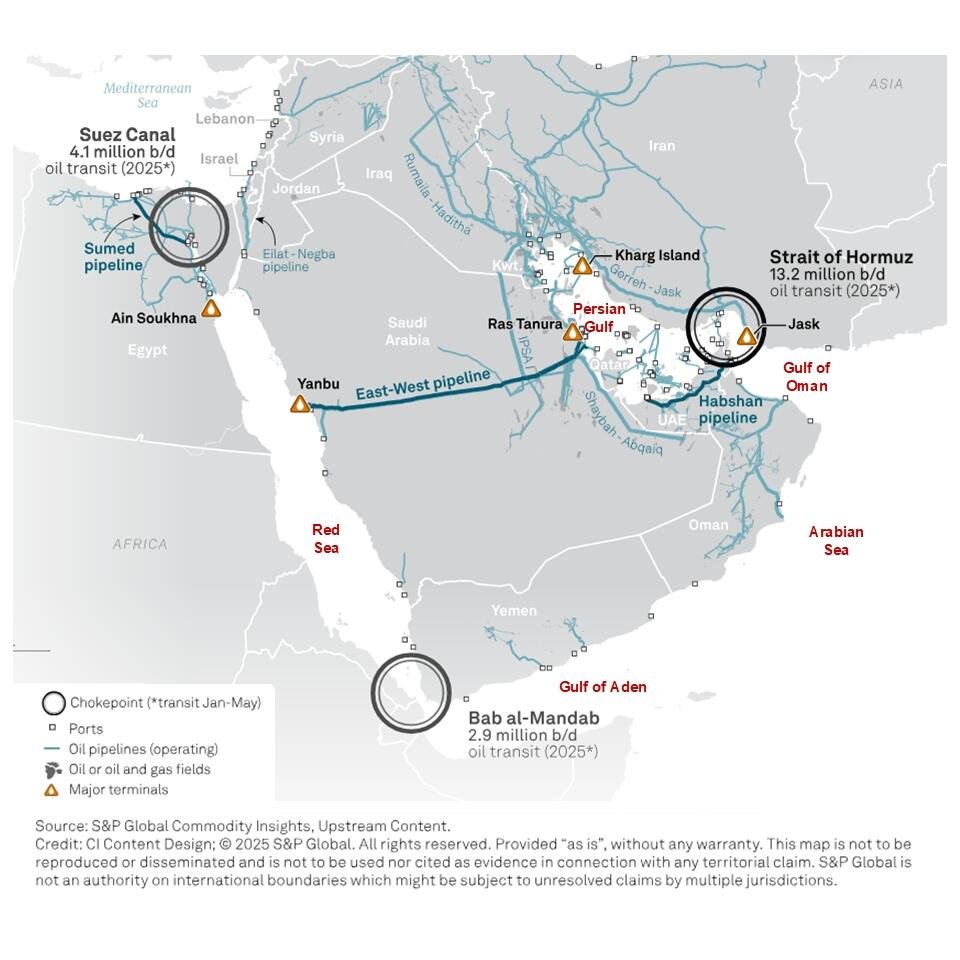
Officials cautioned the pipeline will not fully replace the volumes affected by the de facto closure of the strait.
Just be reminded that this will only bring back roughly 7 million barrels per day. It's a far cry from the roughly 20 million barrels per day disrupted by the de facto closure of the Strait of Hormuz, a senior official said.
Saudi spokespeople reported about 180 million barrels of supply have been affected so far and said they are working to meet most customer requirements amid strained conditions. “There is a significant amount of supply disruption to the market,” an energy ministry official said, noting ongoing efforts to reallocate shipments and use available inventories where possible.
The East–West pipeline carries crude from the kingdom’s oil fields near the Persian Gulf to Red Sea ports, allowing exports to bypass the strait. Restoring roughly 7 million bpd through the pipeline will ease immediate logistical pressure and allow some cargoes to be diverted from Gulf terminals, but industry sources say the gap between pipeline capacity and disrupted volumes remains substantial.
Officials highlighted that nearly 17% of the region’s oil normally transits the Strait of Hormuz, and that spare production capacity and export flexibility are mainly concentrated in the Gulf. With global oil stocks at a five-year low, they warned that continued disruption would accelerate inventory drawdowns and put upward pressure on prices. “Shipping resuming in the Strait of Hormuz is absolutely critical,” one official warned, adding that prolonged disruption could have severe consequences for the oil market and the broader global economy.
Officials said they will continue to monitor flows and customer needs as conditions evolve and will use available storage and logistical options to limit further market disruption.
The content on The Coinomist is for informational purposes only and should not be interpreted as financial advice. While we strive to provide accurate and up-to-date information, we do not guarantee the accuracy, completeness, or reliability of any content. Neither we accept liability for any errors or omissions in the information provided or for any financial losses incurred as a result of relying on this information. Actions based on this content are at your own risk. Always do your own research and consult a professional. See our Terms, Privacy Policy, and Disclaimers for more details.
Tags
Articles by this author