The Future of Finance: Key Takeaways from London’s Digital Assets Innovation Summit

The Digital Assets Innovation Summit in London, held as part of City Week, brought together bank executives, regulators, and Web3 founders to map out the future of finance.
The discussions crystallized around three core themes: the urgent push for clear regulation, the unstoppable rise of asset tokenization, and the deepening integration of institutional capital into the crypto ecosystem. Throughout the summit, speakers consistently drew a sharp distinction between government-led CBDCs, privately-issued stablecoins, and volatile cryptocurrencies, underscoring the need for a nuanced approach to building the new financial system.
Progress in the Digital Assets Industry
The summit commenced with welcoming remarks from Maurice Button, CEO of City and Financial Global, who highlighted developments in the UK’s regulatory scope, including draft rules by the Treasury and collaboration with the US.
Following this, Emma Joyce, the summit’s chair and the Chief Regulatory Officer at Global Blockchain Business Council (GBBC), discussed the GENIUS stablecoin regulation act in the US, awaiting House of Representatives’ approval, and the UK’s proposed regulatory framework for crypto assets. Joyce underscored the importance of cross-country collaboration, stating, “Good regulation doesn't happen in isolation.”
Bank of England's Stance on Central Bank Money and Stablecoin Limits
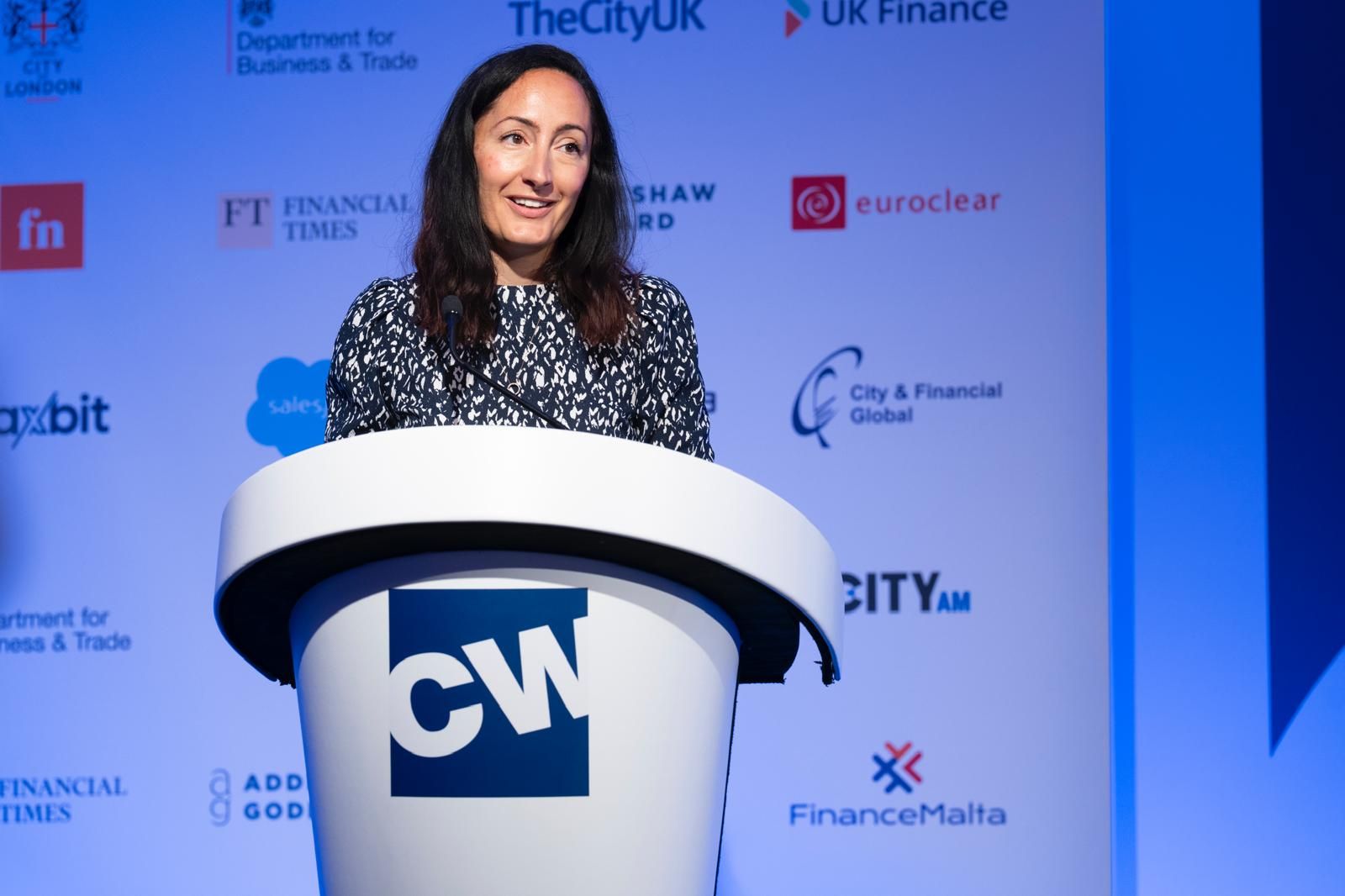
Sasha Mills, Executive Director for Financial Market Infrastructure at the Bank of England, expressed confidence that asset tokenization via Distributed Ledger Technology (DLT) could revolutionize financial markets, all while stressing the importance of preserving financial stability.
Mills noted significant progress since her 2024 conference speech, pointing to new market structures like the Digital Securities Sandbox (DSS) and the UK government’s Digital Gilt pilot (DIGIT), a project aimed at issuing government debt on a distributed ledger. At the same time, the Bank of England continues its work on digital currency.
The Bank has always been clear that central bank money should be the primary settlement asset in the financial system, and we are innovating central bank money to ensure this remains the case,
Mills noted.
Regarding private-sector stablecoins, Mills delivered a key policy update: the Bank will consult on holding limits for systemic stablecoins to mitigate risks from sudden deposit outflows. “If implemented, these limits would likely be in the region of £10–20k for individuals and £10 million for businesses,” she said.
DLT: A Tool for Public Good, Says Lord Chris Holmes
Lord Holmes of Richmond championed the benefits of Distributed Ledger Technology (DLT) from democratic, social, and economic perspectives. Back in 2017, Holmes published a report urging the UK government to explore the technology’s use cases. At the summit, he emphasized that financial infrastructure, voting, education, healthcare, and other services can be improved through DLT.
According to Lord Holmes, DLT could enable people to earn or trade tokens for accessing or contributing to research projects. In health, digital assets could empower individuals, help them access personalized services, and get more involved in health-related initiatives. For education, tokens could support and reward personalized learning.
And imagine those who oftentimes find themselves at the sharpest end of it, people with special educational needs and disabilities, having a digitally enabled DLT supported passport with those needs put up on that,
said Lord Holmes.
This way, learners with special needs could receive tailored support, he added. Speaking on the economic side, Lord Holmes said digital assets can promote financial inclusion and help grow the economy.
Panel Discussions: Global Regulations, Asset Allocation, and More
The Digital Assets Innovation Summit featured engaging panel discussions covering crucial topics such as global regulations across Hong Kong, the UK, the US, and Europe.
Elizabeth Wong, Director and Head of the Fintech Unit at the Hong Kong Securities and Futures Commission, announced upcoming regulatory initiatives to broaden virtual asset activity rules, based on a roadmap issued in early 2025.
Dr. Max Bernt, Managing Director for Europe at TaxBit, identified licensing regimes and AML-driven compliance as the two main pillars of the current regulatory landscape, while noting the significant regulatory gaps still existing between jurisdictions.
During the panel on asset allocation, lawyer Luke Mizzi, Bradley Duke (Head of Europe at Bitwise Asset Management), and Scott Lucas (Head of Markets, Digital Assets) discussed institutional crypto adoption and investment trends.
Scott Lucas noted that the new administration in the US has allowed banks to engage with digital assets more actively, leading to a dynamic shift in institutional adoption.
Bradley Duke highlighted that clients are now allocating a larger portion of their portfolios to crypto. He added that the institutional approach is often tiered: “We need to look at Bitcoin on its own and everything else separately.” Duke noted that investors typically use Bitcoin as their entry point before diversifying into Ether, index funds, and other digital asset products.
Another panel explored tokenization use cases, ranging from traditional financial assets to on-chain luxury assets. Sam Mudie, Founder and CEO of Savea, noted that institutional crypto adoption isn’t driven by hype or influencers, but by improved workflows, reduced costs, and integrating technology without changing user habits.
Hester Peirce on Shifting from Enforcement to Rulemaking
US SEC Commissioner and Crypto Task Force Lead Hester Peirce joined an online fireside chat and answered questions from Maurice Button.
In response to a question about the Crypto Task Force’s approach to classifying crypto, Peirce said the task force is working within the broader context of many ongoing developments in the US crypto industry, holding roundtables and examining crypto issues. The goal is to create sensible and practical regulations for the space. She noted that she has been against using enforcement as a blunt instrument to bring order and has been critical of the SEC’s previous strategy.
Investor protection remains a central focus, with efforts to balance fostering innovation and preventing fraud. Peirce recognized that gaps in jurisdiction – especially concerning trading platforms, are legislative issues that Congress must address.
Discussing cross-border transactions, Peirce emphasized the importance of developing frameworks only if there is real interest in using digital assets:
I don't want to put a lot of work into something that people don't actually want to use. So I think part of this will depend on whether there are people who are actually interested in doing these kinds of cross border commercial viability tests.
Finally, her speech highlights the core promise of blockchain technology: disintermediation. While centralized intermediaries will continue to exist, preserving the technology’s openness and transparency is essential to prevent issues like conflicts of interest and misappropriation of funds.
“We Must Not Do a Dodd Frank for Crypto”: Caroline Pham
In another fireside chat, The Honorable Caroline D. Pham, Acting Chairman at the U.S. Commodity Futures Trading Commission (CFTC), emphasized the importance of engaging with the digital assets industry and establishing clear regulations. She compared former SEC Chair Gary Gensler’s approach to that of the Dodd-Frank Act, a major U.S. financial reform passed after the 2008 crisis.
The law aimed to prevent future crises but, according to Pham, ended up creating overly complex and burdensome requirements. “Dodd-Frank had so many duplicative, costly, burdensome, unnecessary registration, compliance, and reporting requirements that only the largest firms could actually keep up with that overhead,” she pointed out.
Pham then mentioned her 2023 proposal for a Digital Asset Markets Pilot Program as a U.S. version of a regulatory sandbox. Open to international participants, the pilot would allow temporary testing of new digital asset models, with the potential for full authorization based on performance and data. She encouraged creativity and practicality in regulation, rather than simply repeating old narratives or assuming limitations where none exist.
Integrating Decentralization in DradFi: Fireside Chat with Marco Santori
Marco Santori, General Partner at Pantera Capital, founding member of DeFi Development Corporation (DFDV), and former Chief Legal Officer at Kraken, spoke with Emma Joyce about crypto treasuries and the current state of the market.
When asked about the relationship between DeFi and TradFi, whether it’s competition, coexistence, or convergence, Santori said it’s “absolutely coexistence” in his view.
He discussed digital asset treasury companies, citing Strategy (formerly MicroStrategy) as an example. Santori noted that while Strategy has a revenue-generating business, its primary goal is to generate cash to acquire crypto. He also mentioned Nasdaq-listed DFDV, the company he co-founded, whose stock rose from $3 to $24 in a single day.
The company accumulates SOL because, according to Santori, they believe Solana is better than Ethereum. A team of Kraken executives purchased the business and shifted its treasury strategy. At its core, DFDV remains a real estate finance platform powered by AI. According to Santori, more treasury companies will come into the picture in the next few years.
A Mature Industry at a Crossroads
The Digital Assets Innovation Summit painted a picture of a maturing industry. The conversations have shifted from “if” to “how.” Regulators are no longer debating outright bans but are designing nuanced frameworks. Institutions are moving from speculative trading to strategic, long-term allocation. And builders are creating tangible, real-world use cases far beyond simple currency. The key challenge ahead, as highlighted by the summit, is bridging these three worlds to build a single, coherent, and globally integrated digital asset market.
_________________________________________________________________________________________
At the Digital Assets Innovation Summit, senior executives from finance, politics, and regulatory sectors will gather to discuss developments in the digital assets industry and its future. This international event will be held in person at the Royal Garden Hotel in Kensington, London, an area close to Kensington Palace and just a short distance from central London. A global live stream will also be available.
Scheduled for July 2, the Digital Assets Innovation Summit is the final day of the three-day City Week 2025 (CW2025) Conference, where innovators and traditional finance leaders converge. The first day of the conference, June 30, will focus on net-zero energy use and decarbonization, while the second day, July 1, is dedicated to AI applications in financial institutions.
The organizers of City Week 2025 include TheCityUK, the UK Government, the City of London Corporation, UK Finance, and leading City institutions. According to the official website, over 1,000 senior decision-makers from the UK and abroad are expected to attend. Tickets start at £795 for a one-day pass.
Last year, City Week was held on May 20–21 at the Guildhall Art Gallery in central London.
Who’s Speaking at the Digital Assets Innovation Summit
Speakers at the Digital Assets Innovation Summit include regulators, central and commercial bank representatives, and experts in digital assets and financial strategy. Some of the key names are:
- Caroline D. Pham – Acting Chairman, U.S. Commodity Futures Trading Commission since January 2025. Pham has served as a CFTC Commissioner since April 2022. With more than 24 years of experience in law, finance, and digital assets, she focuses on market access, competitiveness, and smarter regulation. Before joining the CFTC, she was a Managing Director at Citigroup and held senior roles in public sector enforcement.
- Hester Peirce – Commissioner, U.S. Securities and Exchange Commission. Known as the “Crypto Mom,” Peirce has served on the SEC since 2018 and leads its Crypto Task Force. A vocal advocate for innovation-friendly regulation, she also comes with deep experience from the Mercatus Center and Senate oversight on banking policy.
- Sasha Mills – Executive Director of Financial Market Infrastructure, Bank of England. Mills has over 30 years of regulatory and central banking experience, having supervised key UK firms. She views tokenization as a transformative opportunity, advocating for central bank money settlement to enhance stability, while cautioning against risks from rapid market changes.
- Ryan Hayward – Head of Digital Assets and Strategic Investments, Barclays. In his role, Hayward is responsible for shaping Barclays' strategy around digital assets, ensuring proper governance, and exploring new initiatives related to digital assets, money, and tokenization across the bank. This means he's at the forefront of how Barclays engages with technologies like blockchain and distributed ledger technology.
The Agenda: Digital Finance in Focus
Crypto regulation, tokenization, and the use of digital assets in capital and financial markets take center stage in the agenda. The event kicks off at 8:30 AM (British Summer Time). Here’s a simple breakdown of what’s on the program:
Morning: Coffee, Networking, Opening Remarks, Panels
The first half of the day will focus on the global crypto regulatory landscape. Speakers will discuss digital innovation, legislation, payments, and institutional adoption. Tokenization and its use cases will take up a major portion of the afternoon.
Late Afternoon: Infrastructure Discussions and What’s Next
The final sessions cover economic security, central bank digital currencies (CBDCs), digital infrastructure, and market interoperability. The event wraps up at 5:45 PM with a networking drinks reception.
Beyond the keynotes, expect fireside chats and informal offstage conversations.
Mapping the Future of Digital Finance
As digital assets gradually move into the mainstream, financial systems are beginning to adapt. In the U.S., regulators have shown growing support for crypto, while the UK and other countries are shaping their own approaches.
Beyond regulation, a deeper shift is underway. The tokenization of assets using blockchain is changing how financial markets operate – how assets are managed, moved, and understood.
The Digital Assets Innovation Summit in London brings together people from both sides of finance, traditional institutions and newer players to reflect on where things are heading. It’s not just about the current market. It’s about quietly shaping what comes next.
The content on The Coinomist is for informational purposes only and should not be interpreted as financial advice. While we strive to provide accurate and up-to-date information, we do not guarantee the accuracy, completeness, or reliability of any content. Neither we accept liability for any errors or omissions in the information provided or for any financial losses incurred as a result of relying on this information. Actions based on this content are at your own risk. Always do your own research and consult a professional. See our Terms, Privacy Policy, and Disclaimers for more details.
Articles by this author