Oil jumps above $119 on Iran strikes; Stocks fall, yields rise

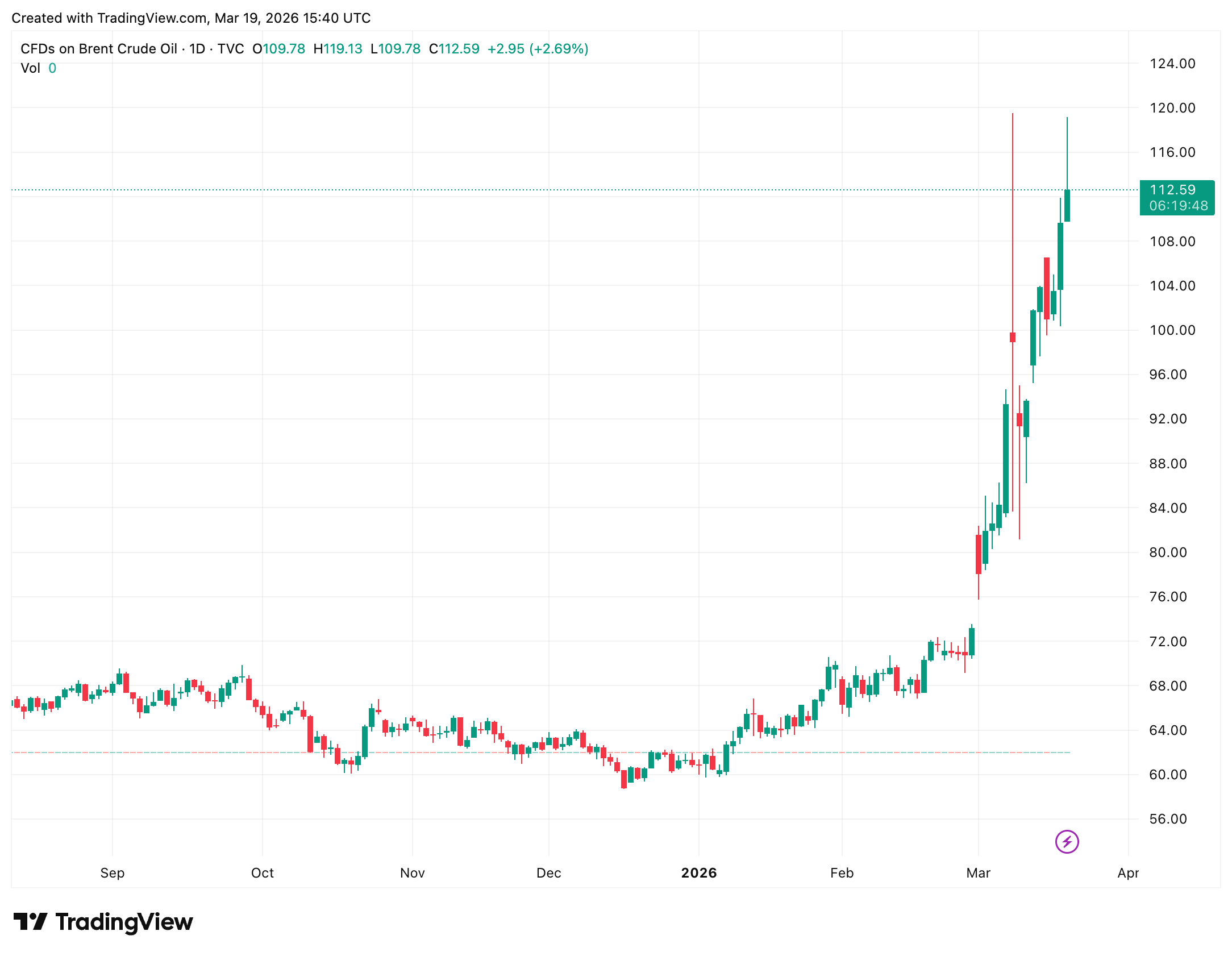
Brent briefly topped $119 before easing to $112.70, up 5%, after Iran hit Gulf energy sites, pushing global stocks lower and driving Treasury yields and rate-hike odds higher.
Brent crude spiked above $119 per barrel on March 19 before pulling back to $112.70, a 5% daily gain, after Iran intensified attacks on oil and gas facilities around the Persian Gulf.
The escalation followed an Israeli strike on a major Iranian natural gas field. Markets assessed the risk that damage to production and transport could persist.
Benchmark U.S. crude rose 1.4% to $96.78. Attention centered on the Strait of Hormuz off Iran’s coast, where about one-fifth of global oil shipments pass, and on the potential for supply interruptions.
Equities fell across major markets. Japan’s Nikkei 225 lost 3.4%, South Korea’s Kospi dropped 2.7%, Germany’s DAX declined 2.6% and the U.K.’s FTSE 100 slipped 2.6%.
In early New York trading, the S&P 500 was down 0.9%. The Dow Jones Industrial Average fell 331 points, or 0.7%, and the Nasdaq Composite lost 1.3% as of 9:35 a.m. Eastern.
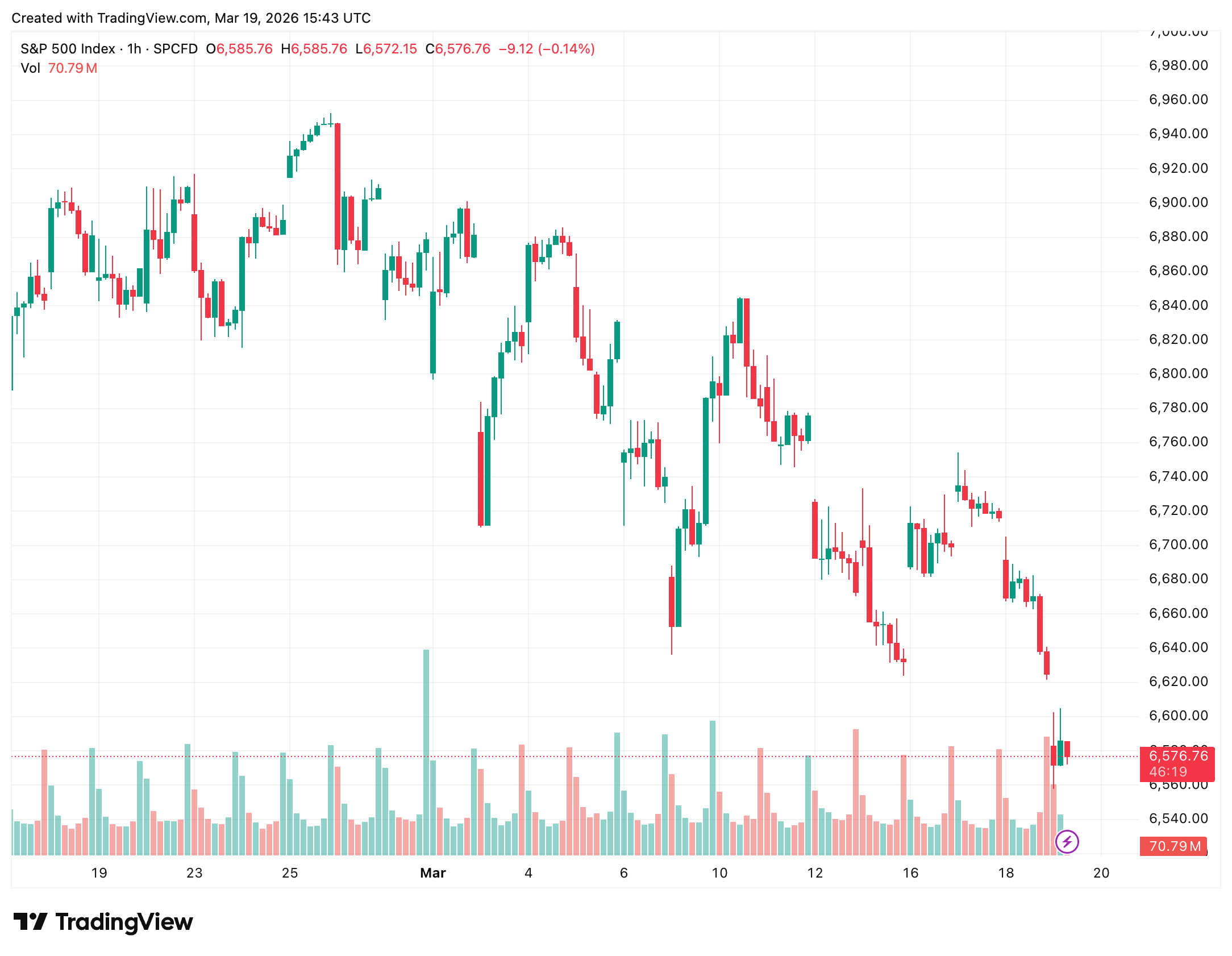
Rate expectations shifted after the Federal Reserve left its benchmark rate unchanged on March 18. Futures pricing indicated about a 10% chance of a rate increase by year-end and nearly an 84% chance of no change, compared with a month earlier when pricing implied a 74% probability of two or more cuts.
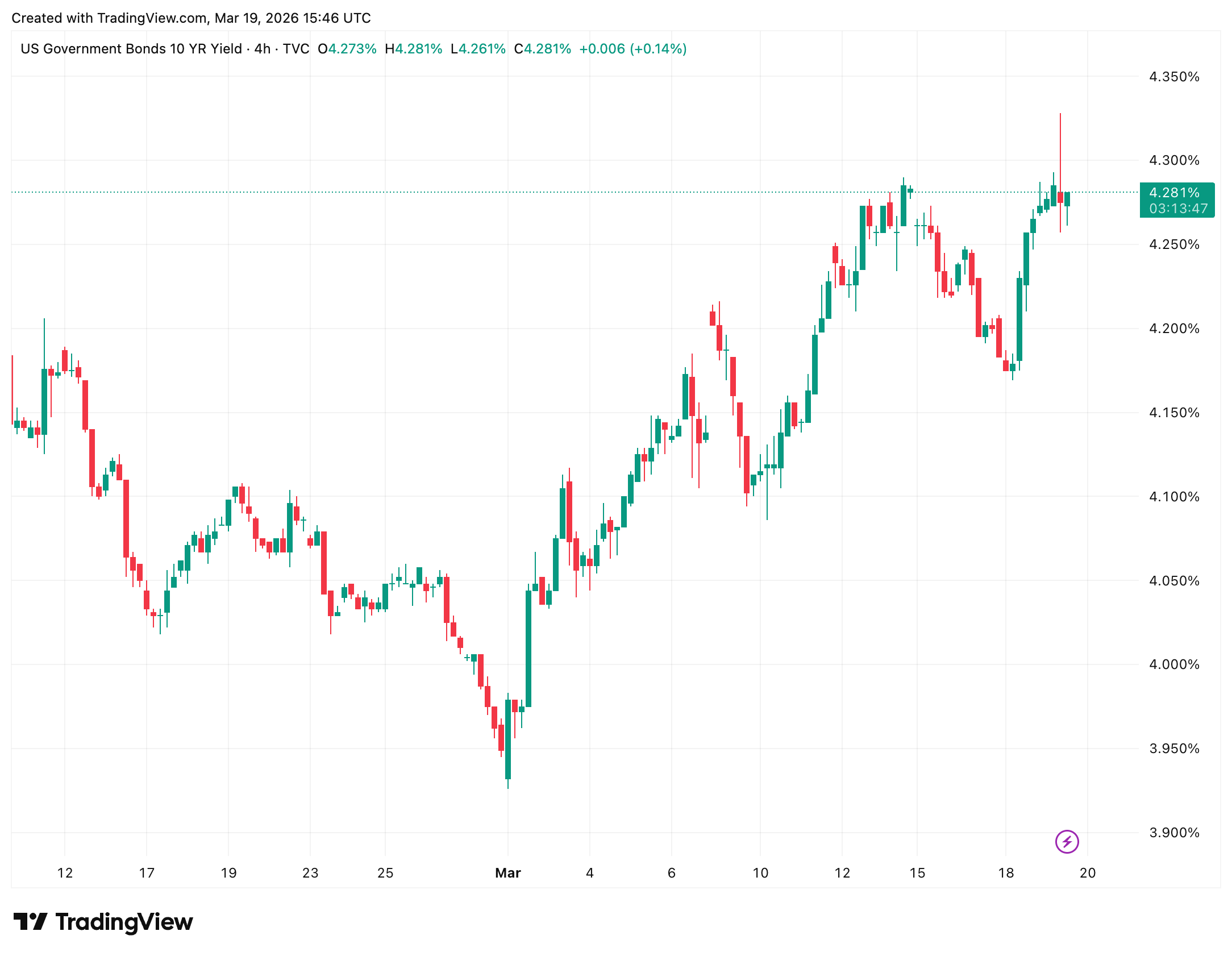
Treasury yields rose. The two-year yield climbed to 3.85% from 3.76% late March 18, the highest since last summer. The 10-year yield increased to 4.28% from 4.26%, up from about 3.97% before the conflict began.
Central banks elsewhere held steady. The Bank of Japan, European Central Bank and Bank of England left interest rates unchanged earlier in the day. In the United States, new filings for unemployment benefits fell, and a mid-Atlantic manufacturing index accelerated.
Higher yields weighed on other assets. Gold dropped 6.9% to $4,557.40 per ounce, and silver fell 12.6%. Micron Technology declined 7.5% after reporting profit and revenue above analyst estimates.
Governments, including the United States, announced actions to contain the oil surge. Market attention remained on the security of Gulf energy infrastructure and safe passage through the Strait of Hormuz.
The content on The Coinomist is for informational purposes only and should not be interpreted as financial advice. While we strive to provide accurate and up-to-date information, we do not guarantee the accuracy, completeness, or reliability of any content. Neither we accept liability for any errors or omissions in the information provided or for any financial losses incurred as a result of relying on this information. Actions based on this content are at your own risk. Always do your own research and consult a professional. See our Terms, Privacy Policy, and Disclaimers for more details.
Tags
Articles by this author