UAV market poised to grow 16% annually, hit $191B by 2035

Research Nester projects the global drone market will expand more than 16% a year to exceed $191B by 2035, driven by defense and commercial demand and advances in AI, machine learning and sensors.
Research Nester Ltd. projects the global unmanned aerial vehicle market will expand at more than 16% a year and surpass $191 billion by 2035. The forecast cites rising demand in defense and commercial sectors and rapid gains in onboard computing and sensors.
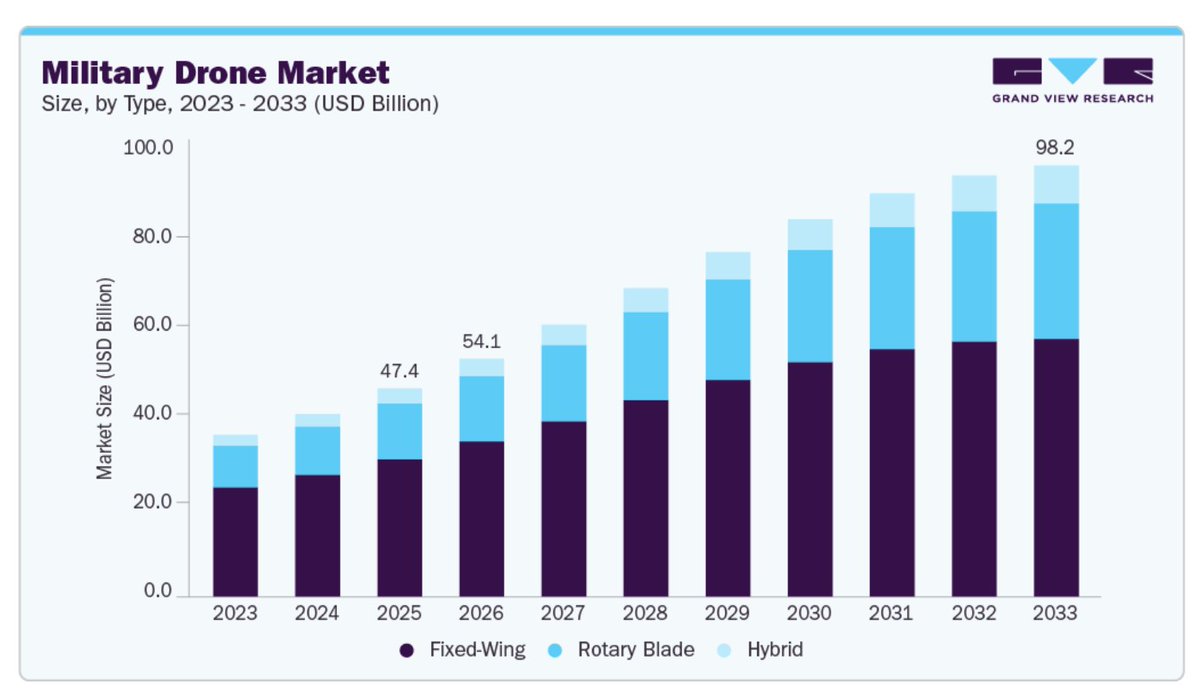
Adoption is expected to accelerate over the next decade, driven by use in intelligence, surveillance and reconnaissance and by civilian work that requires fast, real-time data. Organizations use UAVs to reach areas that are difficult, dangerous or expensive for crewed aircraft or ground teams.
The study describes broad-based growth. Defense agencies are investing in ISR capabilities, while commercial operators deploy small fixed-wing and multirotor aircraft for agriculture, parcel delivery, emergency response and filmmaking. The analysis expects UAVs to be present across many industries by 2035, supported by declining costs and improving performance.
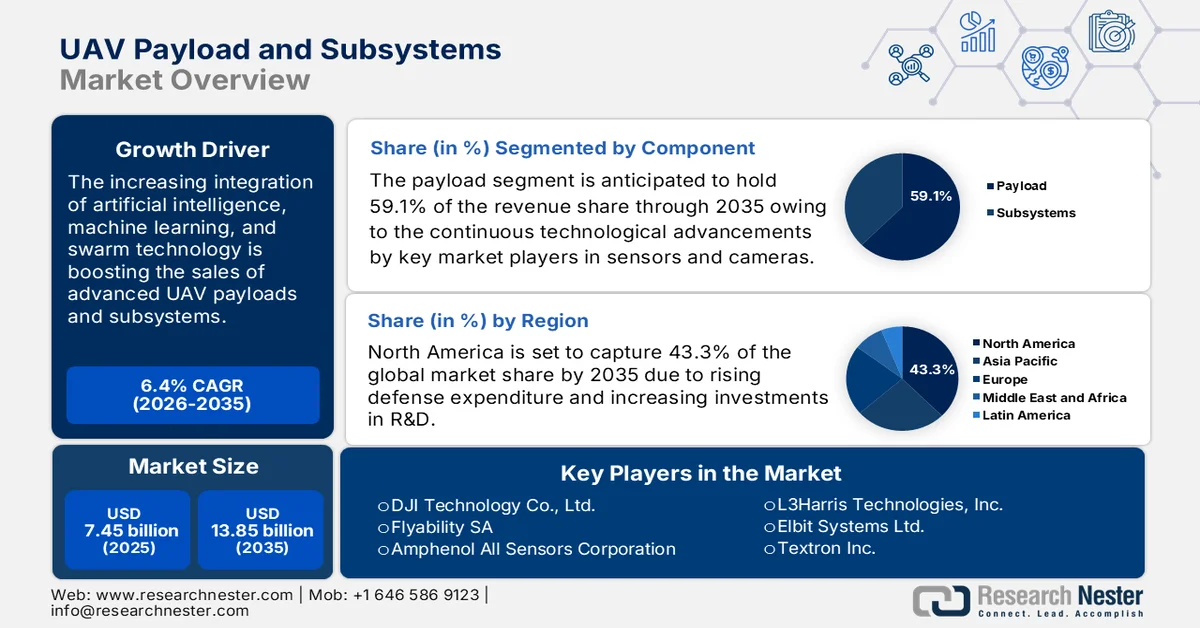
Technology integration is a key factor. Built-in artificial intelligence and machine learning, paired with high-resolution cameras and other sensors, enable automated mapping, precision crop monitoring, disaster assessment and site security. The systems can fly repeatable routes and capture consistent data for tasks such as crop health checks, infrastructure inspection and incident evaluation.
The report notes that drones can be a lower-cost option than traditional aircraft for missions that need frequent monitoring or access to constrained locations. Governments and companies can shorten response times, expand coverage and reduce risk to personnel by shifting some tasks to UAVs.
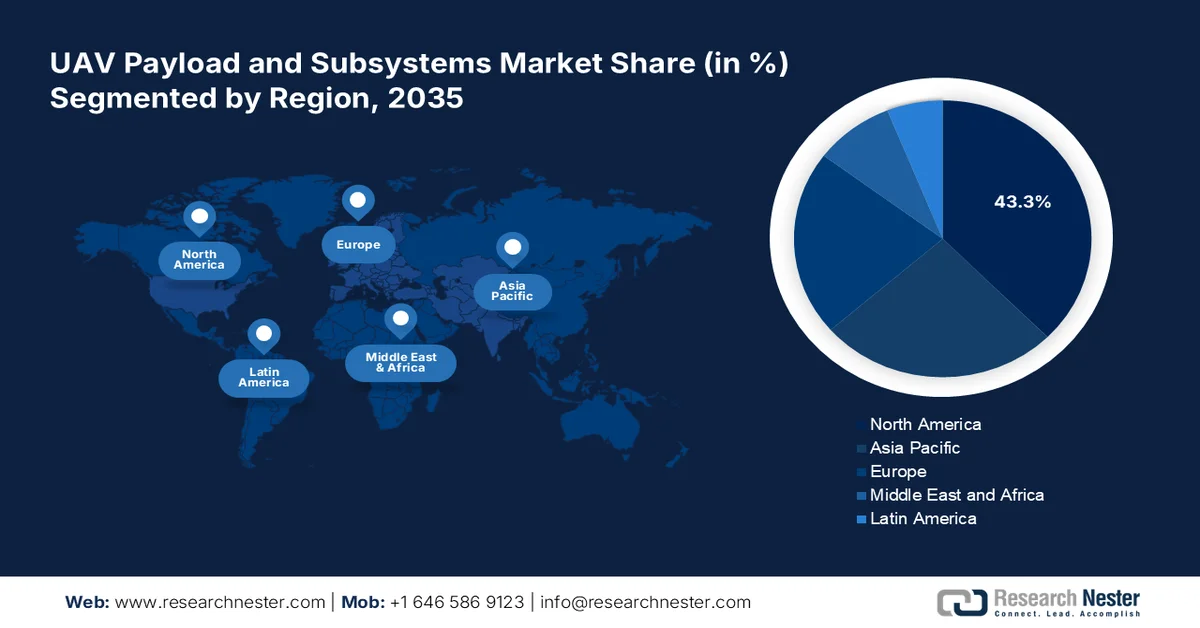
Regulation remains a challenge. Many governments are developing rules for airspace access, operator training and safety to integrate UAVs with existing aviation systems. Standardized requirements are expected to make operations more predictable and support wider deployment once frameworks are finalized and harmonized.
The analysis links rising public awareness to military use in conflict zones, including Ukraine, and to expanding civilian applications in major cities. Greater visibility, combined with practical uses in data collection and logistics, is associated with broader acceptance across public and private users, the report notes.
UAV platforms range from small fixed-wing designs with longer endurance to multirotor models that take off and land vertically and hover precisely. Platform choice depends on mission needs, payload weight and flight duration. Both types are projected to see higher volumes, with more applications shifting from trials to routine operations.
Market expansion, the report adds, will depend on regulatory clarity, airspace management tools and continued advances in autonomy and sensing. Clear operational thresholds and improved detect-and-avoid systems are expected to support a shift from single-drone missions to larger fleets by the mid-2030s.
The content on The Coinomist is for informational purposes only and should not be interpreted as financial advice. While we strive to provide accurate and up-to-date information, we do not guarantee the accuracy, completeness, or reliability of any content. Neither we accept liability for any errors or omissions in the information provided or for any financial losses incurred as a result of relying on this information. Actions based on this content are at your own risk. Always do your own research and consult a professional. See our Terms, Privacy Policy, and Disclaimers for more details.
Articles by this author