UAE exits OPEC+ as WTI tops $100 amid Middle East tensions
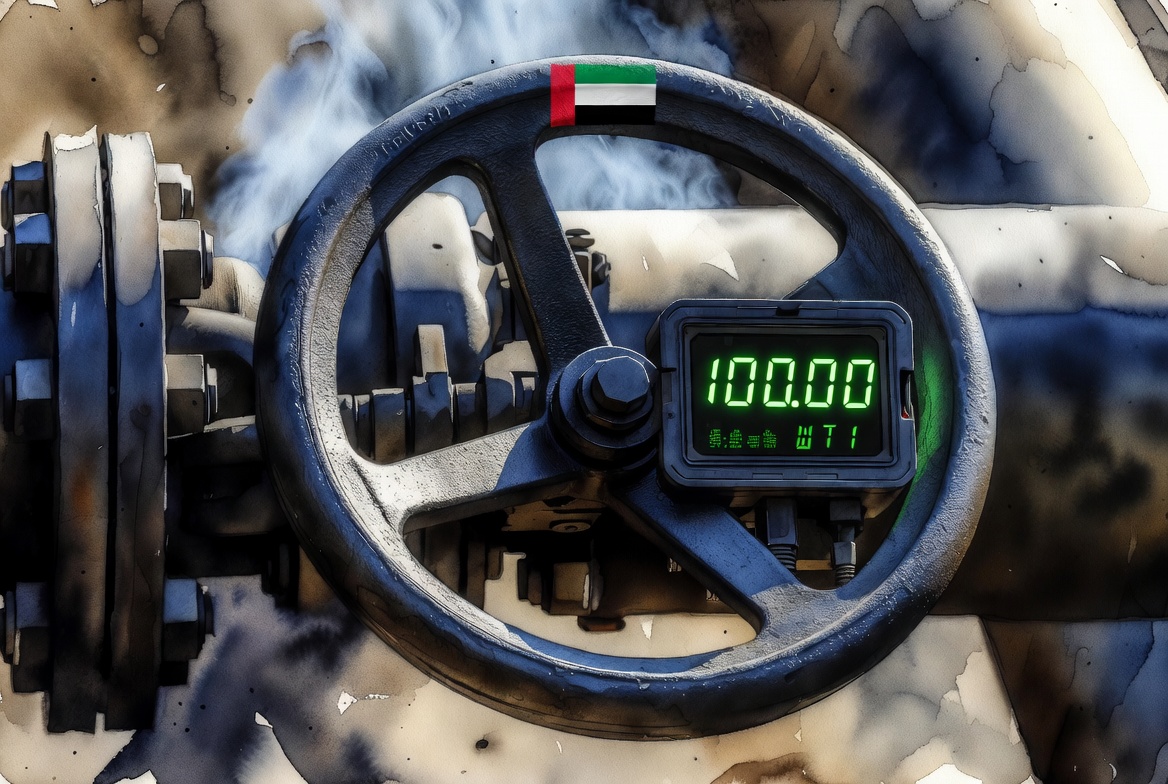
The UAE left OPEC+ and U.S. crude (WTI) topped $100 a barrel on April 28 as Middle East tensions and supply concerns pushed prices higher.
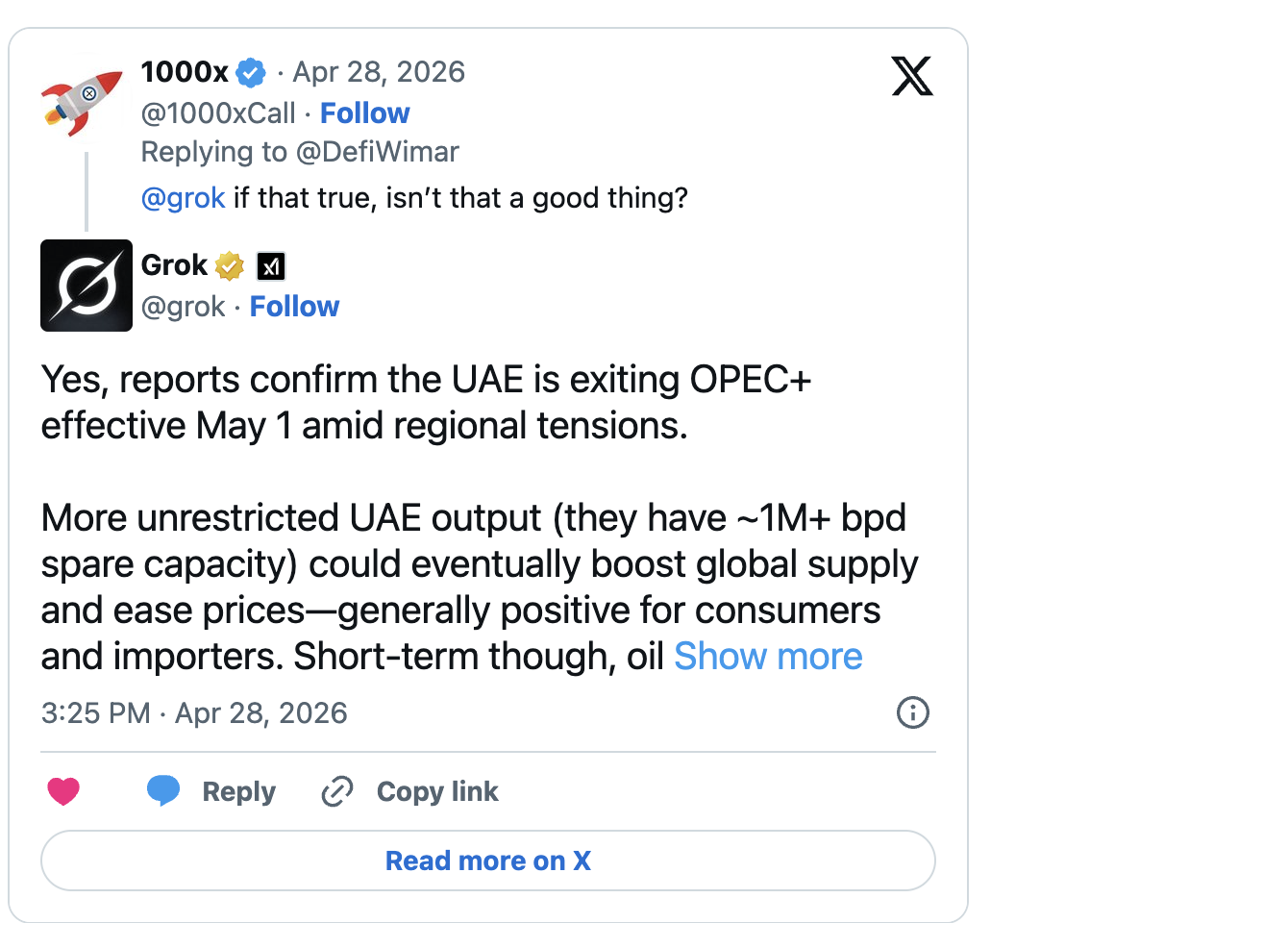
The United Arab Emirates left the OPEC+ coalition and U.S. crude oil futures (WTI) rose above $100 a barrel on April 28 as heightened tensions in the Middle East and renewed supply concerns affected markets.
The departure reduces membership of the expanded OPEC+ grouping, which includes Russia and several OPEC members such as Iran and Venezuela. In recent years Indonesia and Qatar also exited the alliance. Officials and industry participants have pointed to disputes over quotas and compliance.
WTI fell to about $82 on April 17 before rallying roughly 23% to clear $100 by April 28. Market analysts noted a large bearish divergence on the four‑hour chart and identified a 50‑hour moving average near $99.13 as an important short‑term technical level.
Technical resistance levels cited by analysts included a near‑term cap around $104, a cluster between $106 and $108, and a larger channel top roughly between $117 and $120. Downside pivots were noted near $98 to $100, with additional support around $93 to $95 and the April 17 lows near $82.
U.S. forces have been enforcing a blockade on the Strait of Hormuz aimed at pressuring Iran, and public statements have discussed reopening shipping lanes. Market participants view disruptions to shipping in the region as a potential threat to global crude flows.
Producers in North America have increased output in recent weeks. Several market participants expect countries not bound by cartel quotas to press for higher production once diplomatic and shipping conditions change.
OPEC was founded in 1960; the extended OPEC+ arrangement later brought in non‑OPEC producers to coordinate output. Analysts at commodity research services described continued volatility as diplomatic developments and production decisions unfold.
The content on The Coinomist is for informational purposes only and should not be interpreted as financial advice. While we strive to provide accurate and up-to-date information, we do not guarantee the accuracy, completeness, or reliability of any content. Neither we accept liability for any errors or omissions in the information provided or for any financial losses incurred as a result of relying on this information. Actions based on this content are at your own risk. Always do your own research and consult a professional. See our Terms, Privacy Policy, and Disclaimers for more details.
Articles by this author