Trump orders Fed review of crypto access to master accounts
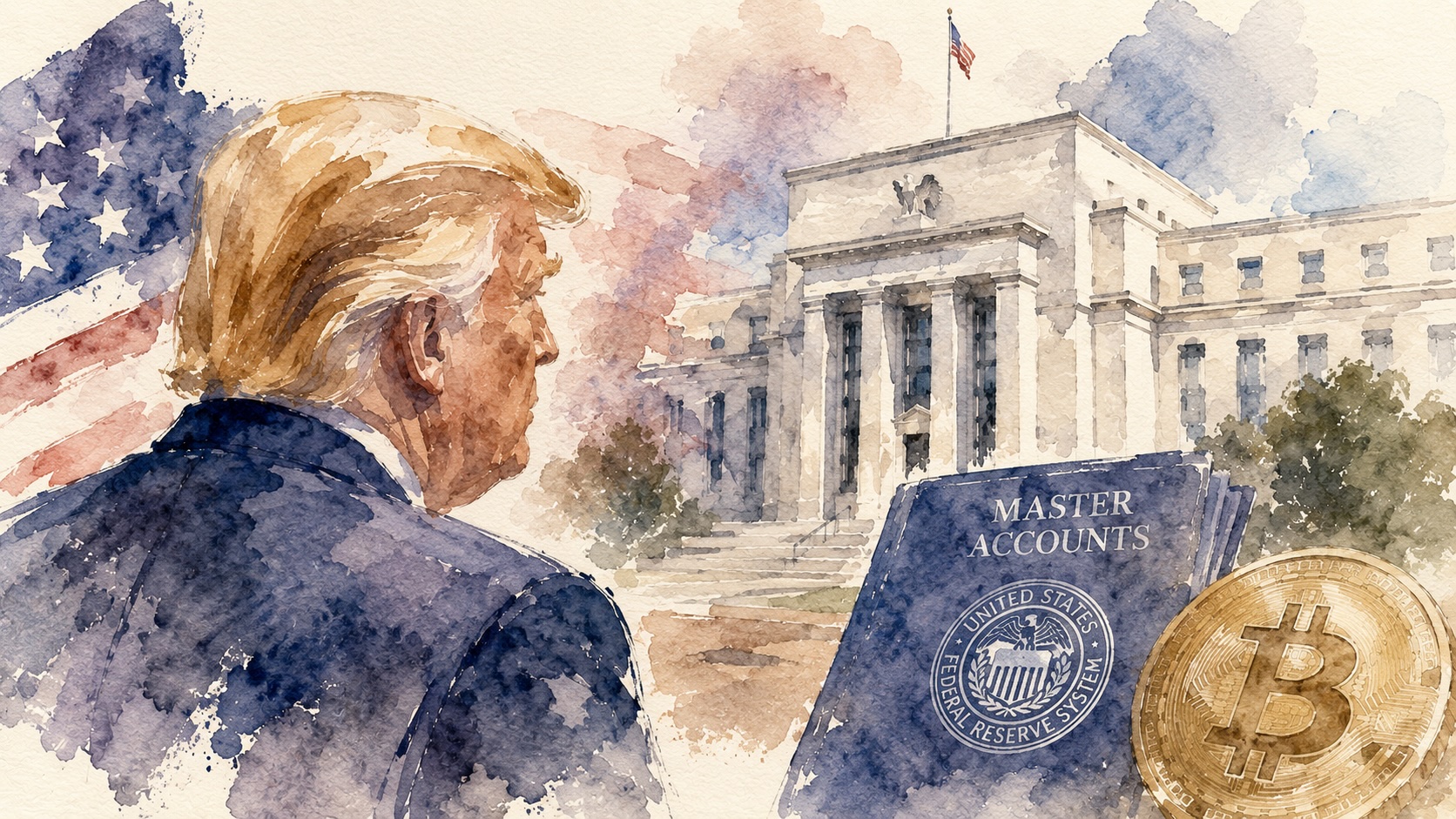
President Trump ordered the Federal Reserve to review whether fintech and crypto firms should have direct access to Fed master accounts and to deliver a report within 120 days.
President Trump signed an executive order directing the Federal Reserve to review policies on allowing fintech and crypto firms direct access to Reserve Bank payment accounts and core U.S. payment rails. The order, titled “Integrating financial technology innovation into regulatory frameworks,” instructs the Fed to deliver a report to the White House within 120 days.
Master accounts are Reserve Bank payment accounts that connect holders directly to core U.S. payment systems used for high-value dollar settlement. Under the Federal Reserve Act, individual Federal Reserve banks have authority to approve or deny applications for access. Historically, account holders have generally been licensed depository institutions, which has led some crypto companies to seek federal bank charters to gain direct access.
The order asks the Fed to evaluate its rules for Reserve Bank accounts and services, and to explore options for extending access to non-bank fintech firms, including companies that offer digital asset and blockchain services. The directive also asks the Fed to clarify whether each of the 12 regional Reserve Banks has the legal authority to independently grant or deny access.
The review follows a March decision by the Kansas City Fed to approve a limited-purpose account for Payward, the parent company of crypto exchange Kraken. That arrangement allowed Kraken to connect to core payment rails for high-value settlement and could speed deposits and withdrawals for institutional clients. The account carried limits, including no access to interest on reserves.
Kraken co-CEO Arjun Sethi described the approval as the “convergence of crypto infrastructure and sovereign financial rails.” The decision drew criticism from banking groups. The Bank Policy Institute expressed “deep concern” that the approval came before the Fed finalized a policy framework for limited-purpose or restricted master accounts.
In December the Fed published a proposal outlining a framework for restricted or “skinny” master accounts that would allow payment-system access while excluding features such as earning interest on reserves or borrowing from the discount window. On the legislative front, California Representatives Sam Liccardo and Young Kim introduced the Payments Access and Consumer Efficiency Act last month to allow certain non-bank providers access to Federal Reserve payment services; the bill is in its early stages and has received support from industry groups.
The Fed must now weigh legal, operational and risk-management issues raised by broader access. The central bank's report will inform whether the Fed or Congress should change existing rules or keep current limits in place.
The content on The Coinomist is for informational purposes only and should not be interpreted as financial advice. While we strive to provide accurate and up-to-date information, we do not guarantee the accuracy, completeness, or reliability of any content. Neither we accept liability for any errors or omissions in the information provided or for any financial losses incurred as a result of relying on this information. Actions based on this content are at your own risk. Always do your own research and consult a professional. See our Terms, Privacy Policy, and Disclaimers for more details.
Articles by this author