Thailand freezes 10,000 crypto mule accounts

Thai crypto platforms blocked over 10,000 suspected mule accounts and put a 24-hour hold with extra ID checks on transfers above 50,000 baht, in coordination with banks and police.
Thailand froze more than 10,000 suspected crypto mule accounts and put in place a 24-hour “Speed Bump” that imposes extra identity checks on transfers above 50,000 baht, part of a coordinated push to curb money laundering on digital asset platforms.
The Thai Digital Asset Operators Trade Association (TDO) indicated its members have blocked accounts believed to move illicit funds through exchanges and wallets. The Speed Bump holds large transfers for one day while users complete added verification, including video-based identity checks.
TDO chairman Att Thongyai Asavanund called mule accounts “one of the most serious vulnerabilities in the crypto system.” Criminal groups often disperse funds across multiple bank accounts, consolidate them, and then move the money into crypto where it can be converted and sent abroad. “We may see the wallet address and the movement on the blockchain, but we often do not know who actually controls it,” he noted.
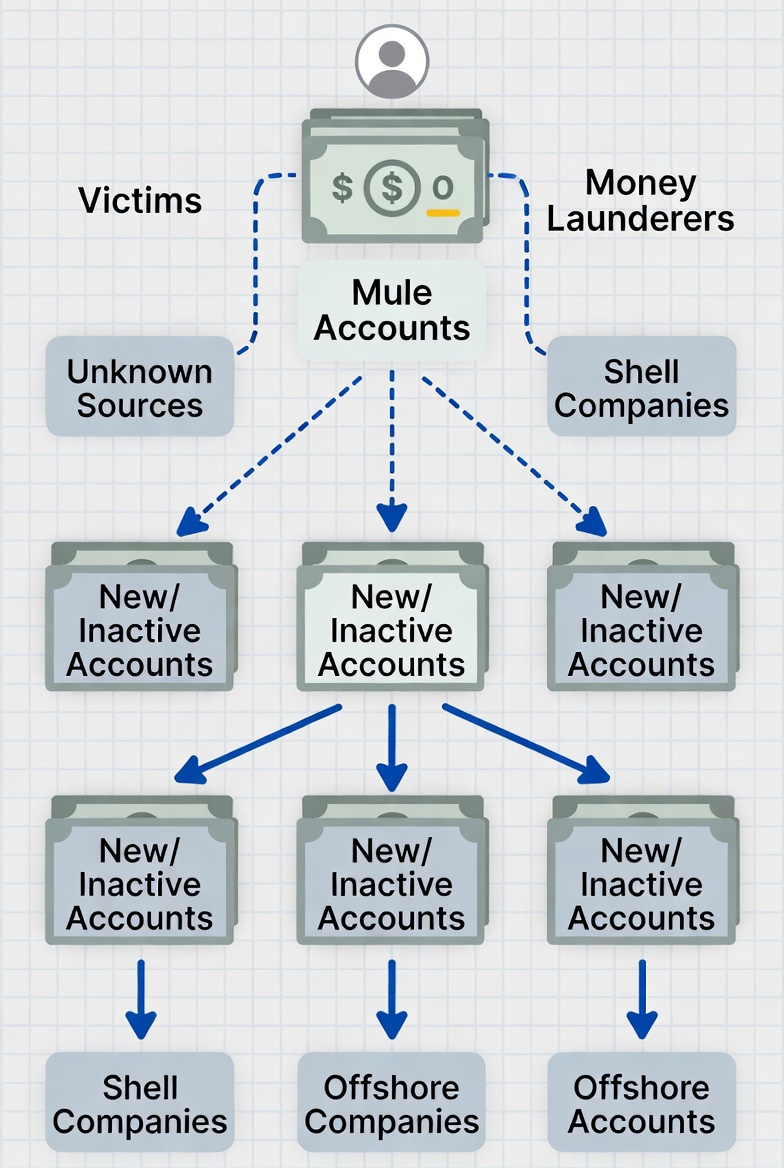
Industry operators and regulators are linking suspicious wallet activity with the Bank of Thailand’s payment system and with police investigations to trace flows from bank accounts into crypto and to speed up freezes. The new checks have prompted operators to flag and lock thousands of accounts, increasing compliance workloads while keeping regular services running. Criminal networks continue to recruit new participants to open replacement accounts after older ones are blocked, according to TDO.
Supervision now spans other channels. Officials are monitoring physical gold trade and online gold platforms to restrict gray money moving through the financial system. Prime Minister Anutin Charnvirakul called for unified enforcement across agencies: “We must work as a single, integrated force to protect the public interest and the integrity of our financial system.”
Recent actions in digital identity oversight include a November 2025 order for Sam Altman’s World project to delete 1.2 million iris scans for breaching Thailand’s Personal Data Protection Act, authorities indicated. Regulators are working to tie on-chain wallet addresses to real-world identities by matching transaction patterns with bank data and police records. Industry groups have committed to adjust controls as tactics change and to maintain direct lines with regulators to fast-track account freezes when suspicious activity appears.
The content on The Coinomist is for informational purposes only and should not be interpreted as financial advice. While we strive to provide accurate and up-to-date information, we do not guarantee the accuracy, completeness, or reliability of any content. Neither we accept liability for any errors or omissions in the information provided or for any financial losses incurred as a result of relying on this information. Actions based on this content are at your own risk. Always do your own research and consult a professional. See our Terms, Privacy Policy, and Disclaimers for more details.
Articles by this author