South Carolina law protects crypto wallets, mining; bans CBDC
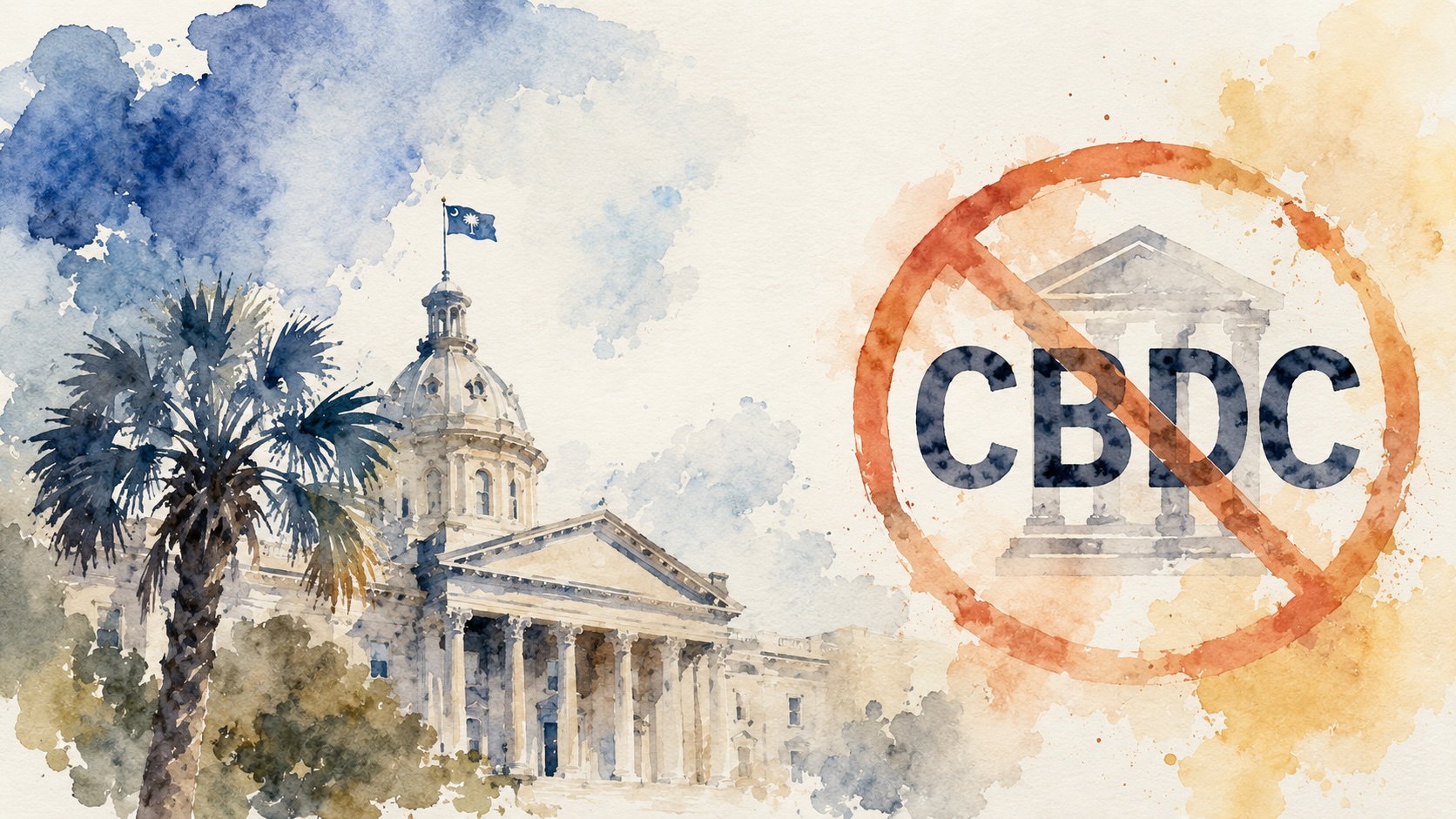
Governor Henry McMaster signed S. 163 on Tuesday, protecting crypto payments and self-custody, exempting certain activities from money-transmitter rules and banning state CBDC testing.
South Carolina Gov. Henry McMaster signed S. 163 into law on Tuesday, amending the state code to set rules for digital assets and related activities.
The law states that individuals and businesses may accept digital assets as payment for goods and services and may use self-hosted and hardware wallets to hold assets in self-custody. It bars state and local governments from imposing extra taxes, withholdings, assessments or charges on cryptocurrencies when used for payment.
S. 163 prohibits any state agency, board, commission, department or political subdivision from accepting or requiring payment in a central bank digital currency (CBDC) and from participating in tests of a similar currency issued by the Federal Reserve.
The statute defines terms including blockchain, digital assets, crypto mining, staking, wallets and nodes to set scope for the new rules.
The law limits local authority over mining operations by barring restrictions on mining located in industrial zones and preventing local governments from setting sound-level limits for mining businesses that go beyond the jurisdiction’s general noise regulations. By naming mining and related activities, the text narrows uncertainty about local regulation in certain areas.
S. 163 exempts several activities from state money-transmitter licensing requirements. Exemptions include crypto mining, running nodes, developing on-chain applications and crypto-to-crypto trading, allowing those operations to proceed without a state money-transmitter license.
The law takes effect as part of South Carolina’s updated statutory framework for digital assets.
Other states have passed similar measures. In March 2025, Kentucky enacted a law guaranteeing the right to hold and manage crypto in self-hosted wallets and barring local ordinances that single out mining operations.
Supporters argue clearer rules for payments, custody and mining encourage innovation and private investment. Opponents have raised concerns about the environmental impact of mining and the need for consumer protections. Federal discussions about a potential CBDC continue, and several states have adopted laws that restrict state participation in CBDC testing or use.
The content on The Coinomist is for informational purposes only and should not be interpreted as financial advice. While we strive to provide accurate and up-to-date information, we do not guarantee the accuracy, completeness, or reliability of any content. Neither we accept liability for any errors or omissions in the information provided or for any financial losses incurred as a result of relying on this information. Actions based on this content are at your own risk. Always do your own research and consult a professional. See our Terms, Privacy Policy, and Disclaimers for more details.
Articles by this author