Senators agree stablecoin yield rules in CLARITY Act

Senators reached a deal on CLARITY Act language that bans interest-like stablecoin rewards, allows platform-activity incentives and lets regulators set disclosure and approval standards.
Senators reached agreement on stablecoin yield language in the CLARITY Act that would bar interest-like rewards, permit incentives tied to legitimate platform activity, and give regulators authority to set disclosure and approval standards.
The compromise was led by Senators Thom Tillis and Angela Alsobrooks. The draft builds on the GENIUS Act, which banned interest payments by stablecoin issuers but left open questions about rewards paid in secondary markets.
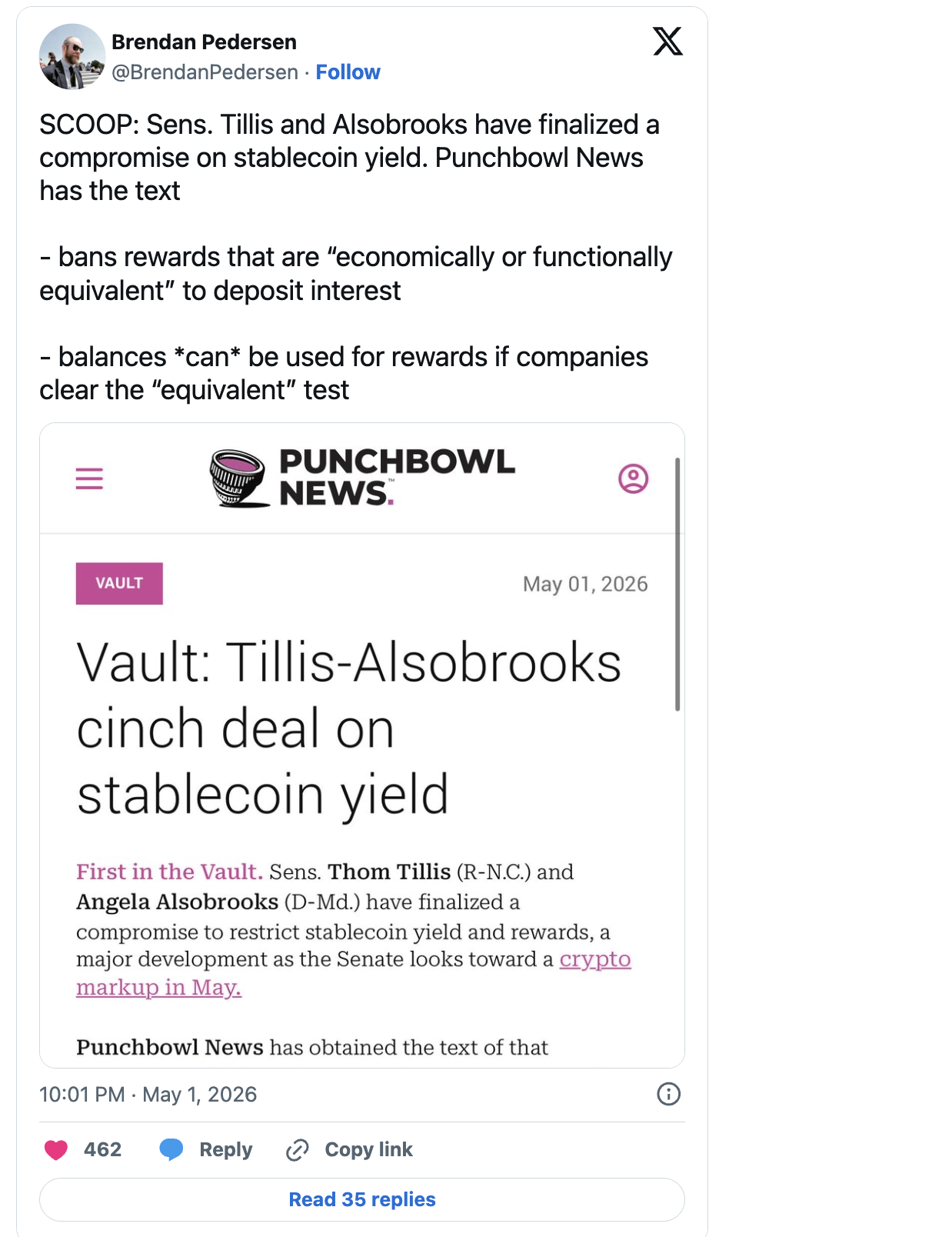
Under the proposed language, payments that operate like interest on bank deposits would be prohibited. Incentives intended to encourage platform use-for example, rewards for liquidity provision or protocol participation-would be allowed if they meet standards set by federal regulators and are disclosed to users.
The CLARITY Act, which has cleared the House, proposes to assign decentralized tokens with no central control to the Commodity Futures Trading Commission. Digital assets tied to investment expectations or centralized development would fall under the Securities and Exchange Commission. The framework defines agency roles for different types of tokens.
Senate Banking Committee Chairman Tim Scott signaled a possible markup in May if the bill advances. Negotiations on other provisions remain ongoing, and the final text will depend on committee action and floor votes.
Congress is also considering other elements of crypto policy, including protections for decentralized finance platforms and potential limits on a central bank digital currency.
The content on The Coinomist is for informational purposes only and should not be interpreted as financial advice. While we strive to provide accurate and up-to-date information, we do not guarantee the accuracy, completeness, or reliability of any content. Neither we accept liability for any errors or omissions in the information provided or for any financial losses incurred as a result of relying on this information. Actions based on this content are at your own risk. Always do your own research and consult a professional. See our Terms, Privacy Policy, and Disclaimers for more details.
Articles by this author