North Carolina Seeks to Define Legitimate Cryptocurrencies

North Carolina lawmakers are reviewing the Digital Asset Freedom Act, which would permit the use of certain cryptocurrencies for tax payments.
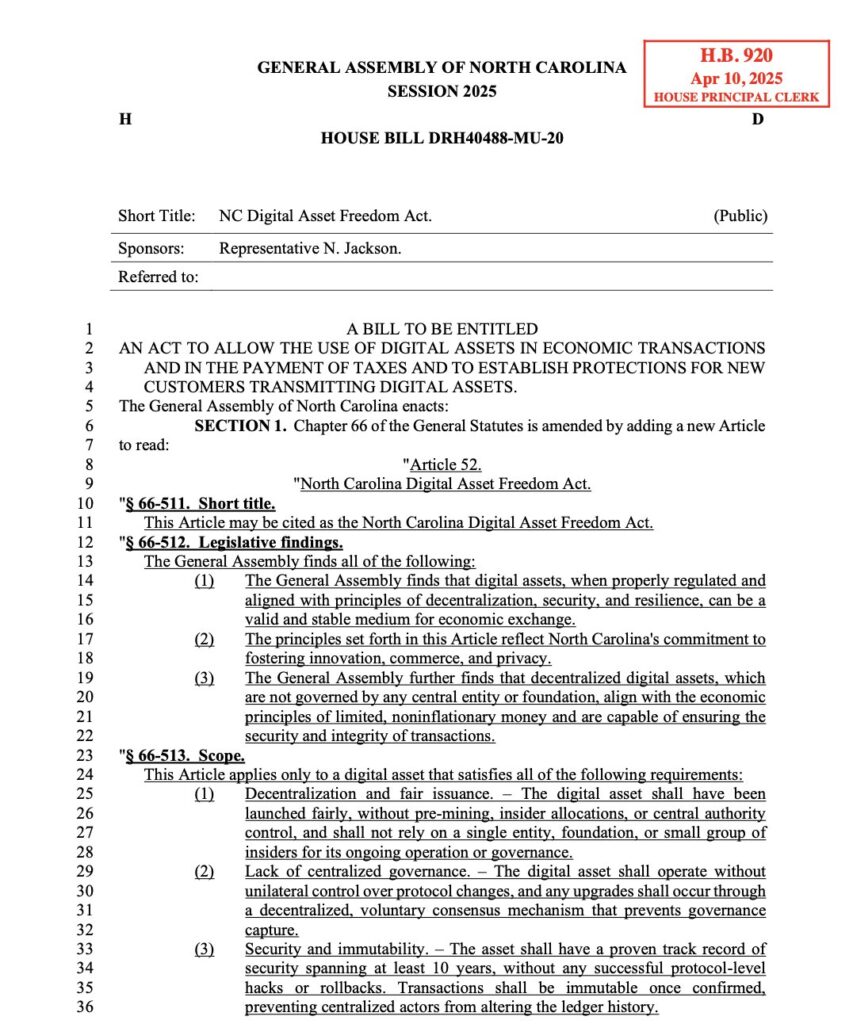
North Carolina has intensified its interest in cryptocurrencies following the introduction of a new bill, H.B. 920, which would allow the use of digital assets for tax payments and economic transactions.
Representative Neal Jackson filed the Digital Asset Freedom Act (H.B. 920) with the support of two co-sponsors. The bill emphasizes recognizing digital assets as a legitimate medium of exchange, subject to specific criteria.
Key Provisions of the Digital Asset Freedom Act
The bill outlines several criteria that an asset must meet to qualify as a “qualified digital asset.”
These include:
- Market capitalization of at least $750 billion
- Average daily trading volume exceeding $10 billion
- Operational track record of over 10 years in open markets
Additionally, the bill emphasizes the following requirements:
- Decentralization
- Launch without pre-mining
- No insider allocations or centralized governance
The bill includes provisions highlighting the security and censorship-resistant nature of digital assets, supporting their long-term reliability as payment methods.
While the document does not explicitly mention Bitcoin, it states that assets meeting the specified criteria qualify for use in tax payments.
Related: U.S. SEC Acting Chair Mark Uyeda Orders Crypto Regulation Review
Development of Crypto Laws in North Carolina
Amid rising interest in cryptocurrencies, North Carolina lawmakers have repeatedly introduced legislation aimed at fostering the digital asset market.
Last month, lawmakers proposed:
- Creating an investment body authorized to invest up to 5% of pension funds into cryptocurrencies.
- Allowing the state treasury to invest funds directly in Bitcoin.
Simultaneously, the state's view on CBDCs deserves attention.
In July 2024, former Governor Roy Cooper opposed a bill designed to ban central bank digital currencies. Shortly after, the legislature and senate overrode his veto, confirming the state's firm stance against CBDCs.
The Digital Asset Freedom Act reflects the changing approaches to cryptocurrency regulation across various U.S. states. It highlights growing support for digital assets as payment methods and seeks to provide legal clarity for widespread crypto adoption in both government and private sectors.
The content on The Coinomist is for informational purposes only and should not be interpreted as financial advice. While we strive to provide accurate and up-to-date information, we do not guarantee the accuracy, completeness, or reliability of any content. Neither we accept liability for any errors or omissions in the information provided or for any financial losses incurred as a result of relying on this information. Actions based on this content are at your own risk. Always do your own research and consult a professional. See our Terms, Privacy Policy, and Disclaimers for more details.
Articles by this author