Markets rebound as ceasefire hopes lift stocks, cut oil

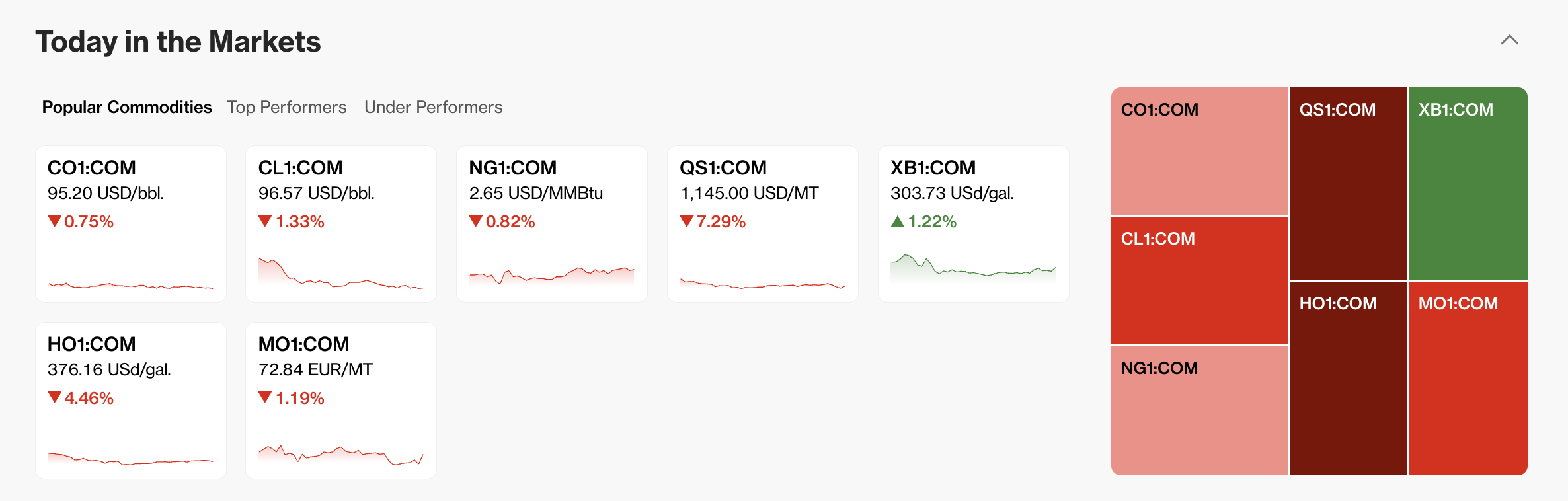
S&P 500 and Nasdaq closed above 100-day averages as stocks rose about 4% for the week; crude futures settled at $96.57 a barrel, down nearly 15%.
U.S. stocks rallied on hopes for a ceasefire in the Middle East, pushing the S&P 500 and Nasdaq above their 100-day moving averages and delivering weekly gains near 4%. West Texas Intermediate crude settled at $96.57 a barrel, down sharply for the week.
Traders moved markets after Israeli officials indicated a commitment to a ceasefire at 4 a.m. Beirut time and U.S. and Iranian representatives prepared for weekend talks aimed at easing tensions and reopening the Strait of Hormuz. A prior 14-day truce briefly allowed some commercial shipping to transit the strait before renewed strikes halted passage.
The S&P 500 and Nasdaq reclaimed technical footing above their 100-day averages and finished the week up roughly 4% each. Major European indexes closed mixed but were higher on the week.
Crude oil, which had jumped during earlier hostilities, fell nearly 15% for the week. The Baker Hughes rig count declined by three to 545 rigs.
U.S. economic reports showed headline consumer prices rose 0.9% in March, driven mainly by a 10.2% surge in energy and a more than 21% jump in gasoline. Core CPI, which excludes food and energy, increased 0.2% for the second consecutive month.
Real weekly earnings fell 0.9% in March. The University of Michigan preliminary April consumer sentiment index dropped to 47.6 from 53.3, the lowest recorded reading, and one-year inflation expectations rose to 4.8% from 3.8%.
Fed futures continued to price low odds of a policy rate change this year. San Francisco Fed President Mary Daly noted that if oil prices decline, a rate cut is not out of the question.
The U.S. Treasury reported a March budget deficit of $164.0 billion, above the $156.75 billion estimate. U.S. factory orders for February were flat, slightly better than forecasts of a modest contraction.
Canada’s labor market showed modest improvement in March, with employment rising by 14,100 and the unemployment rate steady at 6.7%. Average hourly earnings rose, and year-over-year wage growth accelerated to 4.7%.
Currency markets saw broad dollar weakness for the week. The euro, pound, Swiss franc, Canadian dollar, Australian dollar and New Zealand dollar posted gains while the yen slipped modestly.
President Trump stated he was preparing military options should Iran fail to comply with diplomatic demands. Israeli authorities reported earlier approval of strikes in Beirut during the conflict.
Officials are scheduled to hold talks over the weekend. Market attention will focus on any formal ceasefire declarations, incoming inflation reports and remarks from central bankers.
The content on The Coinomist is for informational purposes only and should not be interpreted as financial advice. While we strive to provide accurate and up-to-date information, we do not guarantee the accuracy, completeness, or reliability of any content. Neither we accept liability for any errors or omissions in the information provided or for any financial losses incurred as a result of relying on this information. Actions based on this content are at your own risk. Always do your own research and consult a professional. See our Terms, Privacy Policy, and Disclaimers for more details.
Articles by this author