Kalshi fines, bans three candidates for betting on their races
Prediction market Kalshi fined and suspended three congressional candidates for placing wagers on contracts tied to their own races, imposing fines, profit returns and five-year bans.
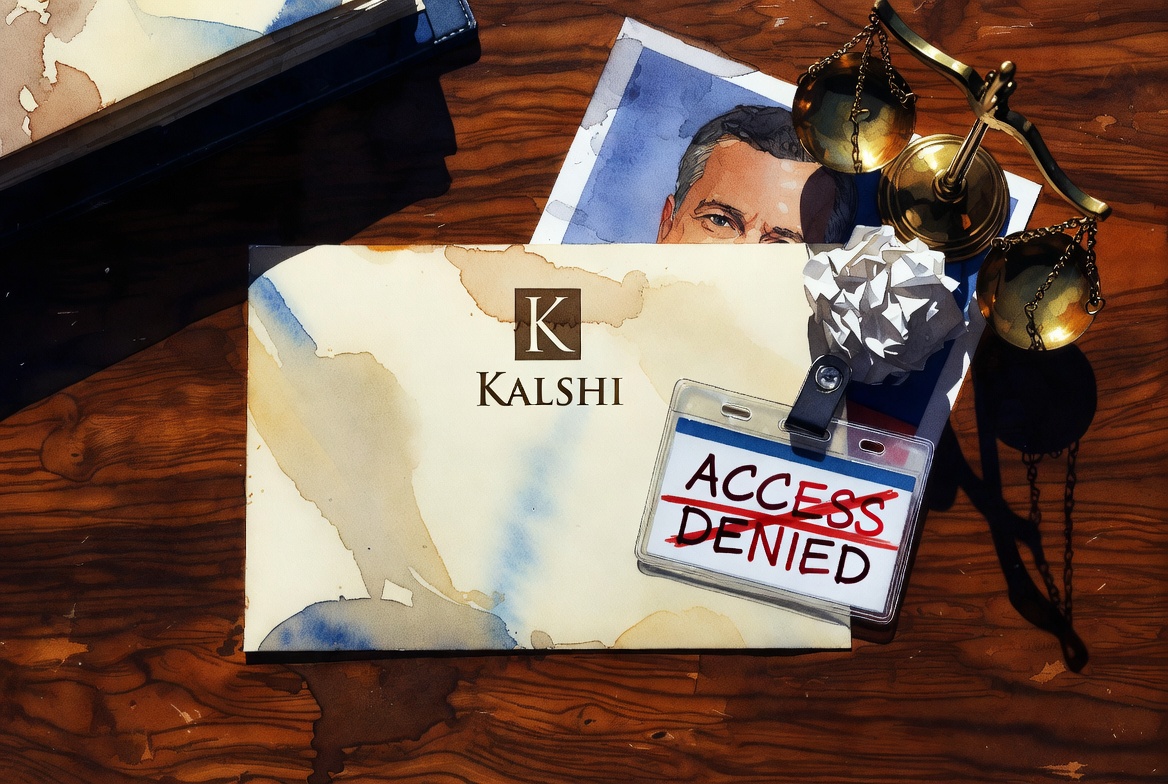
Kalshi fined and suspended three congressional candidates after finding they placed wagers on markets tied to their own races. The company imposed fines, ordered some profit returns and barred each candidate from trading on the platform for five years.
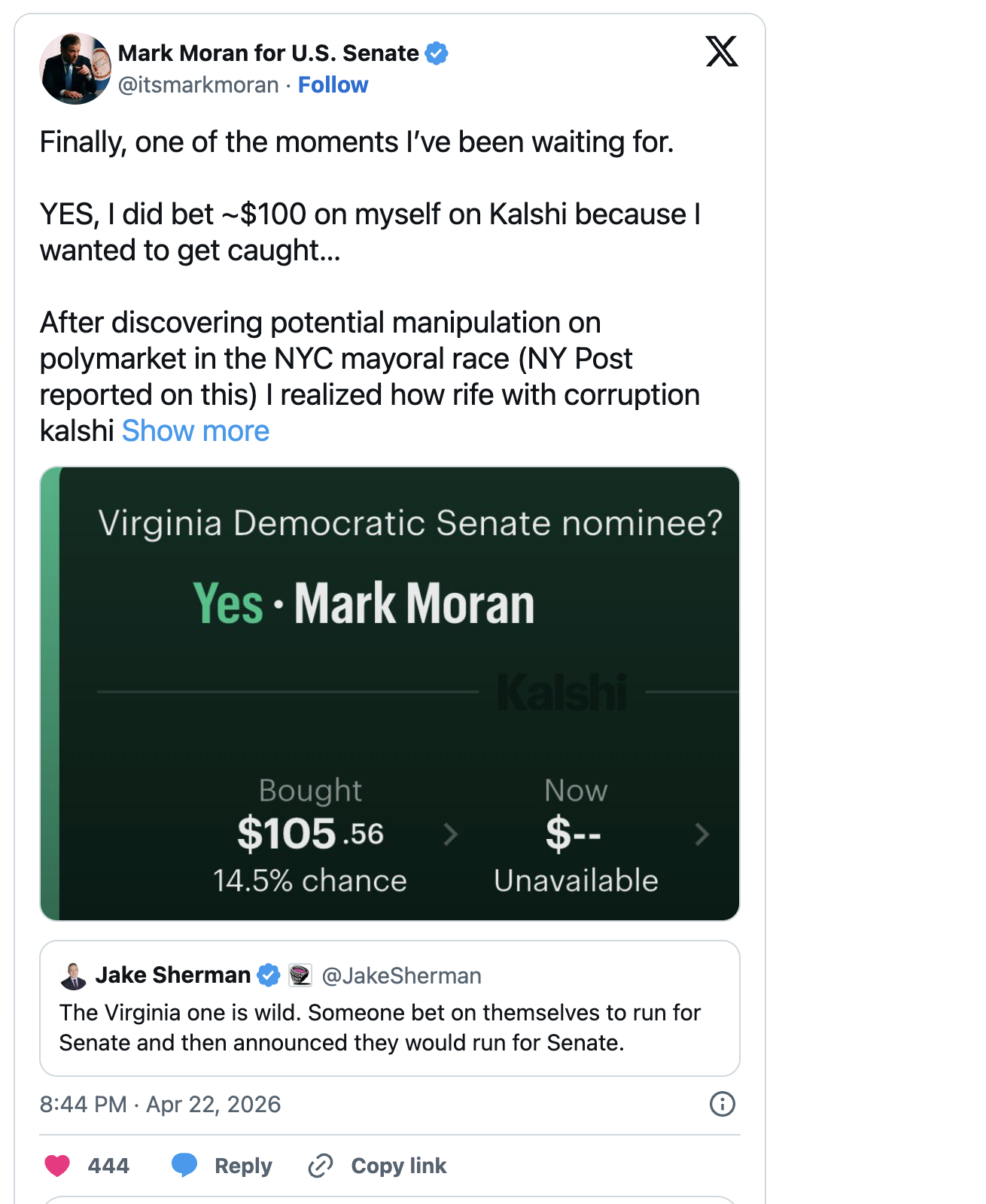
Regulatory filings from Kalshi identify the candidates as Mark Moran, Matt Klein and Ezekiel Enriquez and outline the penalties. Moran, a candidate for the U.S. Senate in Virginia, was assessed a $6,229 fine, required to return profits from trades in two markets tied to his campaign and was banned from the exchange for five years. Klein, a Democratic state senator running for a House seat in Minnesota, was fined $540 and suspended for five years. Enriquez, who ran in a Texas Republican primary for a House seat, received a $784 fine and a five-year ban. Kalshi’s filings show Klein and Enriquez each purchased less than $100 in contracts related to their races.
Kalshi characterized the enforcement as part of stepped-up efforts to prevent market abuse and insider trading. Bobby DeNault, the company’s enforcement and legal counsel, wrote that political candidates who can affect a market by changing whether they stay in or leave a race violate platform rules, and that any trade found to have breached exchange rules will be punished regardless of size. The company said it has added screening tools to detect and block trades by those with potential insider influence.
The candidates offered different explanations. Moran posted on X that he placed about a $100 bet on himself because he “wanted to get caught,” and wrote he acted after seeing what he described as potential manipulation on another prediction platform and wanted to expose corruption. Klein posted on X that he wagered out of curiosity, was later notified his action violated Kalshi’s rules, paid the penalty and accepted the suspension, and that it was the only wager he has ever made on a prediction market. Kalshi’s filings did not include a public comment from Enriquez.
Prediction market platforms have faced increased scrutiny from lawmakers and regulators. Two U.S. senators introduced legislation called the Prediction Markets Are Gambling Act that would bar prediction contracts tied to sports or casino-style games from appearing on registered trading platforms. Kalshi and other operators have tightened insider trading safeguards in recent months as usage and regulatory attention have risen.
Industry data show trading on prediction exchanges has grown: Kalshi handled roughly $13 billion in monthly volume in March, compared with about $10.57 billion on a rival platform. Kalshi’s enforcement notice stresses the company will apply financial penalties, claw back profits in some cases and issue multi-year suspensions where it finds trades that violate exchange rules.
The content on The Coinomist is for informational purposes only and should not be interpreted as financial advice. While we strive to provide accurate and up-to-date information, we do not guarantee the accuracy, completeness, or reliability of any content. Neither we accept liability for any errors or omissions in the information provided or for any financial losses incurred as a result of relying on this information. Actions based on this content are at your own risk. Always do your own research and consult a professional. See our Terms, Privacy Policy, and Disclaimers for more details.
Articles by this author