JPMorgan faces class action over alleged $328M crypto Ponzi

Investors sued JPMorgan in Northern California federal court, alleging it enabled Goliath Ventures $328 million crypto Ponzi by processing Chase deposits and exchange transfers despite AML flags.
Investors filed a federal class-action lawsuit in the U.S. District Court for the Northern District of California, accusing JPMorgan Chase of enabling an alleged $328 million Ponzi scheme tied to crypto trading at Goliath Ventures. The complaint states the bank processed deposits through Chase business accounts and transferred funds to exchanges while overlooking anti-money-laundering warnings.
According to the filing, more than 2,000 investors sent money that was directed into Chase accounts controlled by the scheme’s operators. Plaintiffs assert about $253 million was first deposited into those accounts. Approximately $123 million was routed to Coinbase and other crypto exchanges, and roughly $50 million was returned to investors as purported profits.
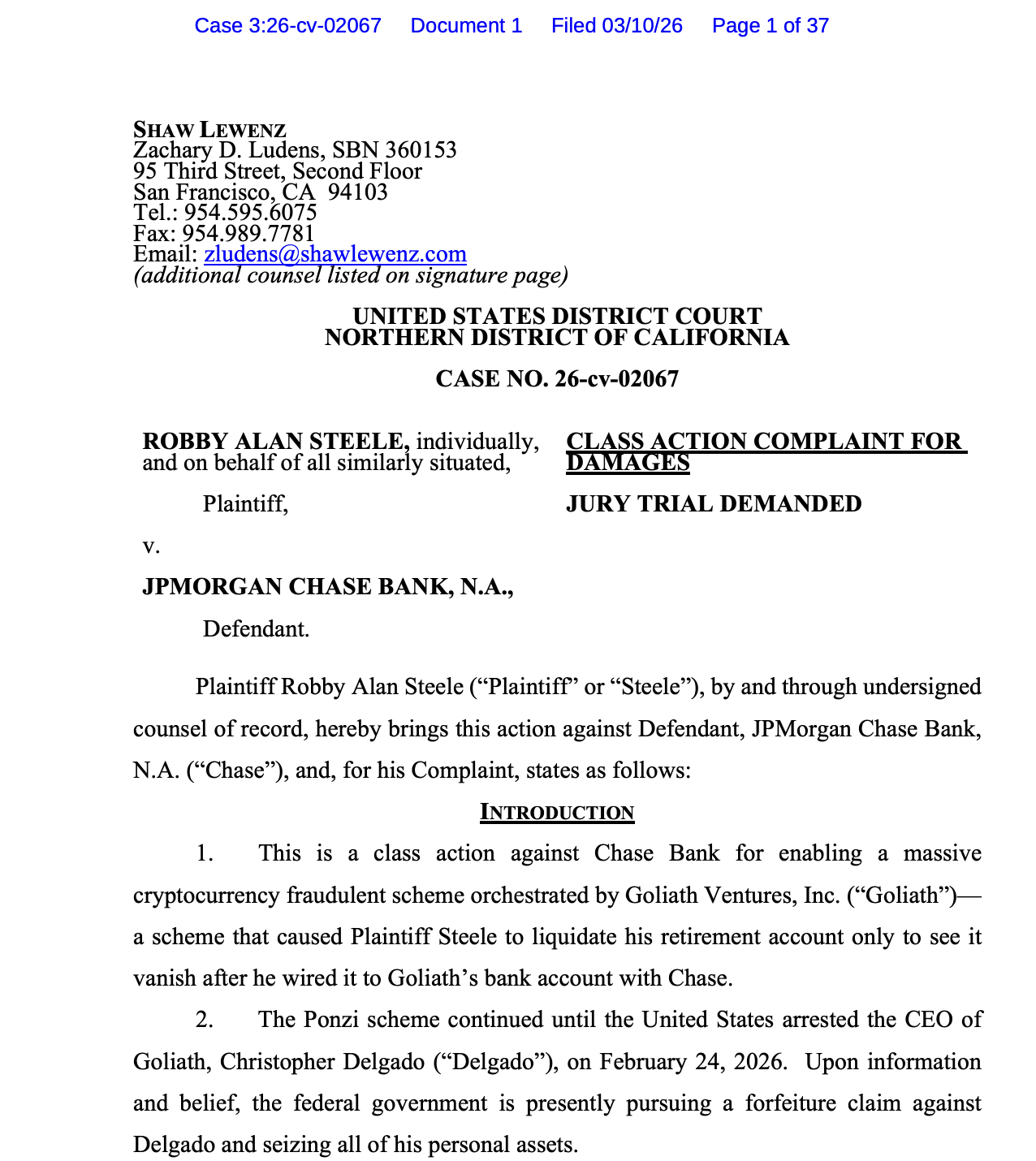
The suit argues JPMorgan knew or should have known the activity indicated fraud. The allegations cite rapid, high-value transfers inconsistent with the accounts’ stated business purpose, repeated inflows from retail investors, and circular movement of funds. The plaintiffs contend the bank did not file or escalate suspicious activity reports in a timely way, which they argue extended losses.
The case seeks damages for investors and focuses on JPMorgan’s role as a provider of banking services that, according to the filing, served as the cash pathway into the crypto transactions presented to customers. The complaint states that transfers to exchanges were central to representations that investor funds would be used in crypto trading strategies.
Monitoring and compliance practices are central to the claims. The filing challenges the design and operation of JPMorgan’s know-your-customer checks, anti-money-laundering controls, and transaction monitoring for high-risk promoters, alleging the bank failed to stop or flag flows inconsistent with declared business uses.
Plaintiffs describe the operation as a Ponzi structure, with new deposits funding payments labeled as returns and maintaining the appearance of trading profits. They allege JPMorgan’s continued servicing of the accounts enabled ongoing inflows and rapid outbound transfers.
Next steps include the court’s review of class certification and whether the claims can proceed to discovery in the Northern District of California.
The content on The Coinomist is for informational purposes only and should not be interpreted as financial advice. While we strive to provide accurate and up-to-date information, we do not guarantee the accuracy, completeness, or reliability of any content. Neither we accept liability for any errors or omissions in the information provided or for any financial losses incurred as a result of relying on this information. Actions based on this content are at your own risk. Always do your own research and consult a professional. See our Terms, Privacy Policy, and Disclaimers for more details.
Articles by this author