Gold falls 1% as dollar strengthens; bulls defend $4,500
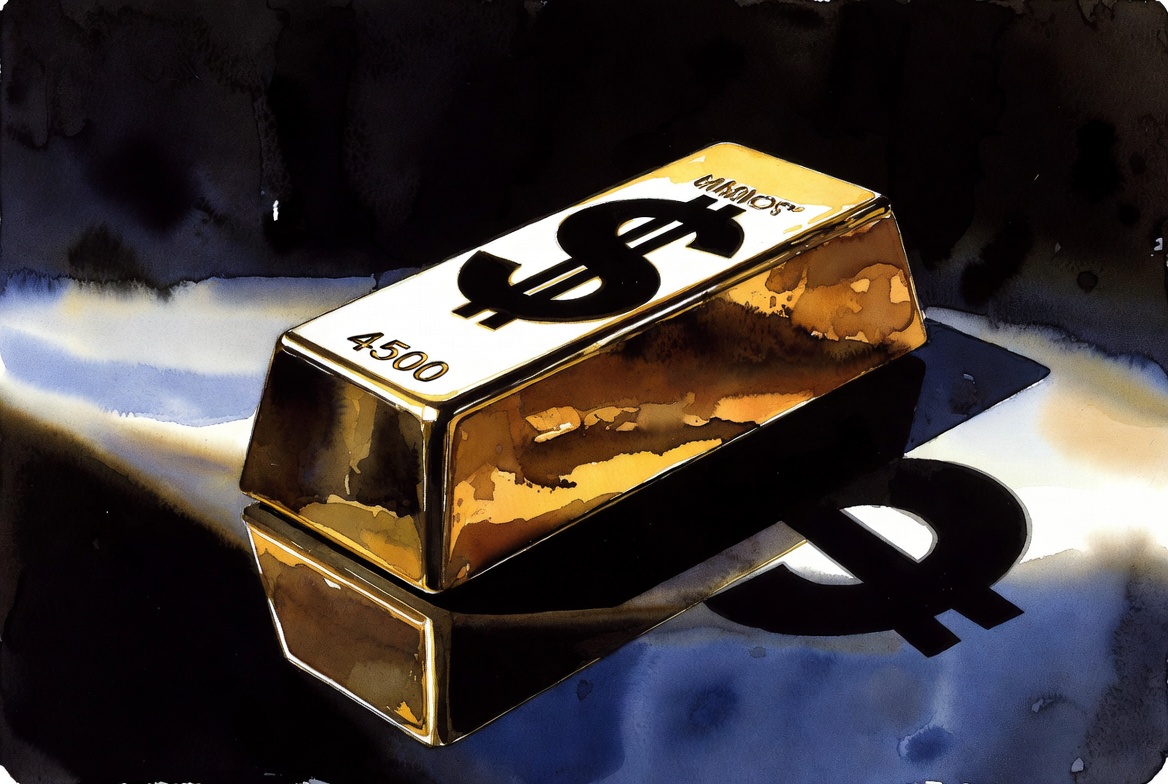
On May 1, gold fell about 1% after reports the U.S. might strike Iran, boosting the dollar and putting pressure on prices as buyers defend $4,500.
Gold fell about 1% on May 1 in early European trading after reports the U.S. might strike Iran raised fears of a prolonged Middle East conflict. Traders moved into the U.S. dollar, and a firmer dollar put downward pressure on dollar-priced gold. The Federal Reserve, European Central Bank and Bank of England this week warned that an extended conflict could push inflation higher and complicate policy decisions.
On the four-hour chart, technical indicators showed a shift to bearish conditions. Gold broke horizontal supports around 4,700 and 4,668 and was trading below both the 100- and 200-period simple moving averages. The H4 relative strength index sat near 40, and the $4,500 level remained the main psychological support.
The hourly chart showed a rejection near 4,615, close to the 100-hour moving average. The 4,601 level, previously a support area, had flipped to resistance. The hourly RSI formed lower highs, indicating buying pressure weakened during attempted recoveries.
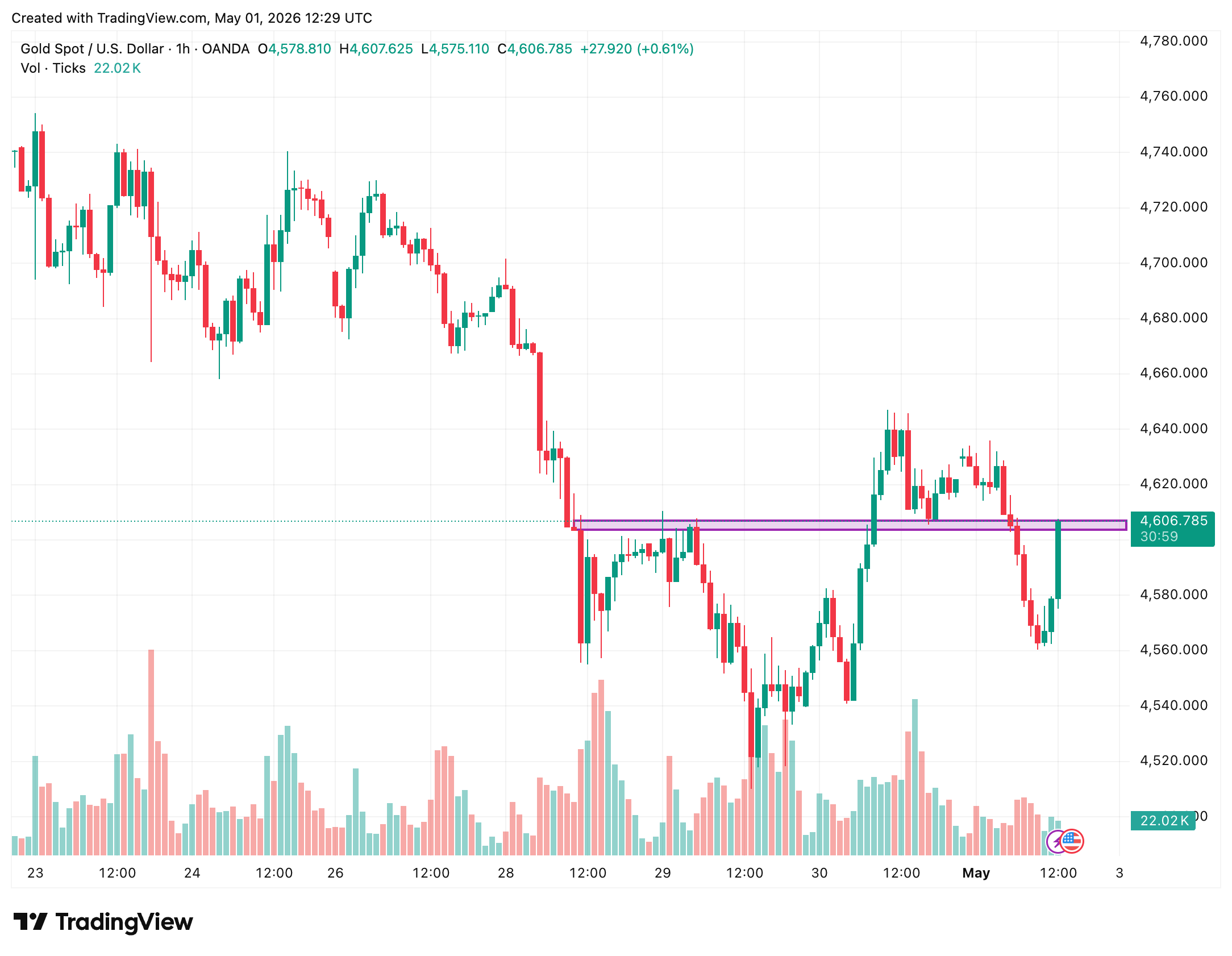
On the 15-minute chart, price consolidated after a drop toward 4,560. A break below the recent swing low at 4,560 could accelerate selling toward 4,520 and then the $4,500 floor. Intraday sellers were likely to treat rallies toward 4,586 or 4,601 as opportunities to re-enter short positions. A sustained move above 4,601 and a reclaiming of 4,614 would open the path to 4,640, though moving averages remained aligned to the downside.
Immediate levels to watch were resistance at 4,586, 4,601 and 4,615 and support at 4,560, 4,520 and 4,500. Market participants said the next clear signal of a trend change would require greater clarity on the geopolitical situation or a decisive reversal in the dollar.
In a market note, a market analyst wrote, “the short-term outlook remains decidedly bearish while the price stays below the 4,601–4,615 resistance zone.” Direction will also depend on upcoming inflation data and central bank signals; a prolonged conflict could affect energy and commodity prices, with implications for inflation and monetary policy.
The content on The Coinomist is for informational purposes only and should not be interpreted as financial advice. While we strive to provide accurate and up-to-date information, we do not guarantee the accuracy, completeness, or reliability of any content. Neither we accept liability for any errors or omissions in the information provided or for any financial losses incurred as a result of relying on this information. Actions based on this content are at your own risk. Always do your own research and consult a professional. See our Terms, Privacy Policy, and Disclaimers for more details.
Articles by this author