Dollar rises as Iran‑US tensions push oil above $100; UK PMI up

US dollar gained its first weekly advance in a month as Iran‑US tensions lifted Brent above $100. UK S&P Global Composite PMI rose to 52.0 and service input costs hit record highs.
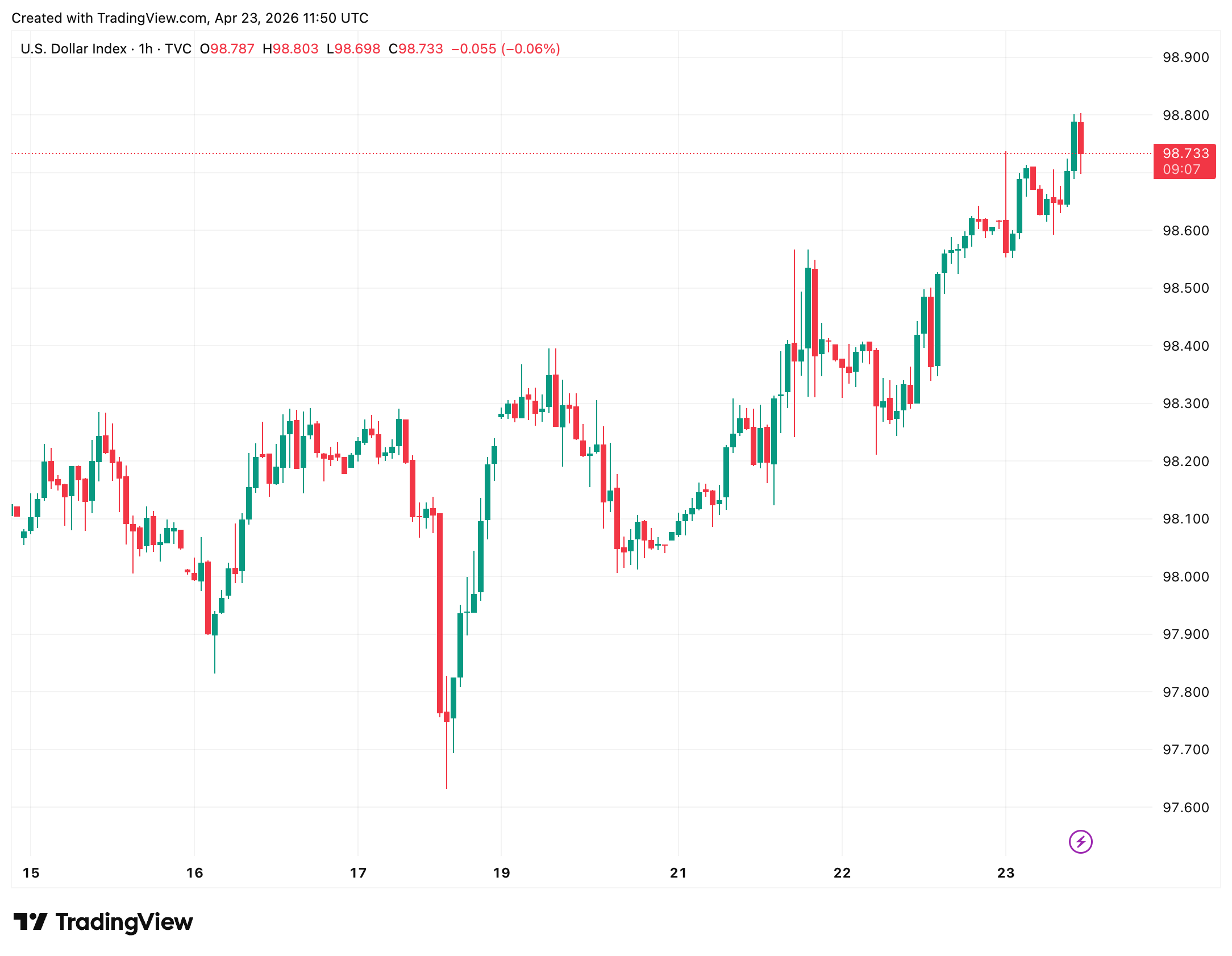
The US dollar posted its first weekly gain in a month as rising Iran‑US tensions pushed Brent crude above $100 a barrel and drew investors into safe‑haven assets. The US Dollar Index traded near 98.60, putting the currency on track for a 0.4% weekly advance. Market participants pointed to ongoing blockades and threats to the Strait of Hormuz as drivers of the oil rally. The White House released a statement quoting President Trump: “Talks could restart tomorrow.” Tehran had not confirmed any diplomatic progress.
European equities opened lower as corporate updates and the geopolitical backdrop adjusted investor positions. The pan‑European STOXX 600 slipped about 0.2%, Germany’s DAX fell 0.2% and the FTSE 100 declined roughly 0.5%. Energy stocks led gains on higher crude prices, telecommunications outperformed, and banks were the weakest sector. Nestlé shares rose about 6% after the company reaffirmed full‑year organic growth guidance. L’Oréal shares climbed roughly 8% after reporting quarterly sales growth of 6.7%.
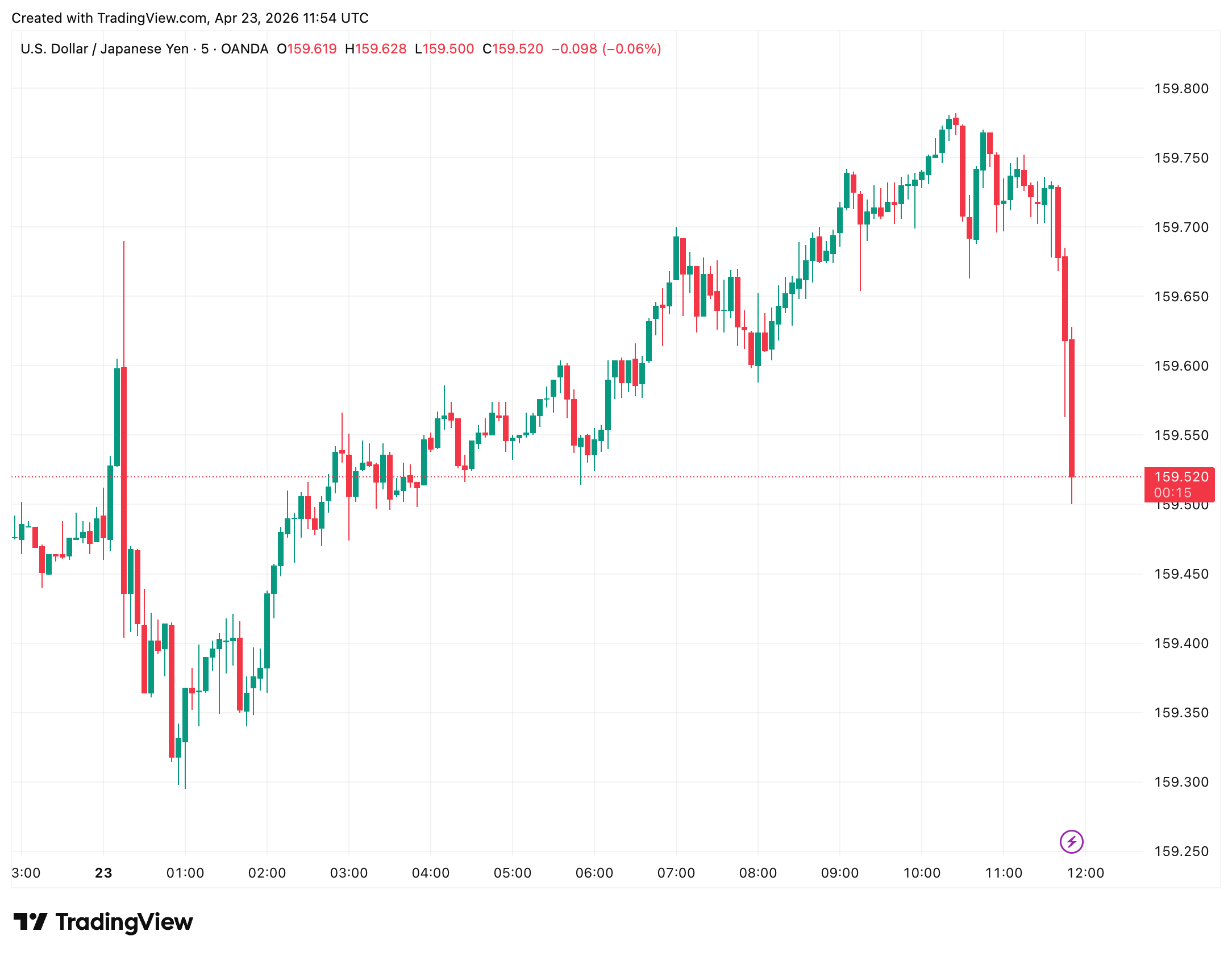
Major currency pairs moved on the risk shift and oil gains. EUR/USD traded near $1.17 after reaching its softest levels since mid‑April and was set for a roughly 0.5% weekly drop. GBP/USD eased to about $1.3484. USD/JPY approached the 160.00 level at about 159.50, a threshold monitored by market participants for potential Bank of Japan action.
Interest rate expectations diverged across markets. Pricing implied about a 25% probability of a Federal Reserve rate cut before year‑end, while traders priced in the prospect of two European Central Bank rate hikes in 2026. Higher oil prices and persistent inflation readings were cited by market participants as factors shaping those expectations.
UK PMI data showed expansion in April despite cost pressures. The S&P Global UK Composite PMI rose to 52.0 from 50.3 in March, with manufacturing at 51.8 and services at 52.0. Aggregate new business was broadly stable. Manufacturers reported customers frontloading orders to hedge against supply disruption and volatility, while service firms registered a slight reduction in new business.
Two persistent headwinds in the UK were highlighted in the PMI release. Employment fell for the 19th consecutive month, with firms frequently citing higher National Insurance contributions as a reason for holding back on hiring. Service providers recorded the sharpest rise in input costs on record, and aggregate charge inflation was at its highest level since June 2022.
In commodities, gold traded below key short‑term moving averages and was testing technical support around the 4,700 level. Market participants noted that further downside in bullion would depend on shifts in the geopolitical picture. Oil trading above $100 a barrel was flagged by some investors as a potential factor for slower growth and higher inflation.
Market attention now turns to upcoming US and global PMI releases and any further developments in the Middle East that could affect oil flows and diplomatic prospects.
The content on The Coinomist is for informational purposes only and should not be interpreted as financial advice. While we strive to provide accurate and up-to-date information, we do not guarantee the accuracy, completeness, or reliability of any content. Neither we accept liability for any errors or omissions in the information provided or for any financial losses incurred as a result of relying on this information. Actions based on this content are at your own risk. Always do your own research and consult a professional. See our Terms, Privacy Policy, and Disclaimers for more details.
Articles by this author