Senate crypto bill limits stablecoin yield, omits Trump ban
Senate Banking Committee released a 309-page Clarity Act draft that curbs stablecoin yield and protects non‑custodial DeFi developers; it heads to markup and lacks a presidential ban.
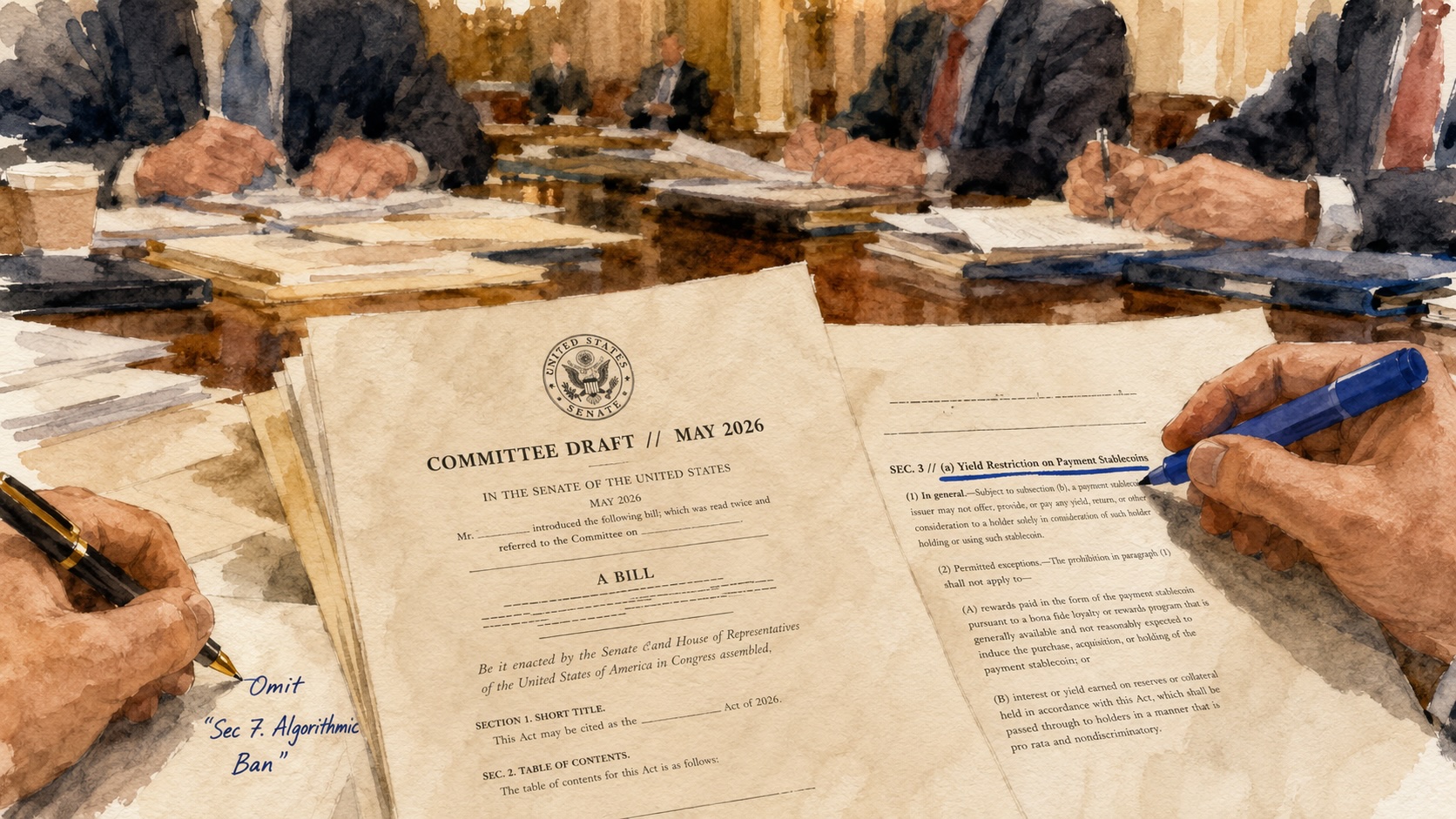
The Senate Banking Committee released a 309-page revision of the Clarity Act late Monday. The draft restricts stablecoin rewards, clarifies protections for non‑custodial decentralized finance developers and is scheduled for a committee markup later this week. The text does not include a ban on the president or other senior federal officials personally profiting from digital assets.
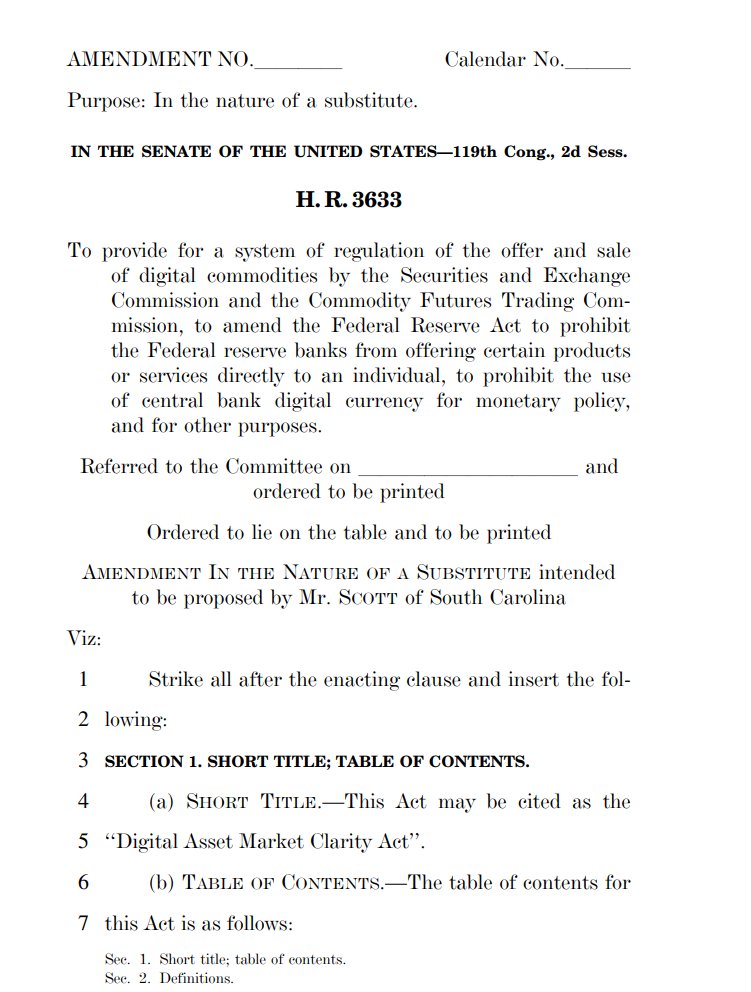
Committee Chair Tim Scott described the updated text as the result of “good-faith work,” saying it provides “certainty, safeguards, and accountability.” He added the bill aims to protect consumers, combat illicit finance and keep financial activity in the United States.
A markup to amend and vote on the bill had been planned for January but was canceled after a major crypto exchange withdrew support over stablecoin provisions. Negotiators later revised the language and restored industry backing.
Senators Angela Alsobrooks and Thom Tillis inserted language that bars certain firms from paying interest or anything “economically or functionally equivalent” to interest for merely holding stablecoins. The provision is intended to prevent platforms from offering yield that regulators equate with deposit interest. The new drafting drew backing from much of the crypto industry and brought an exchange back into talks.
Bank trade groups expressed concern that the restriction could push deposits into payment stablecoins. American Bankers Association CEO Rob Nichols warned in a letter to bank executives that the current text would “unnecessarily incentivize the flight of bank deposits into payment stablecoins, putting both economic growth and financial stability at risk.”
The bill includes the Blockchain Regulatory Certainty Act, which would clarify that non‑custodial developers are not money transmitters. Law enforcement officials and some senators raised concerns that the provision could create enforcement gaps for financial crime. Senators Chuck Grassley and Cynthia Lummis worked on language to address those issues, and other sections were adjusted to reflect input from Grassley and Senator Catherine Cortez Masto.
DeFi stakeholders are reviewing the draft. The DeFi Education Fund posted that it is encouraged by recent negotiations and noted that BRCA and Exchange Act protections for developers remain in the text.
Ethics language is not in the current draft. Democrats previously sought amendments to bar the president, vice president, members of Congress and other federal officials from certain digital‑asset transactions. Senator Alsobrooks’ office said she continues to negotiate for an ethics compromise needed to secure Democratic support. Senator Kirsten Gillibrand has indicated she will not support the bill without an ethics provision. Senator Elizabeth Warren criticized the omission, stating the bill would “turbocharge Donald Trump’s crypto corruption” and urging committee members not to back the draft without measures addressing conflicts of interest.
The draft also contains a housing provision directing the Securities and Exchange Commission and the Commodity Futures Trading Commission to set timelines for rules tied to a pilot program intended to incentivize housing.
The committee’s markup later this week will amend and vote on the draft and determine whether the revised text can win bipartisan support.
The content on The Coinomist is for informational purposes only and should not be interpreted as financial advice. While we strive to provide accurate and up-to-date information, we do not guarantee the accuracy, completeness, or reliability of any content. Neither we accept liability for any errors or omissions in the information provided or for any financial losses incurred as a result of relying on this information. Actions based on this content are at your own risk. Always do your own research and consult a professional. See our Terms, Privacy Policy, and Disclaimers for more details.
Articles by this author