Circle economist urges 40–50% USDC supply rates on Aave

Circle economist Gordon Liao urged Aave to raise USDC supply rates to 40–50% and lower optimal utilization after the KelpDAO rsETH exploit left the USDC pool fully utilized for four days.
Gordon Liao, chief economist at Circle, posted an Aave Request for Comment asking Aave v3 Ethereum Core to raise USDC supply rates and lower the pool's optimal utilization. The request follows a Kelp DAO rsETH exploit that left the USDC pool effectively at full utilization for four days.
Liao proposed an interim increase of the interest-rate “Slope 2” to 40%, with a 50% target, and a lower optimal utilization point to attract deposits. He noted the current supply rate of about 14% has not restored usable liquidity because repayments are being absorbed almost dollar-for-dollar by queued withdrawals. He wrote a higher supply rate should pull in USDC “within hours.”
The pressure on Aave's USDC market began after a $292 million exploit tied to KelpDAO. The exploit triggered large withdrawals and sustained high utilization across core markets. Aave's total value locked fell from above $45 billion to about $15.3 billion as on-chain activity and outflows reshaped liquidity in the protocol.
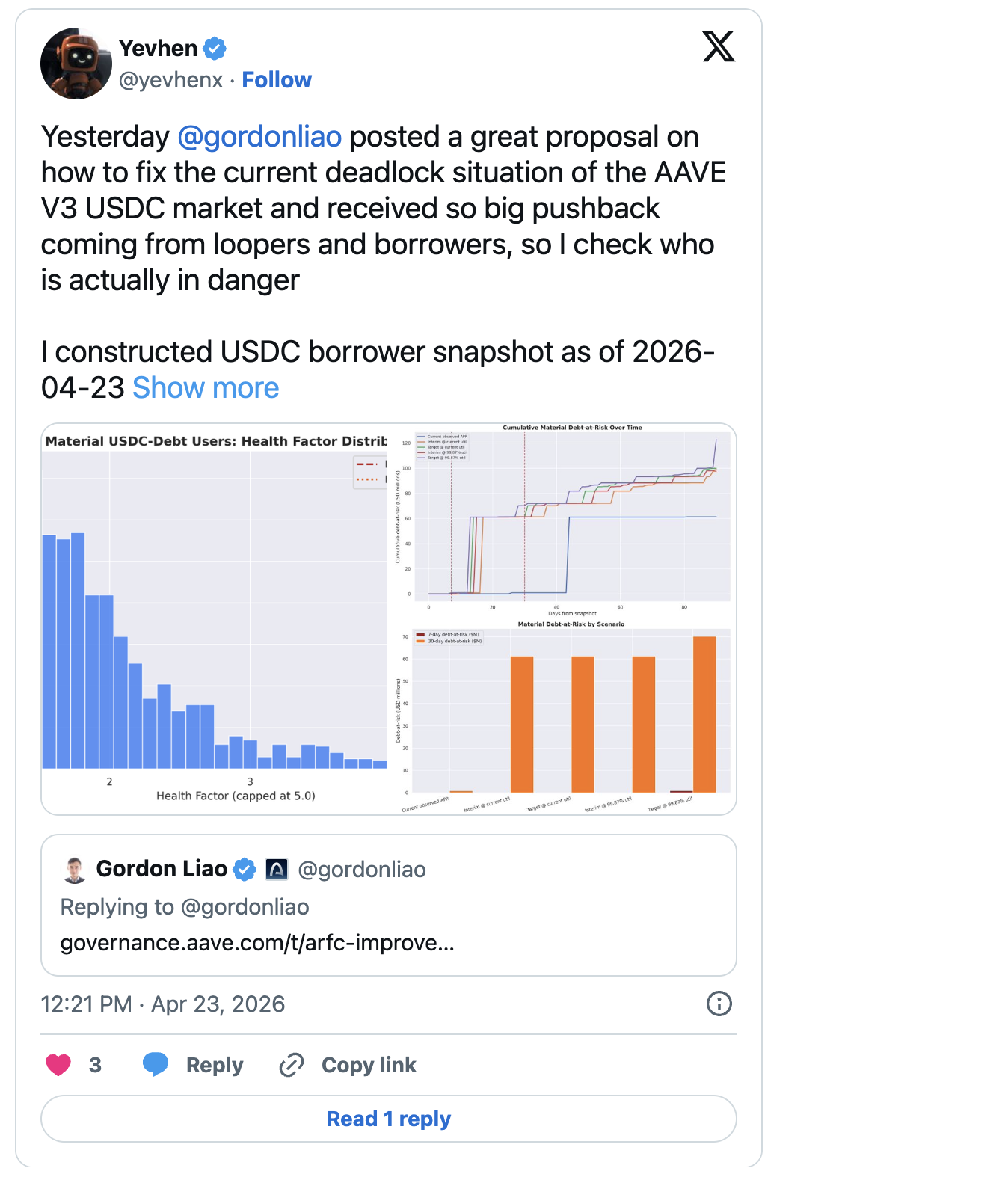
A delegate-style analysis posted in response estimated that under stressed utilization the proposed curve could move roughly $70.1 million of material debt closer to liquidation over 30 days, with one large wallet accounting for most of that exposure. Respondents warned steeper supply rates can raise borrowing costs for users with thin health factors and increase the risk of liquidations.
Some community members questioned why a Circle economist was proposing governance changes instead of Circle providing liquidity directly. Liao included a disclaimer saying the post reflected “personal views only, not representing those of Circle.”
On-chain analysis shows the attacker swapped nearly all of about 75,700 ETH still under control-about $175 million-into bitcoin over roughly a day and a half, primarily using decentralized bridges and swaps. That activity generated significant volume and fees on those networks and contributed to volatile flows across lending markets.
Aave governance members, delegates and other stakeholders are evaluating the request and the risks involved as they consider whether to adjust the USDC interest-rate curve, approve direct liquidity measures or take other steps to reduce utilization and stem outflows.
The content on The Coinomist is for informational purposes only and should not be interpreted as financial advice. While we strive to provide accurate and up-to-date information, we do not guarantee the accuracy, completeness, or reliability of any content. Neither we accept liability for any errors or omissions in the information provided or for any financial losses incurred as a result of relying on this information. Actions based on this content are at your own risk. Always do your own research and consult a professional. See our Terms, Privacy Policy, and Disclaimers for more details.
Articles by this author