China’s Belt and Road revives Silk Road rail corridors
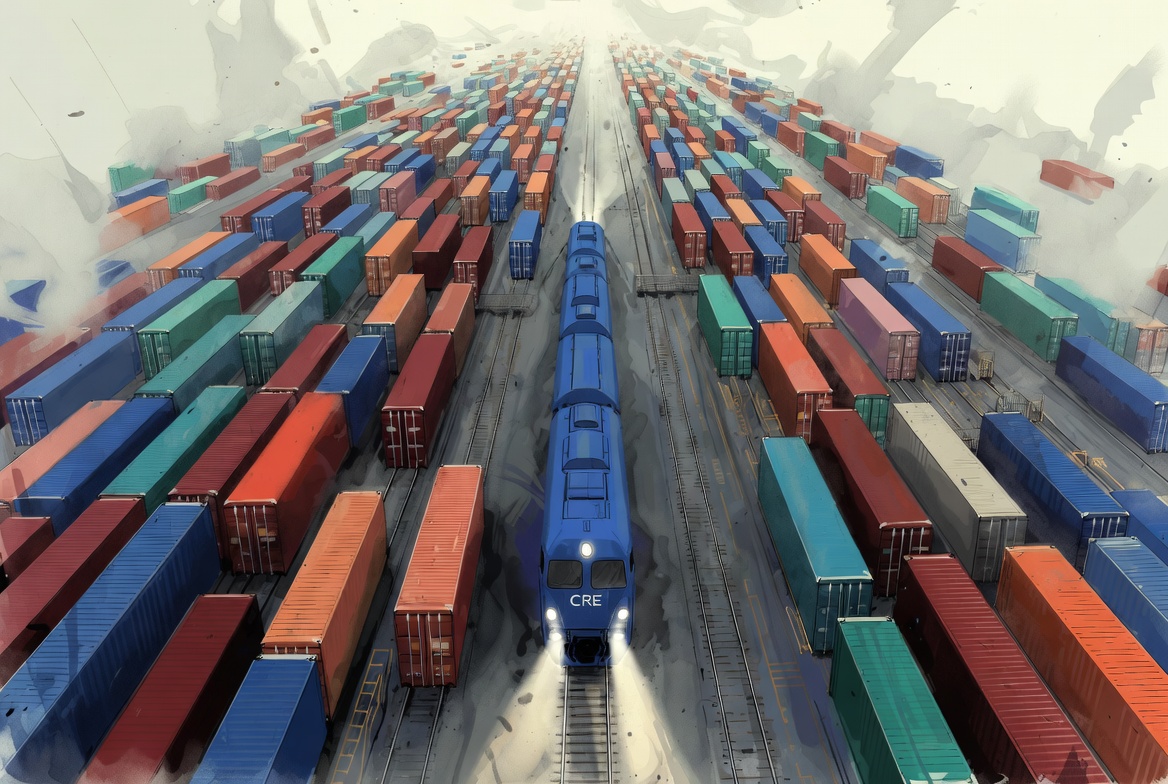
China’s Belt and Road Initiative is replacing caravan routes with cargo trains and rail links connecting western Chinese factories to markets in Europe, the Middle East and Africa.
China’s Belt and Road Initiative is expanding overland freight services that connect inland Chinese factories to markets in Europe, the Middle East and Africa. Regular cargo trains and new rail corridors aim to shorten transit times and create scheduled overland supply chains.
Commercial rail freight between China and Europe began in 2011 with the Chongqing–Duisburg service. Since then operators have added north, central and southern corridors. Trains run from western Chinese logistics hubs across Kazakhstan into Russia, across the Caspian Sea and through the Caucasus into Turkey, and via the Trans‑Siberian network into central and northern Europe. Operators schedule regular departures and cite common transit times in the low‑to‑mid teens of days, shorter than typical sea shipping and less expensive than air cargo.
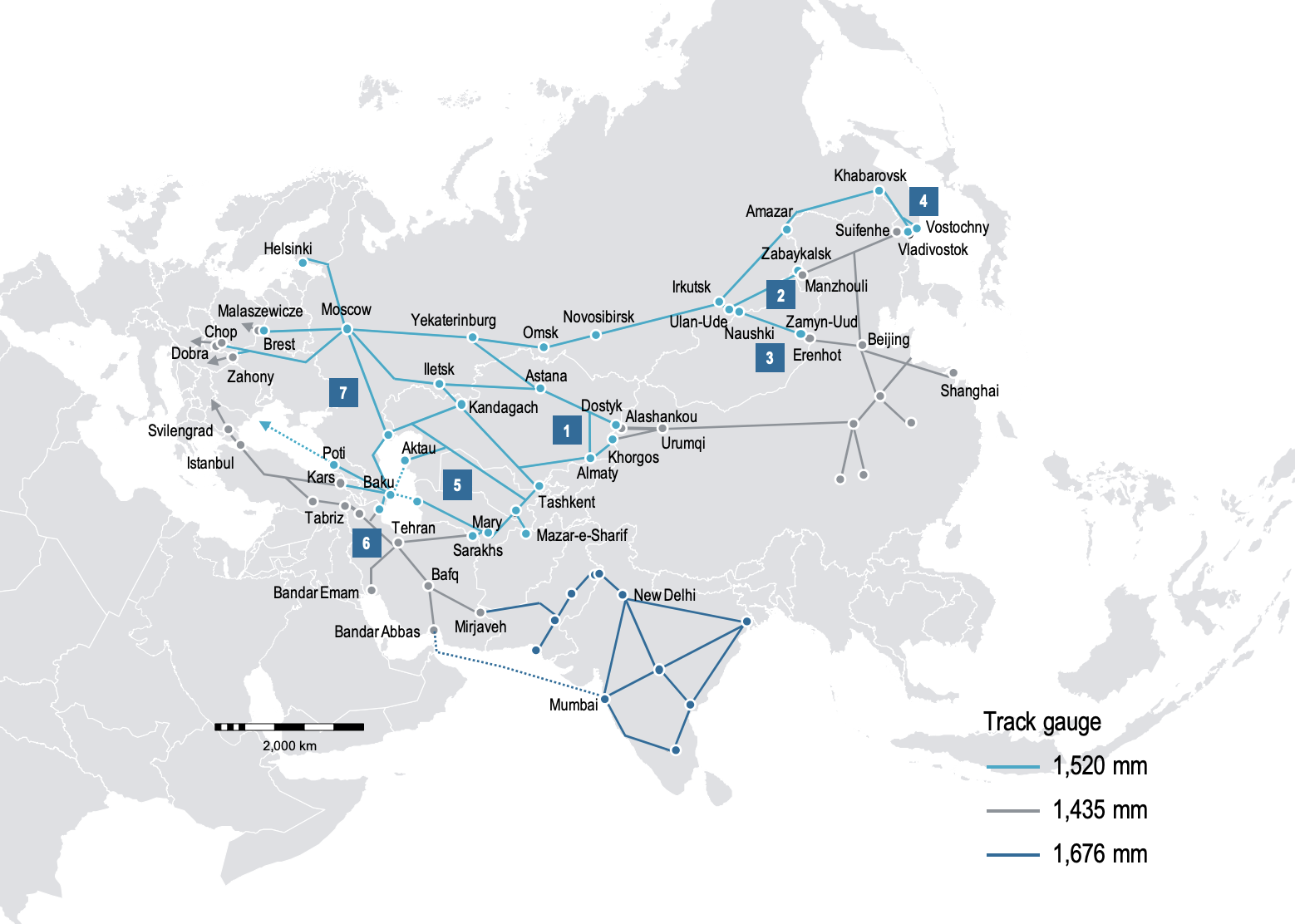
distances, numbering based on route usage for Eurasian rail cargo transport). Source: uic.org
Beijing‑backed projects have built and financed rail lines outside the China–Europe corridor. The Mombasa–Nairobi standard‑gauge railway in Kenya opened in 2017. The Addis Ababa–Djibouti line began service in 2018. The China–Laos railway opened in December 2021, linking southwestern China with Vientiane and forming part of a planned overland link toward Southeast Asia. The Baku–Tbilisi–Kars link, completed in 2017, serves the Trans‑Caspian route between China and Europe.
Cargo moved by rail includes electronics, automotive parts, machinery components, textiles and e‑commerce parcels. Some routes also carry medical supplies and industrial inputs. Chinese logistics companies, large e‑commerce firms and state railway corporations operate block trains and manage inland logistics hubs in cities such as Chongqing, Chengdu and Xi’an to streamline loading and customs procedures.
Financing and construction have involved Chinese policy banks, state‑owned contractors and host‑country partners. Projects have used loans, build‑operate arrangements and bilateral agreements. Rail links have been paired with port upgrades, dry ports and customs clearance facilities to integrate rail and sea transport where needed.
Operational characteristics vary by route. Northern corridors that use the Trans‑Siberian route offer direct rail access into central and northern Europe. Central corridors combine rail across Kazakhstan with short sea transits across the Caspian to reach the Caucasus and Turkey. Southern corridors connect China to Southeast Asia and, where tracks and border links exist, to maritime ports serving Africa and the Middle East. Each corridor requires coordination on border crossings, container transfers and customs procedures to keep schedules.
Transit countries have upgraded stations, freight yards and customs systems to handle higher volumes. The Belt and Road Initiative, announced in 2013, frames many of these rail projects; financing sources, construction timetables and operational arrangements differ by project and country.
The content on The Coinomist is for informational purposes only and should not be interpreted as financial advice. While we strive to provide accurate and up-to-date information, we do not guarantee the accuracy, completeness, or reliability of any content. Neither we accept liability for any errors or omissions in the information provided or for any financial losses incurred as a result of relying on this information. Actions based on this content are at your own risk. Always do your own research and consult a professional. See our Terms, Privacy Policy, and Disclaimers for more details.
Articles by this author