Chainalysis: Stablecoin volume may exceed $1 quadrillion by 2035

Chainalysis projects global stablecoin transaction volume could exceed $1 quadrillion by 2035 in a high-adoption scenario for on-chain payments and tokenized assets.
Chainalysis issued a report projecting that global stablecoin transaction volume could exceed $1 quadrillion by 2035 under a high-adoption scenario. The forecast covers growth in on-chain payments, remittances, decentralized finance and tokenized real-world assets.
The firm built several adoption pathways. In its most aggressive scenario, stablecoins capture a large share of cross-border transfers and e-commerce settlement as financial institutions and payment processors build direct on-ramps to blockchain networks. The model assumes faster on-chain settlement, broader merchant acceptance of crypto-backed payment options and expanded decentralized finance use cases.
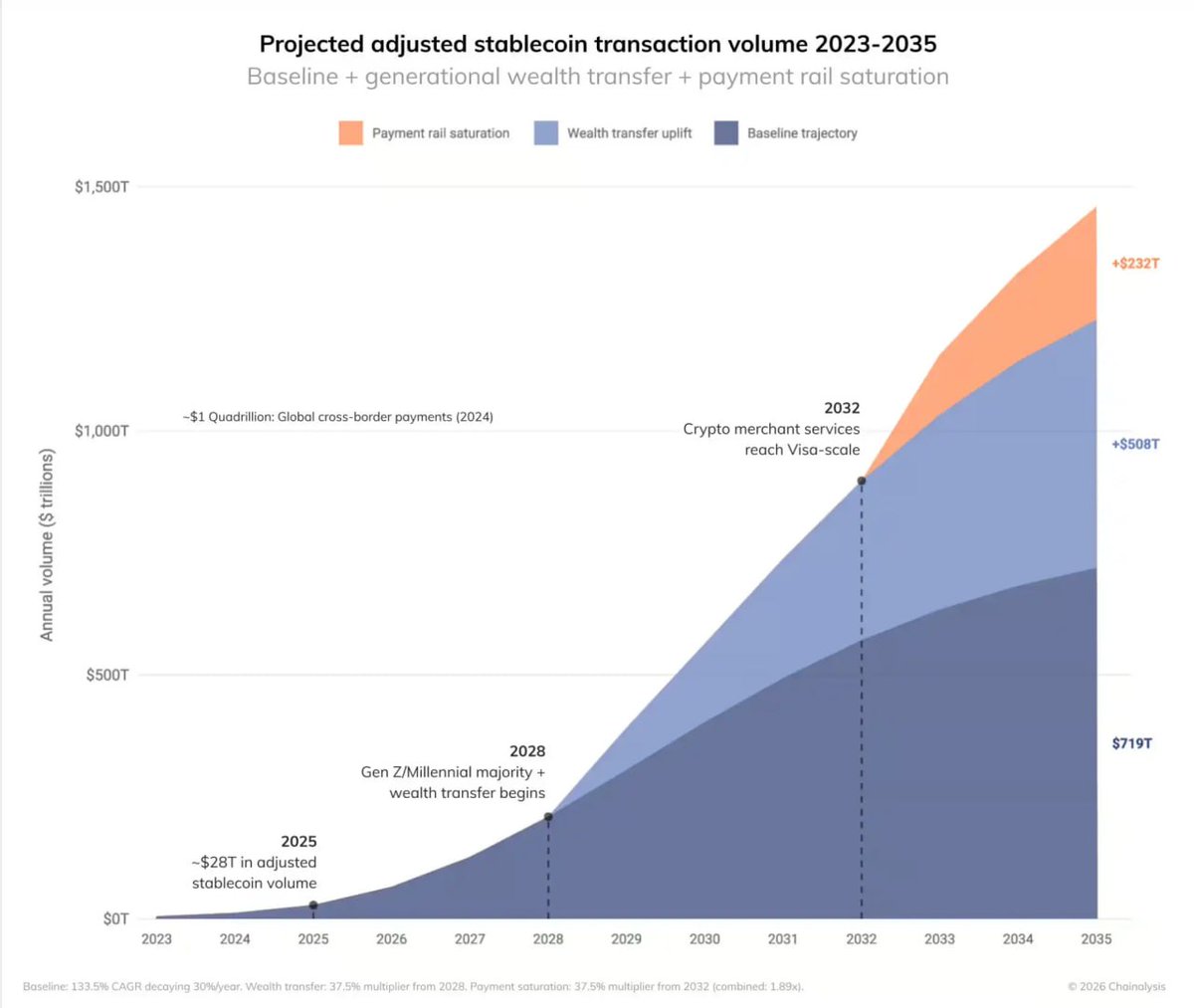
Chainalysis presented a more conservative scenario in which adoption of on-chain settlement proceeds slowly and regulatory controls limit some use cases. The report framed the $1 quadrillion figure as an upper bound among modeled outcomes rather than a guaranteed result.
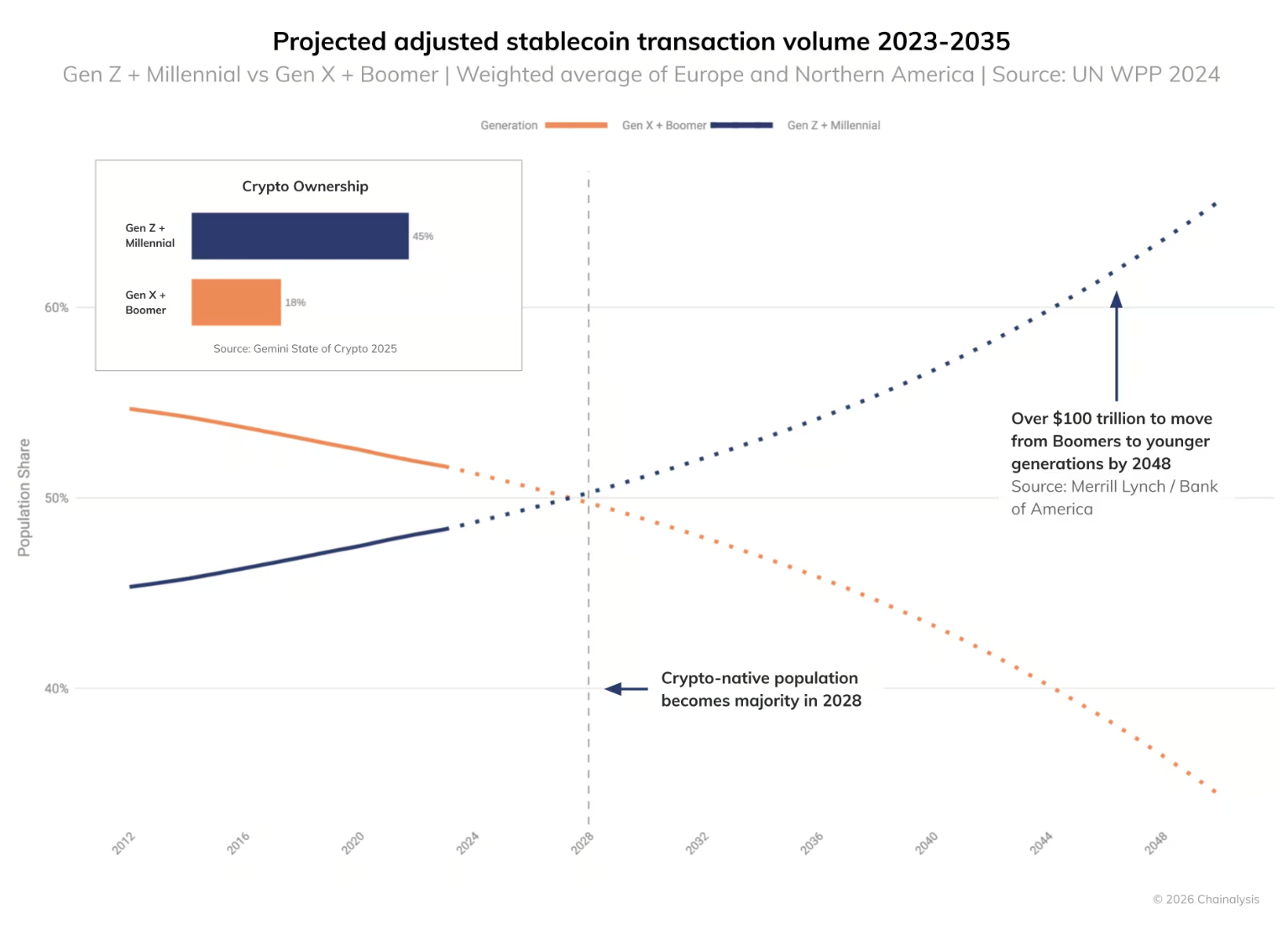
The report identified demand drivers behind higher transaction volumes. Stablecoins enable continuous settlement and near-instant transfers across borders, features that appeal to payment processors and remittance services. Decentralized finance platforms use stablecoins as the primary unit for trading, lending and collateral, which increases on-chain transaction activity. Tokenization of bonds, equities and other financial instruments could shift portions of trading and settlement from legacy systems to blockchains that use stablecoins for liquidity and settlement.
Chainalysis flagged structural and regulatory risks that could affect the trajectory. The firm pointed to concentration among major stablecoin issuers and the need for transparency on reserves as potential financial stability concerns. Regulators in multiple jurisdictions are considering frameworks for stablecoin issuance, custody and interoperability with banking systems; differing regulatory approaches could change global adoption patterns and the scale of on-chain activity.
The analysis noted that issuer trust and regulatory compliance are likely to influence which stablecoins achieve the widest use in payments and settlement. Market factors such as the number of active on-ramps, ease of converting between fiat and stablecoins and availability of institutional custody services will shape whether the high-adoption scenario materializes.
For context, stablecoins are cryptocurrencies designed to hold a stable value relative to a fiat currency or basket of assets. Major types include fiat-collateralized tokens backed by reserves, crypto-collateralized tokens backed by other digital assets and algorithmic models that use code-based rules to manage supply. Debate over reserve transparency, consumer protections and regulation has increased as stablecoin usage has grown.
The report recommends that policymakers and market participants consider how on-chain settlement and stablecoin payment flows interact with existing financial infrastructure. Chainalysis advises planning for interoperability, reserve reporting standards and clearer issuer responsibilities to influence the pace and extent of stablecoin adoption for high-volume payment and settlement use cases.
The content on The Coinomist is for informational purposes only and should not be interpreted as financial advice. While we strive to provide accurate and up-to-date information, we do not guarantee the accuracy, completeness, or reliability of any content. Neither we accept liability for any errors or omissions in the information provided or for any financial losses incurred as a result of relying on this information. Actions based on this content are at your own risk. Always do your own research and consult a professional. See our Terms, Privacy Policy, and Disclaimers for more details.
Articles by this author