Bank of Canada tests first tokenized bond with digital CAD

Bank of Canada, RBC and TD completed Project Samara, issuing and settling an EDC C$100 million short-term bond on an RBC-run ledger using tokenized wholesale Canadian dollars.
On March 6, 2026, Canada’s central bank and units of Royal Bank of Canada and Toronto-Dominion Bank completed the country’s first tokenized bond trial using digital Canadian dollars. Export Development Canada issued a C$100 million short-term note that was traded and settled on an RBC-operated distributed ledger under Project Samara.
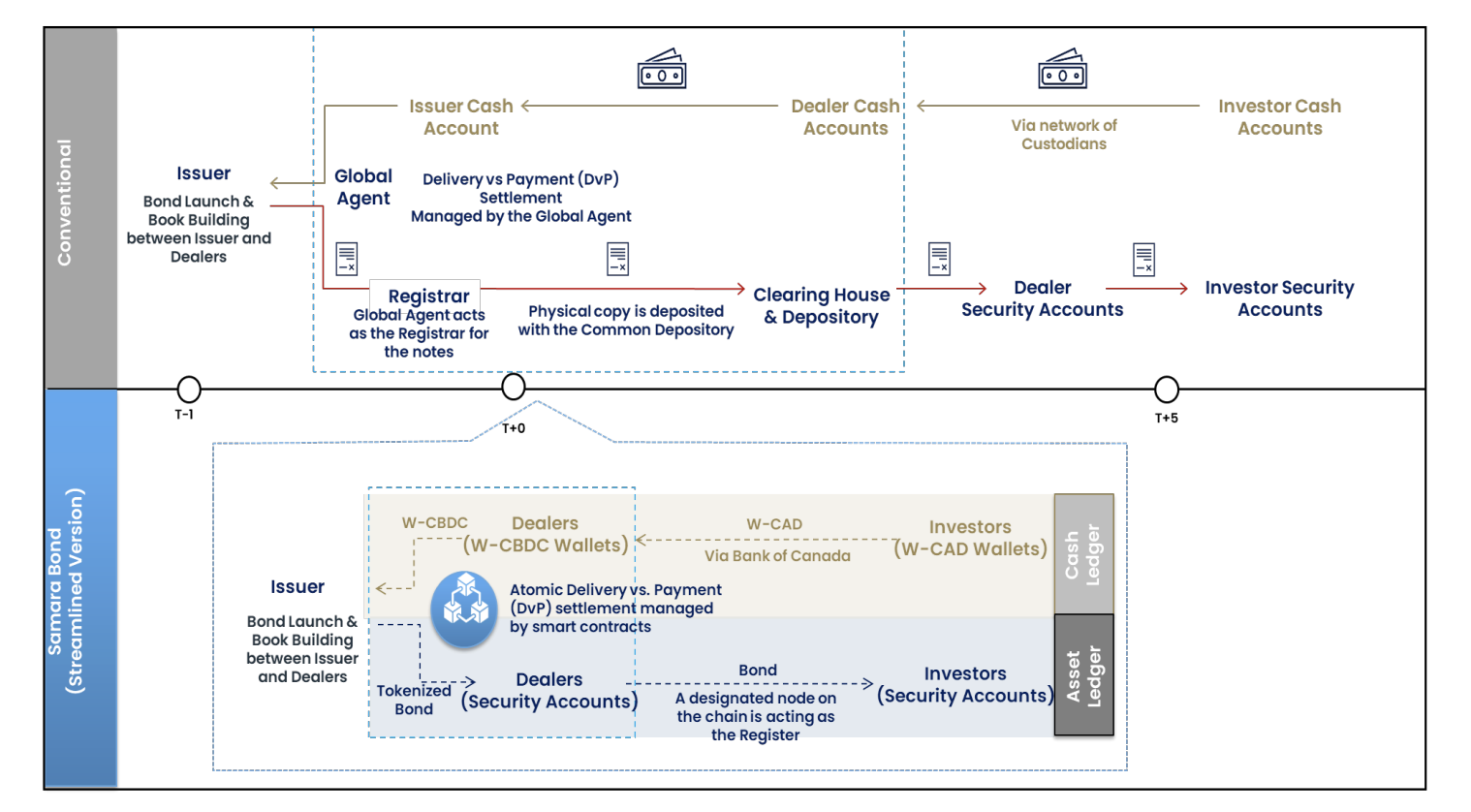
The pilot tested how a bond can be issued in tokenized form and managed through its full lifecycle on a single platform, including bidding, coupon payments, redemption and secondary-market trading. The note had a maturity of under three months and was sold to a closed group of investors to keep the environment controlled.
RBC Dominion Securities, RBC Investor Services Trust and TD Securities took part. The platform, run by RBC, used distributed ledger technology to record ownership and transactions. Tokenized wholesale Canadian dollars, created and managed by the Bank of Canada, were used to settle trades on the same ledger.
Keeping the bond and digital funds on one system enabled on-ledger settlement rather than using separate payment rails. The test focused on wholesale transactions among regulated institutions and did not include retail investors.
The central bank is examining whether digitizing both assets and cash can shorten settlement times and reduce operational steps in bond markets. The pilot also validated standard functions such as processing coupon payments and redeeming the bond at maturity in tokenized form.
Project Samara will continue to test issuing, trading and settling bonds using digital Canadian dollars on a distributed ledger. Future phases are expected to refine workflows, risk controls and links to existing market infrastructure. No timeline has been set for broader deployment, and the work remains exploratory.
The test arrives as Canadian authorities develop oversight for digital money and market infrastructure. In the November budget, the federal government outlined plans to propose legislation for Canadian-dollar-backed stablecoins, with oversight expected to involve the Bank of Canada and rules on reserves, redemption and risk management. Last month, the Canadian Investment Regulatory Organization introduced a digital asset custody framework for trading platforms to strengthen how crypto assets are held and managed.
Export Development Canada regularly issues short-term debt and served as issuer to provide a familiar instrument in a new format. The tokenized wholesale Canadian dollars used in the test were limited to settlement among participating institutions and are distinct from any retail digital currency.
Within the pilot, RBC operated the ledger and supported order submission and post-trade processing. TD Securities acted as a dealer, and RBC Investor Services Trust handled custody and settlement. Using a closed investor group allowed participants to gauge performance, controls and record-keeping.
The content on The Coinomist is for informational purposes only and should not be interpreted as financial advice. While we strive to provide accurate and up-to-date information, we do not guarantee the accuracy, completeness, or reliability of any content. Neither we accept liability for any errors or omissions in the information provided or for any financial losses incurred as a result of relying on this information. Actions based on this content are at your own risk. Always do your own research and consult a professional. See our Terms, Privacy Policy, and Disclaimers for more details.
Articles by this author