CFTC grants Phantom No-Action relief on Broker Rules

A CFTC staff letter lets crypto wallet Phantom test a derivatives trading interface without registering as an introducing broker, subject to disclosures, compliance policies and recordkeeping.
The Commodity Futures Trading Commission’s Market Participants Division issued a staff no-action letter on Tuesday allowing Phantom to build a wallet interface for derivatives access without registering as an introducing broker, so long as the company meets disclosure, compliance, and recordkeeping conditions.
Under the letter, CFTC staff would not recommend enforcement tied to introducing broker registration for software features that let users view derivatives market data, track positions, and submit orders to registered exchanges or intermediaries. The relief covers a front-end interface embedded in Phantom’s self-custodial wallet, which currently lets users store and manage digital assets across multiple blockchains.
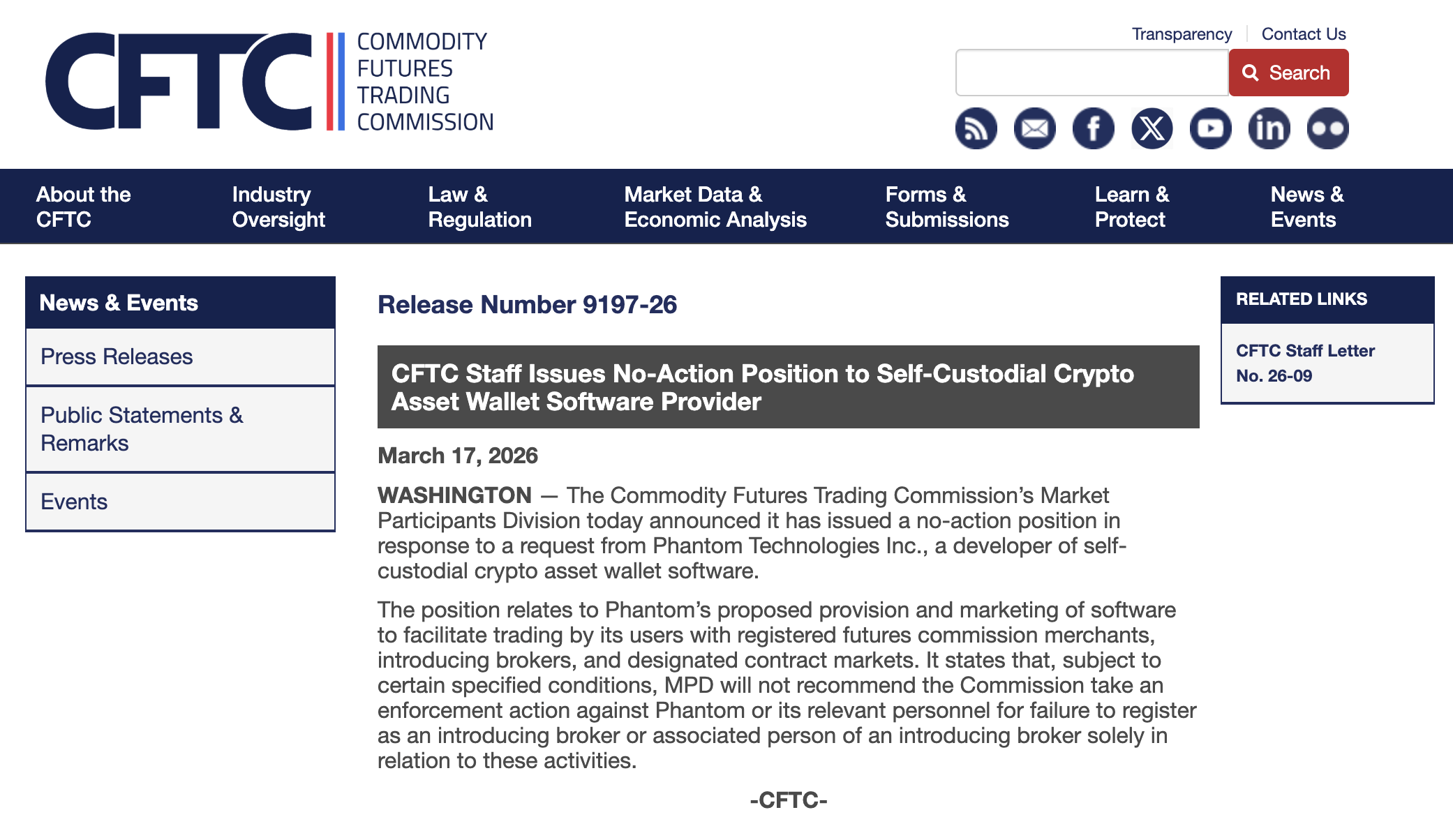
The letter makes clear that Phantom’s role must remain limited to a user interface that transmits trading instructions directly to designated contract markets or other registered intermediaries. Phantom may not intermediate trades or handle customer funds for derivatives activity. The relief applies to the functionality described to staff and does not extend to activities outside that scope.
Conditions include clear disclosures to users about potential conflicts of interest and the risks of derivatives trading. Phantom must maintain and enforce compliance policies governing marketing and communications related to derivatives and keep records of derivatives-related activities for potential CFTC review.
Phantom informed the agency it plans to expand its wallet to include tools for monitoring derivatives markets and submitting orders to registered venues or brokers, while keeping custody and execution with those regulated entities. The model is designed so users maintain direct relationships with registered exchanges or intermediaries while using the wallet as an interface.
The action comes as U.S. regulators examine how existing financial rules apply to non-custodial crypto software, including wallets and decentralized finance applications. Recent cases involving privacy tools and crypto mixers, such as Tornado Cash and Samourai Wallet, have drawn attention to the boundary between software development and regulated intermediation.
Agency leadership has indicated work is underway on guidance to clarify when developers of non-custodial software may be subject to intermediary registration requirements. The staff letter offers one example of how the CFTC may view front-end wallet interfaces that connect users to registered derivatives venues without taking custody or routing orders through the provider’s own systems.
The no-action letter does not bar future enforcement if Phantom fails to meet the stated conditions or expands its role beyond a user interface. It does not bind the commission, which retains authority to interpret and enforce the Commodity Exchange Act and CFTC regulations.
The content on The Coinomist is for informational purposes only and should not be interpreted as financial advice. While we strive to provide accurate and up-to-date information, we do not guarantee the accuracy, completeness, or reliability of any content. Neither we accept liability for any errors or omissions in the information provided or for any financial losses incurred as a result of relying on this information. Actions based on this content are at your own risk. Always do your own research and consult a professional. See our Terms, Privacy Policy, and Disclaimers for more details.
Articles by this author