Alabama recognizes DAOs as legal entities, second in U.S.
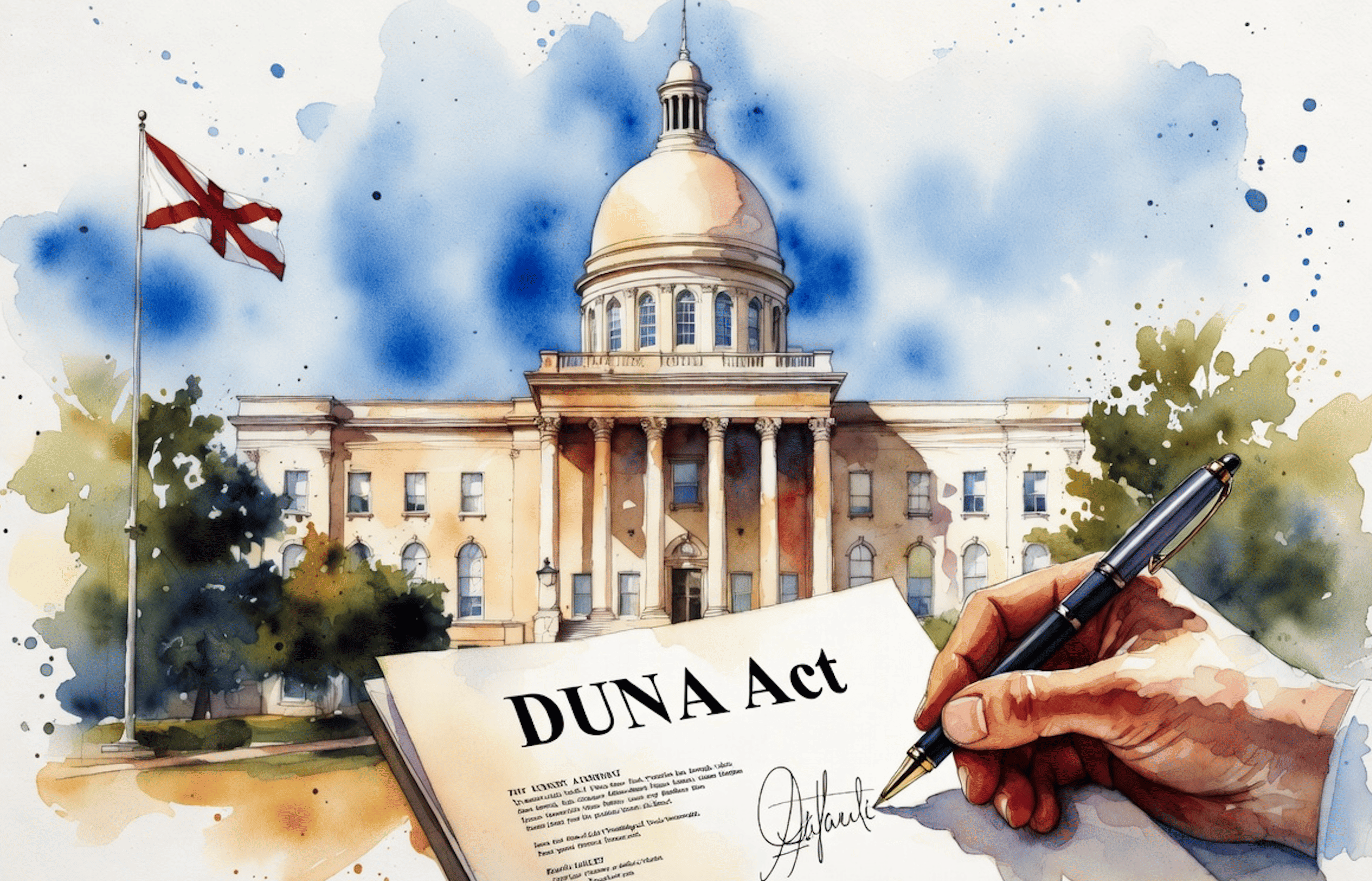
Gov. Kay Ivey signed the DUNA Act, granting legal status and limited liability to decentralized autonomous organizations and making Alabama the second state after Wyoming to adopt the framework.
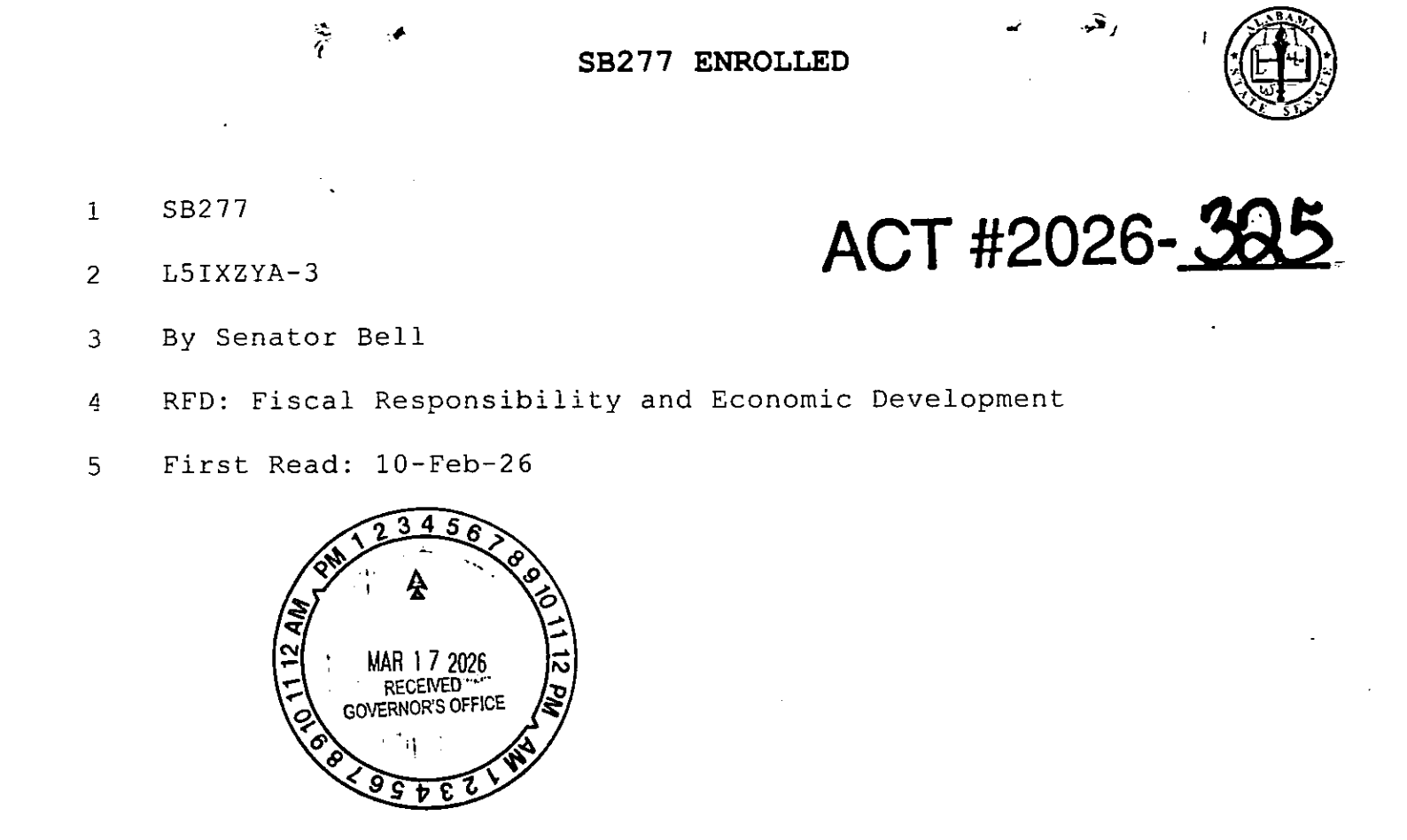
Alabama enacted the Decentralized Unincorporated Nonprofit Association Act, giving decentralized autonomous organizations, or DAOs, legal recognition and limited liability in the state. Gov. Kay Ivey signed the measure after it cleared the Legislature on March 17 by a vote of 82-7, with 16 abstentions.
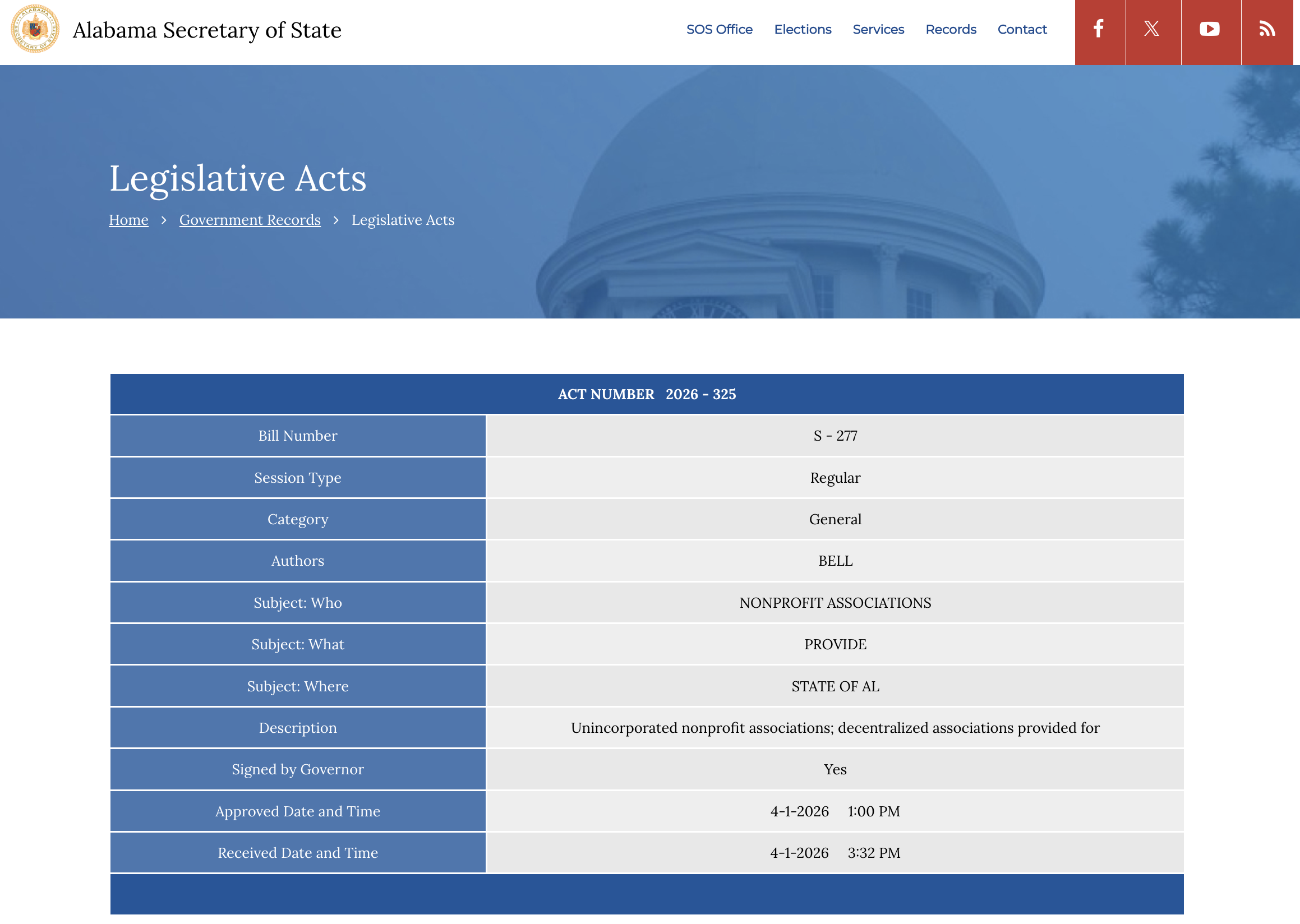
The law allows DAOs to operate as legal entities in Alabama, including the ability to own property, enter contracts, and sue or be sued. It recognizes on-chain governance, meaning proposals, votes, and records can be stored and executed through blockchain technology and smart contracts.
The DUNA Act was introduced in February by Republican Sen. Lance Bell. Alabama becomes the second state to adopt this framework, following Wyoming’s action in 2024.
To qualify under the statute, a DAO must have at least 100 members organized for a common nonprofit purpose, such as governing a blockchain network or smart contract system. The act extends limited liability protections to individual members, shielding them from personal responsibility for disputes tied to the DAO’s activities.
Related: Why DAOs still haven’t gone mainstream
Supporters describe the framework as a way to provide clear rules for how decentralized groups interact with existing law. In a post on X, Miles Jennings, head of policy and general counsel at a16z Crypto, called decentralized governance “essential to crypto’s future” and wrote that the law gives decentralized communities “the certainty to build, govern, contract, and scale in the real world.” He added, “As federal crypto market structure legislation moves closer to becoming law, builders need effective domestic legal structures.”
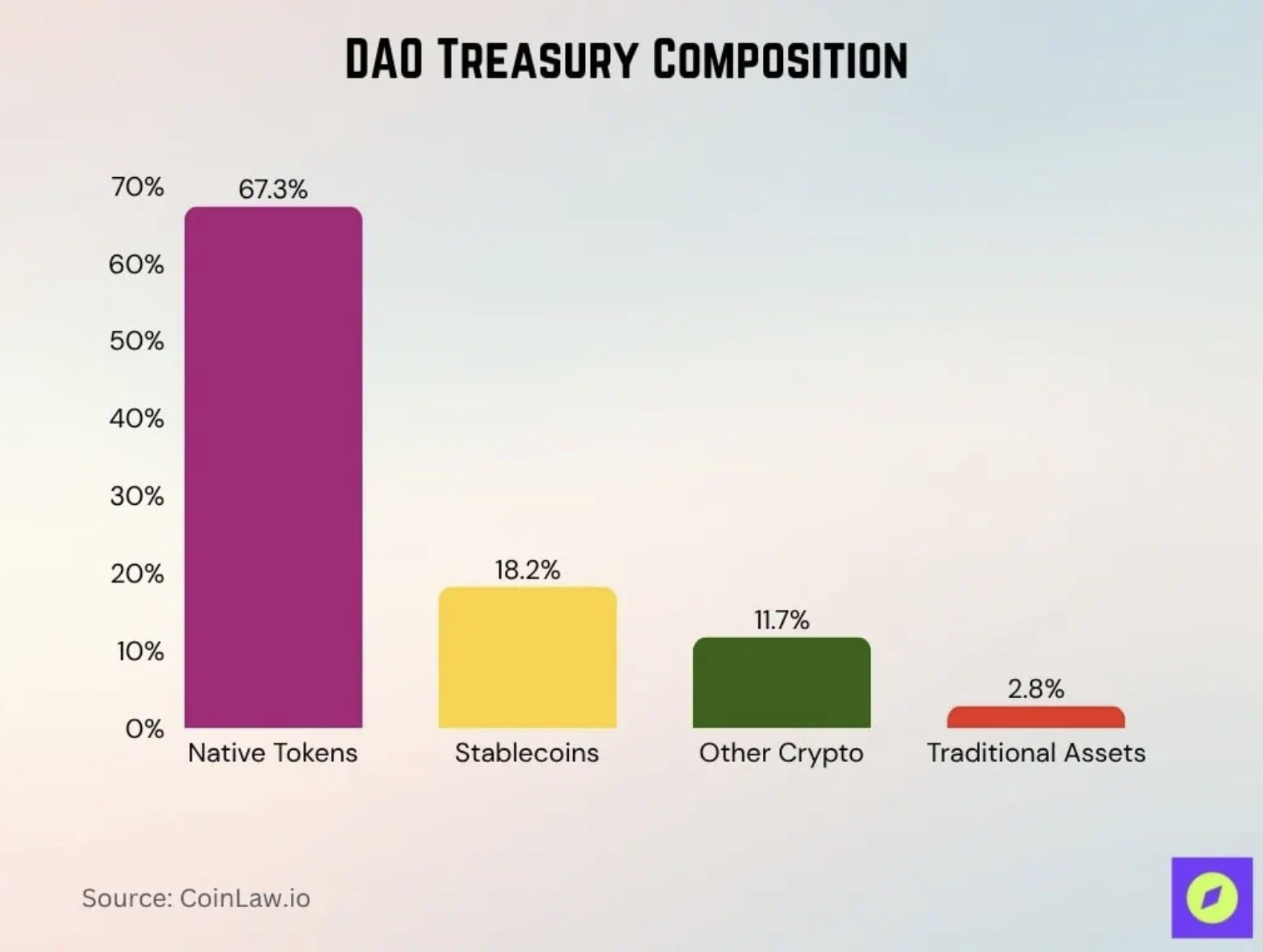
Data from CoinLaw indicates there are more than 13,000 DAOs worldwide, collectively overseeing about $24.5 billion in assets. Legal recognition at the state level sets out how these groups can hold assets and enter agreements and provides a path to resolve disputes under established procedures.
Other states are weighing similar measures. In West Virginia, a DUNA bill introduced in February by Rep. Tristan Leavitt is awaiting the governor’s signature.
Alabama’s statute is designed for nonprofit-oriented decentralized groups rather than for-profit token ventures. It defines membership thresholds, recognizes on-chain records, and outlines entity powers so DAOs can operate within familiar legal processes while coordinating through blockchain technology.
The content on The Coinomist is for informational purposes only and should not be interpreted as financial advice. While we strive to provide accurate and up-to-date information, we do not guarantee the accuracy, completeness, or reliability of any content. Neither we accept liability for any errors or omissions in the information provided or for any financial losses incurred as a result of relying on this information. Actions based on this content are at your own risk. Always do your own research and consult a professional. See our Terms, Privacy Policy, and Disclaimers for more details.
Articles by this author