Tether CEO Says Global AI Agents Will Use Bitcoin and USDT by 2040
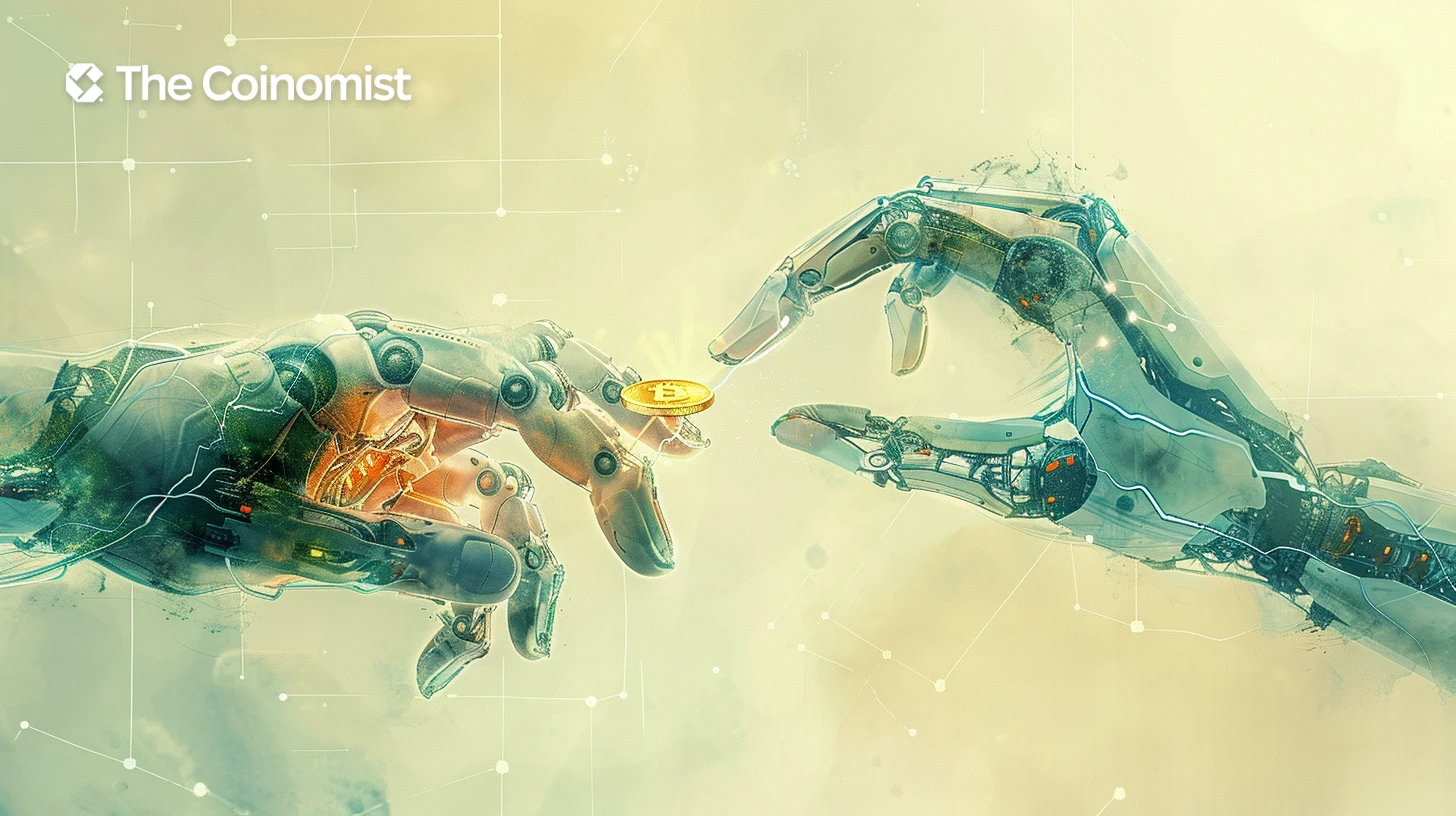
Paolo Ardoino, the CEO of Tether, a stablecoin issuer, forecasts that by 2040, a trillion AI agents will conduct autonomous transactions using Bitcoin and USDT, ushering in machine-led commerce.
Within the next 15 years, a global network of one trillion AI agents will transact using Bitcoin and USDT, Ardoino stakes his claim. He believes these assets will power an era of autonomous, machine-driven economic activity within the AI ecosystem.
The Rise of AI Agents in Crypto Commerce
Ardoino expects an explosion of machine-to-machine commerce, with AI agents interacting and transacting autonomously. He sees devices negotiating and settling deals without human intervention. Speaking on The Block’s Big Brain podcast, he said USDT and Bitcoin will be the backbone of future autonomous commerce, powering these AI-driven transactions among devices.
Paolo also envisioned each AI agent having its own crypto wallet to self-manage funds and execute trades. This setup could let agents earn, hold, and spend crypto without human oversight.
This vision builds on Tether’s May 2024 restructuring into four divisions, including artificial intelligence, Bitcoin mining, education, and stablecoins. The move signaled Ardoino’s push to merge AI and blockchain at scale.
Under his leadership, Tether invested about $1 billion in AI infrastructure and $200 million in Blackrock Neurotech to support emerging AI technologies. These investments aim to strengthen the technical backbone for autonomous agents.
As this wave builds, one question arises: can existing networks scale to support a trillion autonomous agents? Only robust, decentralized platforms will handle the load of machine-to-machine commerce.
AI Agents in Crypto: Use Cases
AI agents are autonomous software programs that perceive their environment, plan actions, and execute tasks to achieve goals with minimal human input. They leverage techniques like memory, reasoning, and tool usage to adapt behavior over time. In crypto, these agents can manage wallets, trigger trades, and interact with smart contracts on their own.
Straight to the case point. Bittensor is a decentralized AI network that rewards participants for training and sharing machine-learning models via its native TAO token. It organizes workloads into subnets, enabling specialized tasks and competitive model improvements. Miners stake TAO and submit model outputs, earning rewards proportional to the usefulness of their contributions.
Another illustration is ElizaOS: an open-source operating system and DAO framework designed to deploy and manage autonomous AI agents called Elizas. Originally launched in October 2024 as AI16Z, it rebranded to ElizaOS in January 2025 while retaining the AI16Z ticker as its governance token. The platform offers multi-agent simulations, built-in connectors for Discord and Telegram, and tools for blockchain interactions like token transfers.
Both Bittensor and ElizaOS leverage token incentives and decentralized governance to power AI agents in Web3. They pave the way for autonomous trading bots, on-chain data analysis, and multi-agent collaboration across blockchains.
Risks of AI Agents in Crypto
Despite their promise, AI agents in crypto introduce security risks like context manipulation that can lead to unauthorized asset transfers. These attacks exploit unprotected input channels and memory modules. Adversaries can inject malicious instructions into AI agents’ input feeds, corrupting smart contract interactions and causing financial losses. Such exploits could trigger cascading failures across protocols.
Regulators and developers must prioritize security frameworks for AI agents to prevent catastrophic exploits as autonomous transactions proliferate. Standards like the emerging Model Context Protocol aim to safeguard agent behavior.
The content on The Coinomist is for informational purposes only and should not be interpreted as financial advice. While we strive to provide accurate and up-to-date information, we do not guarantee the accuracy, completeness, or reliability of any content. Neither we accept liability for any errors or omissions in the information provided or for any financial losses incurred as a result of relying on this information. Actions based on this content are at your own risk. Always do your own research and consult a professional. See our Terms, Privacy Policy, and Disclaimers for more details.
Articles by this author