Goldman: AI trimmed U.S. payrolls by 16,000 jobs a month

AI reduced U.S. payroll growth by about 16,000 jobs a month over the past year and lifted unemployment by 0.1 percentage point, new Goldman Sachs research finds.
Goldman Sachs economists estimate artificial intelligence reduced U.S. payroll growth by about 16,000 jobs per month over the past year, adding 0.1 percentage point to the unemployment rate.
The team, led by Elsie Peng, analyzed the labor market over the past 12 months and separated jobs where AI substitutes for human work from those where it complements it. Their approach combined a displacement score with an IMF complementarity index to flag occupations most at risk of replacement. The study finds substitution has slowed monthly job gains, while augmentation has produced smaller offsets in other fields.
Roles facing the highest substitution risk include telephone operators, insurance claims clerks, and bill collectors, with customer service representatives and data entry workers close behind. Firms with heavier exposure to these jobs have reported lower operating costs and fewer job postings.
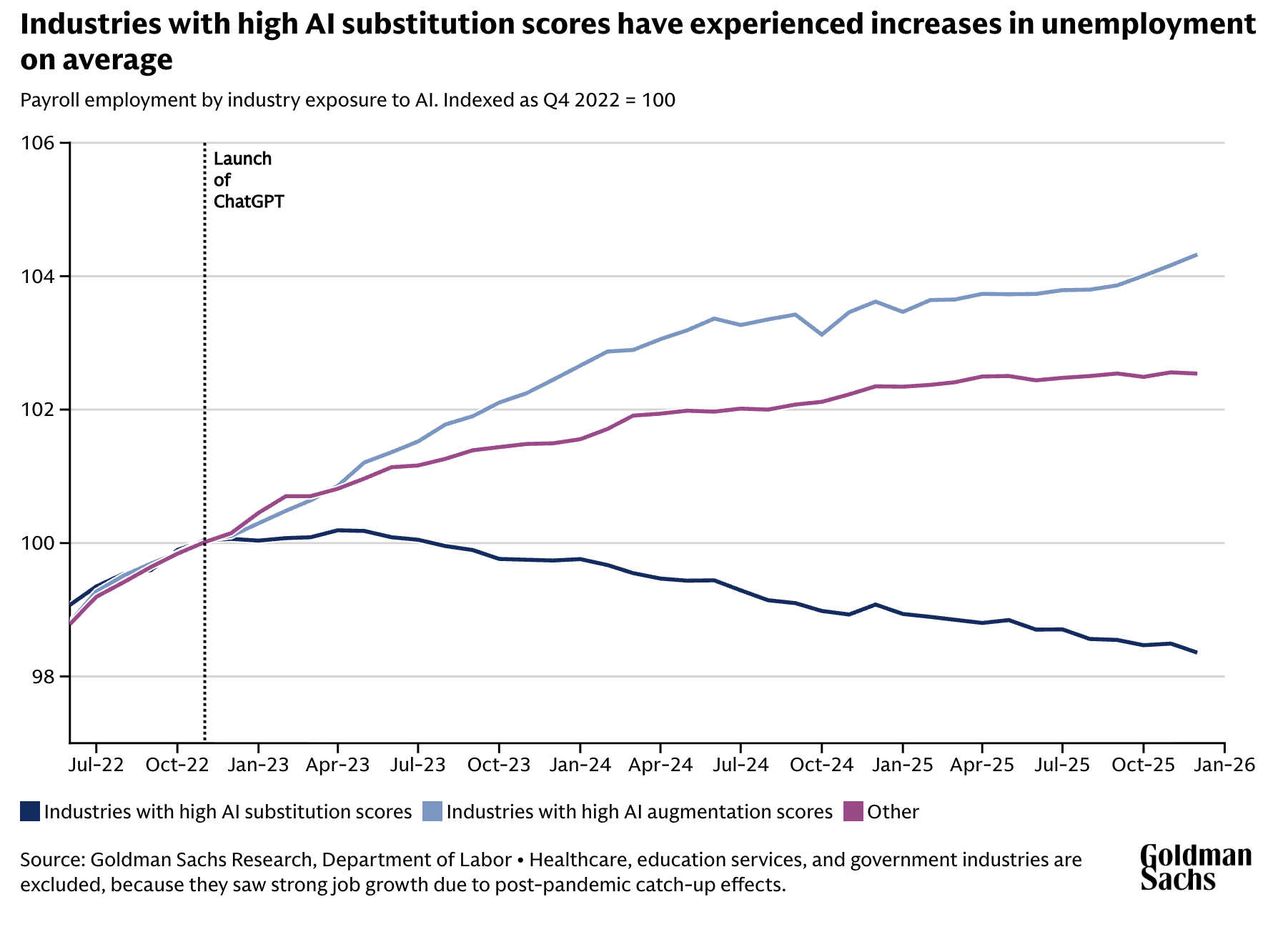
The burden has fallen most on younger and less experienced workers who overlap with AI on routine office tasks that once served as entry points into white-collar careers. Over the same period, entry-level hiring in professional services has cooled.
Not all exposed roles are shrinking. In occupations with high potential for augmentation, the bank estimates AI has added roughly 9,000 jobs per month. Education workers, judges, and construction managers are highlighted as examples where tools assist rather than replace, often due to requirements for in-person work, judgment, or interpersonal skills. Companies in these areas have shown faster productivity gains and more job openings than peers.
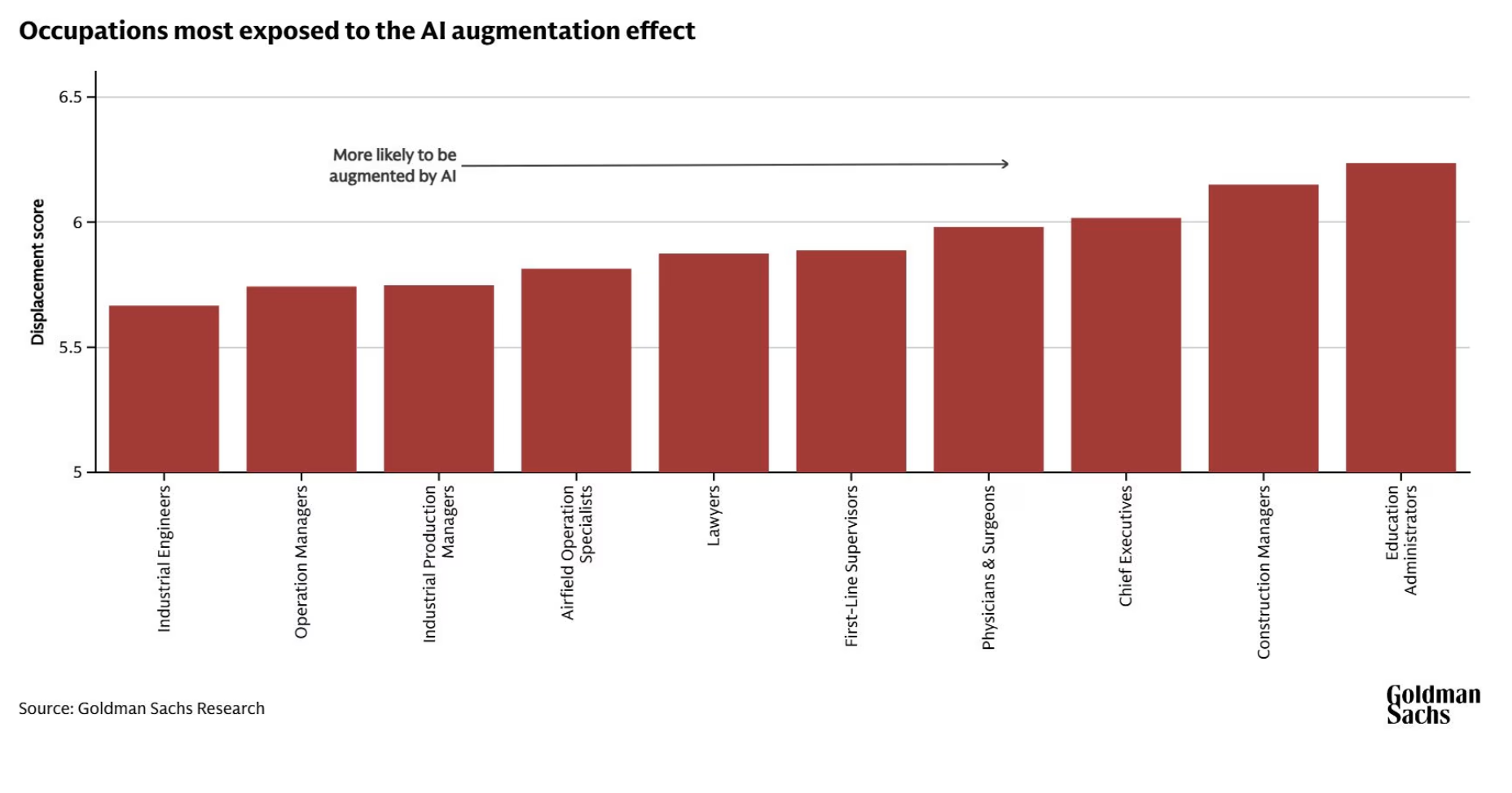
The researchers frame the pattern through Jevons paradox, the idea that efficiency improvements can raise overall demand. When AI reduces the cost per unit of output, customers may consume more, drawing additional workers into affected sectors even as specific tasks are automated.
Goldman Sachs notes the estimate may understate AI-related job creation. Hiring tied to data center construction and broader productivity gains from AI adoption are not fully captured. Corporate spending on AI is projected to rise through 2026, which could intensify both substitution and augmentation as adoption spreads across industries.
The findings point to AI already influencing payroll growth and the mix of hiring in the United States, with effects that vary by occupation and experience level. The next monthly employment report will offer another reading on whether substitution pressures are building or whether augmentation gains are keeping pace.
The content on The Coinomist is for informational purposes only and should not be interpreted as financial advice. While we strive to provide accurate and up-to-date information, we do not guarantee the accuracy, completeness, or reliability of any content. Neither we accept liability for any errors or omissions in the information provided or for any financial losses incurred as a result of relying on this information. Actions based on this content are at your own risk. Always do your own research and consult a professional. See our Terms, Privacy Policy, and Disclaimers for more details.
Articles by this author